Seven states require reporting time pay when a scheduled shift is cancelled or cut short, and the obligation triggers at clock-in, not at the schedule notice. Learn how CloudApper AI TimeClock documents the reporting event so UKG can apply the correct premium automatically.




Table of Contents
- What Triggers Reporting Time Pay at Clock-In
- Calculating the Premium Is Not the Same as Documenting the Trigger
- How the Minimum-Hours Formula Differs by State
- Closing the Gap: Documenting the Report-for-Duty Event at the Clock
When a UKG-scheduled shift gets cancelled or cut short partway through, most managers assume no work means no pay owed. In seven states plus Washington, D.C., that assumption is wrong. Show-up pay, also called reporting time pay or call-in pay, guarantees a minimum number of paid hours whenever an employee reports for a scheduled shift, even if the shift gets cut short or cancelled outright.

That’s the moment CloudApper AI TimeClock is built to capture: the clock-in itself. For Payroll Managers and HR Operations teams running UKG Ready or UKG Pro WFM, the real gap isn’t how UKG calculates the premium. It’s proving a reporting event happened at all.
What Triggers Reporting Time Pay at Clock-In
Reporting time pay doesn’t care how much notice an employee got that their shift was changing. It cares whether they physically showed up for a scheduled shift and didn’t get the work. An employee who clocks in, works twenty minutes, and gets sent home because walk-in traffic never showed up has reported for duty under the law, regardless of any heads-up text sent an hour earlier. That’s a different legal test from predictive scheduling and fair workweek notice rules, which govern how far in advance a schedule change has to be posted. Reporting time pay kicks in whether or not proper notice was given. What matters is what happens once the employee shows up.
Calculating the Premium Is Not the Same as Documenting the Trigger
UKG Ready and UKG Pro WFM calculate pay correctly once a shortfall is entered into the timecard, and the pay engine applies a minimum-hours pay code without any trouble once it knows one applies. Telling a reporting-time event (employee showed up, got sent home early through no fault of their own) apart from a voluntary early departure, a called-in absence, or a routine short shift is a distinction that has to be captured the moment it happens, not pieced together afterward from a schedule log. At least seven states plus the District of Columbia currently require reporting time pay for adult employees: California, Massachusetts, Connecticut, New Hampshire, New Jersey, New York, Rhode Island, and D.C. Each jurisdiction sets its own eligibility threshold and formula, so multi-location employers running a single UKG tenant across several of these states need location-specific configuration rather than one blanket rule.
How the Minimum-Hours Formula Differs by State
The amount owed varies enough that a single UKG business process won’t cover every location. California guarantees half the scheduled shift at the regular rate, with a minimum of 2 hours and a maximum of 4 hours. New York guarantees pay for the scheduled shift up to 4 hours at minimum wage, with separate hospitality-industry minimums.
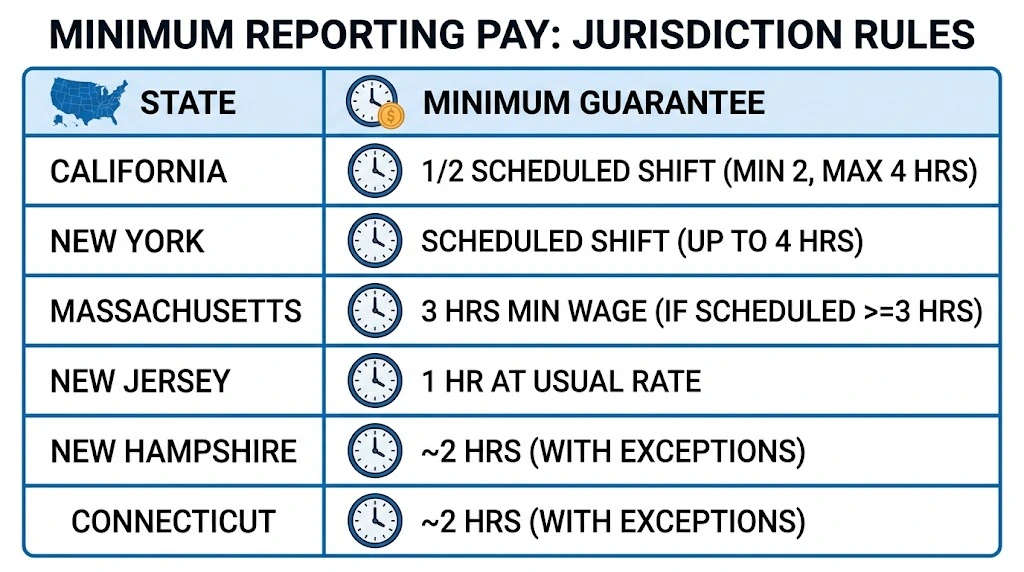
Massachusetts guarantees at least 3 hours at minimum wage when the employee was scheduled for 3 or more hours. New Jersey requires a minimum of 1 hour at the employee’s usual rate, New Hampshire guarantees 2 hours at the regular rate, and Connecticut’s minimum depends on the industry wage order. Rhode Island requires at least 3 hours at the regular rate when an employee reports and gets less than 3 hours of work. Applying any of this takes per-location configuration, and the premium only pays out correctly once the system already knows a reporting event occurred.
Closing the Gap: Documenting the Report-for-Duty Event at the Clock
CloudApper AI TimeClock adds a reporting-event attestation directly to the UKG-connected clock, configured per location so each site applies its own state’s threshold and formula. When a manager sends an employee home before a scheduled shift is complete, the clock captures a timestamped record of when the employee reported, how long they worked, and that the shortfall came from the employer, not a voluntary departure or call-out. Geofencing confirms the employee was physically on-site, which is the key fact behind most reporting-time claims. That record syncs to UKG alongside the punch, on the same offline-first setup already handling absence and no-call-no-show detection, and it feeds the same punch-level audit trail employers pull when a claim gets disputed. It works the same way CloudApper already documents meal and rest break compliance and multi-state overtime rules in UKG. UKG still calculates the pay. The clock proves the calculation had a real trigger behind it.
If you’re ready to close the reporting-time gap in your UKG shifts, request a demo to see how it works with your current configuration, or learn more about CloudApper AI TimeClock for UKG first if you want the details before talking to anyone.
FAQ
What is reporting time pay?
Reporting time pay is a state-mandated minimum payment owed to an employee who reports for a scheduled shift but is given less work than scheduled, or none at all. It applies whether the shortfall happens because the shift is cancelled outright or cut short after the employee has already clocked in.
Does UKG calculate reporting time pay automatically?
UKG applies the correct pay code once a reporting-time shortfall is recorded on the timecard. Whether that shortfall came from an employer sending someone home early, rather than a voluntary departure or absence, is a distinction that has to be captured at the point of punch, since that’s where the fact originates.
Which states require reporting time pay?
At least seven states plus the District of Columbia require reporting time pay for adult employees: California, Massachusetts, Connecticut, New Hampshire, New Jersey, New York, Rhode Island, and D.C. Oregon has a reporting time requirement that applies to minors only. Federal law does not require it.
Does reporting time pay apply if the employee is notified in advance?
It depends on the state and how far in advance notice was given. Some states reduce or eliminate the obligation if the employer notified the employee before they left for work; others apply the minimum regardless of notice once the employee has physically reported. This is separate from predictive scheduling and fair workweek notice requirements, which govern advance posting of schedules rather than what’s owed at the point of reporting.
How much is owed under reporting time pay laws?
Amounts vary by state. California guarantees half the scheduled shift, with a 2-to-4-hour range; New York guarantees up to 4 hours at minimum wage; Massachusetts guarantees at least 3 hours at minimum wage for shifts scheduled 3 hours or longer. Multi-state employers need location-specific configuration rather than one company-wide rule.
Does adding this kind of documentation require new hardware?
No. CloudApper AI TimeClock runs on the iPad or Android tablets already deployed at each location and connects to the UKG tenant you’re already running.

October 19, 2026
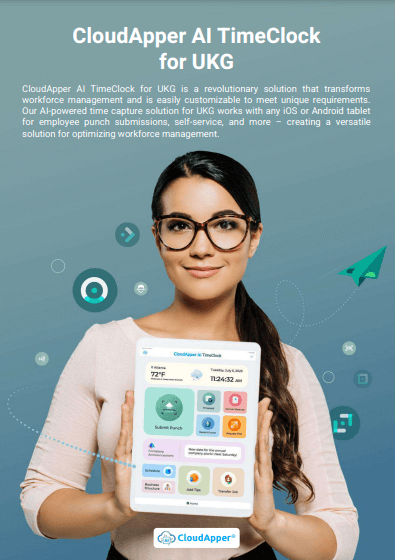
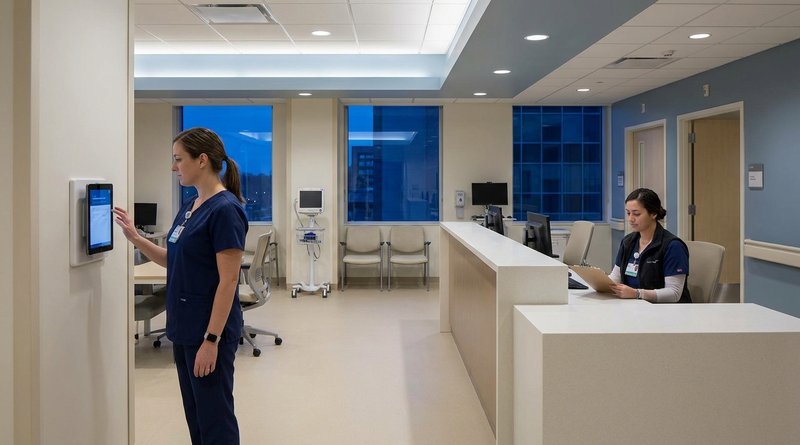
Nurse Mandatory Overtime Limits in UKG: Documenting Voluntary Overtime at Clock-Out
New York, Pennsylvania and Washington restrict mandatory overtime for nurses, which makes documented consent the key record. Learn how UKG Pro WFM and UKG Ready separate voluntary and mandated overtime, and how CloudApper AI TimeClock captures consent on an affordable unit tablet.
October 16, 2026
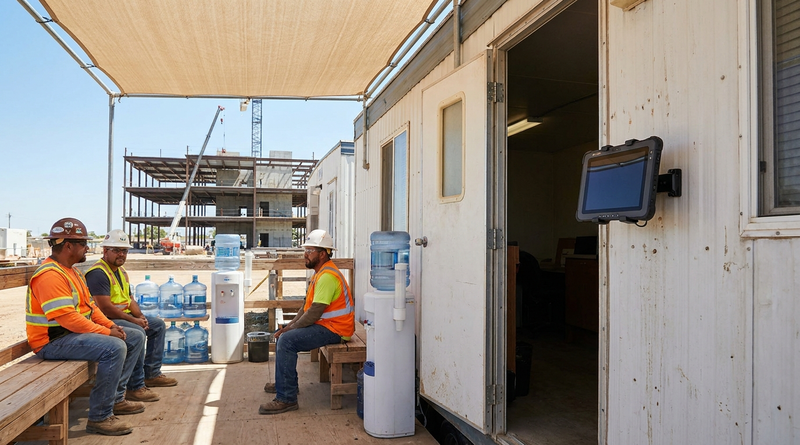
Heat Illness Recovery Breaks in UKG for Construction and Logistics Crews
State heat rules in California, Washington and beyond require cool-down breaks that payroll must be able to prove. Learn how UKG Ready and UKG Pro WFM track recovery periods, and how CloudApper AI TimeClock captures them on an affordable jobsite tablet that works offline.
October 15, 2026
PUMP Act Lactation Breaks in UKG: Tracking Them Without Breaking Meal Rules
Lactation breaks protected by the PUMP Act often show up as meal break exceptions in UKG. Learn what federal law requires, how to configure UKG Ready and UKG Pro WFM pay codes, and how CloudApper AI TimeClock records these breaks privately on an affordable tablet clock.
October 14, 2026
Enforcing Minor Work Hour Limits at the UKG Time Clock
Child labor hour limits are usually built into UKG schedules, but violations happen at the punch. Learn the federal rules for 14 to 17 year olds, how UKG Pro WFM and UKG Ready handle minor rules, and how CloudApper AI TimeClock adds age-based checks on an affordable tablet clock.