California's meal and rest break law carries PAGA class action risk for employers who cannot document meal period attestation and waivers at the terminal level. UKG handles pay rules and exception reporting — the documentation gap is at the time clock, where CloudApper AI TimeClock closes it.


Table of Contents
- What California Meal and Rest Break Law Actually Requires
- What UKG Handles Natively for California Compliance
- Where the Documentation Gap Creates Real Exposure
- What to Configure in UKG Before a California Audit
- Where Native UKG Configuration Reaches Its Limit
- How CloudApper AI TimeClock Closes the California Documentation Gap
- Frequently Asked Questions
- Closing
A class action PAGA lawsuit starts with a single pay stub. An employee notices they were never paid a meal period premium for a week where the punch records show a 29-minute meal break on Tuesday and a completely missed break on Thursday. The records exist in UKG. The premium pay calculation was never triggered. The employer’s defense depends on documentation that the terminal never collected.
California’s meal and rest break law is the most litigated labor statute in the country. The Private Attorneys General Act of 2004 turns individual wage claims into representative actions — one employee sues on behalf of all similarly situated employees, and the exposure multiplies per employee per pay period of violation. For a 300-person retail or manufacturing operation, a two-year lookback at $1 per missed meal period, per missed rest period, per affected employee, per day adds up faster than most HR teams expect when they first see the demand letter.
CloudApper AI TimeClock for UKG is the terminal-level layer that most California UKG customers are missing — capturing meal period attestation, on-duty meal waivers, and rest period acknowledgment at clock-in and clock-out, synced directly to UKG Ready and Pro WFM, on any standard Android tablet or iPad at a fraction of the cost of proprietary Intouch hardware.
What California Meal and Rest Break Law Actually Requires
California’s meal and rest period requirements come from the IWC wage orders, Labor Code §512, and a body of Supreme Court decisions that have progressively tightened what compliance actually means.
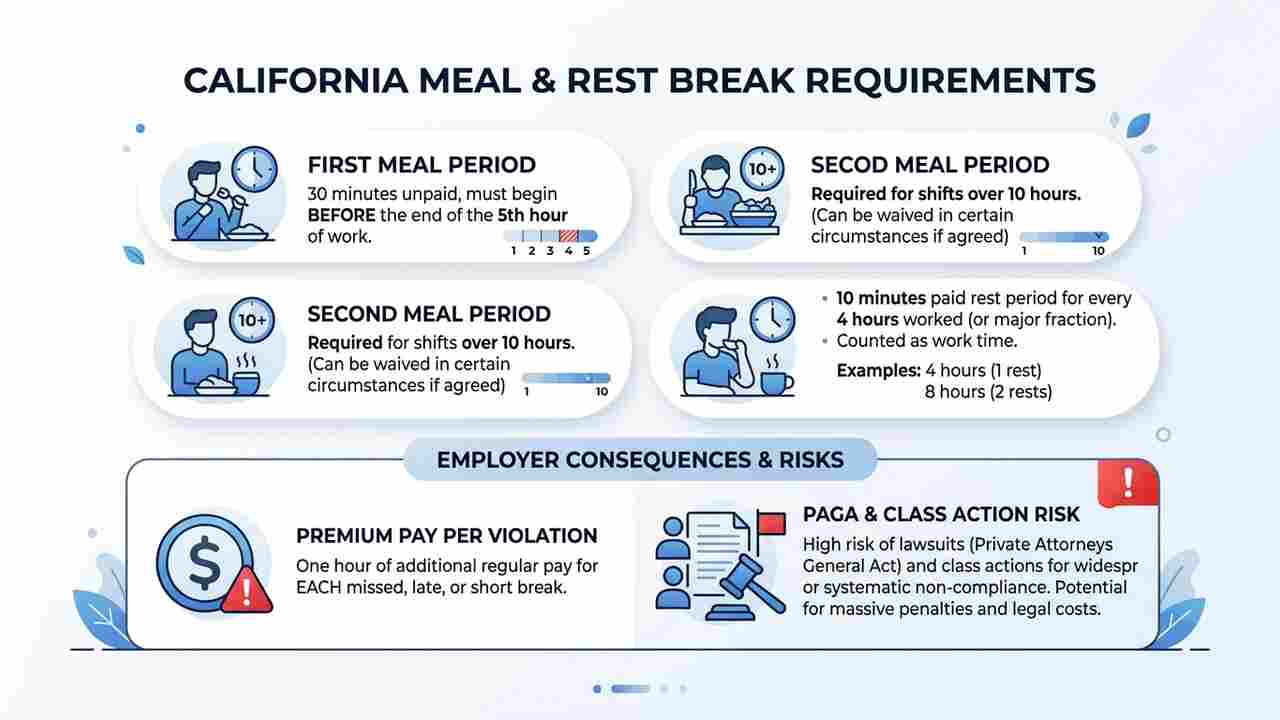
First meal period. Employers must provide an unpaid, duty-free meal period of at least 30 minutes for employees who work more than five hours in a workday. The meal period must begin no later than the end of the employee’s fifth hour of work. A meal period that starts in hour six — even by one minute — is a violation. A meal period that is interrupted by work duties is a violation. A meal period that is less than 30 minutes is a violation. Each violation triggers a one-hour premium at the employee’s regular rate of pay for that workday.

Second meal period. Employees working more than ten hours in a workday are entitled to a second 30-minute duty-free meal period. The second meal period may be waived by mutual consent if the total hours worked is no more than 12 hours and the first meal period was not waived. This waiver must be documented. A verbal agreement between a supervisor and employee is not sufficient — it is not enforceable and it will not survive a wage claim.
Rest periods. Employees are entitled to a paid, duty-free rest period of at least ten minutes for every four hours worked, or major fraction thereof. For an eight-hour shift: two rest periods. For a six-hour shift: one rest period. Rest period premiums work the same way as meal period premiums: one additional hour of pay at the regular rate for each missed or interrupted rest period.
The Donohue ruling. In 2021, the California Supreme Court held in Donohue v. AMN Services that time records showing a missed or short meal period create a rebuttable presumption that a violation occurred. The burden shifts to the employer to produce evidence — documented employee acknowledgment, a waiver, a business necessity explanation — that the employee was authorized and permitted a compliant meal period. Time records that simply show a 28-minute break do not rebut that presumption without accompanying employee-level documentation. This is the gap that matters most for UKG admins operating California locations.
What UKG Handles Natively for California Compliance
UKG Ready and Pro WFM have genuine capabilities that apply to California meal and rest break compliance, and it is worth being accurate about what those are.
UKG’s timekeeping records every punch event with a timestamp. Meal break duration is calculable from punch records. For employers who review exception reports regularly, UKG’s reporting can surface meal periods shorter than 30 minutes, meal periods that started after the fifth hour, and shifts where no meal period punch appears. This is the foundation of a California compliance program — the raw time data exists in UKG.
UKG’s pay rules engine can be configured to calculate meal period premium pay automatically. When the pay rules are built correctly for California, a missed first meal period generates a one-hour premium on the employee’s pay record without manual intervention. The same configuration applies to rest period premiums if the pay rules are constructed to recognize the rest period obligation by shift length. Organizations operating in multiple states will recognize this as similar to the state-specific configuration approach required for Washington meal break rules in UKG — each jurisdiction needs its own pay rule layer built explicitly.
What UKG does not do natively is create the employee-level documentation that Donohue demands when a punch record shows a short or missed break. The punch record is in UKG. The presumption of violation attaches to that record. The rebuttal — evidence that the employer authorized a compliant break and the employee chose not to take it, or that the employee signed a valid waiver — has to come from somewhere.
Where the Documentation Gap Creates Real Exposure
Short meal periods with no acknowledgment. A 28-minute meal period in UKG’s punch records creates a presumed violation under Donohue. If the employee took a slightly short break voluntarily and there is no terminal-level documentation capturing that fact, the employer cannot rebut the presumption without testimony — and testimony is expensive and inconsistent across a large workforce.
Missed meal periods with no waiver record. California allows employees who work six hours or less to waive their first meal period by mutual consent. That waiver must be documented contemporaneously. If the punch records show no meal period on a six-hour shift and there is no waiver record, the employer is exposed regardless of what actually happened. Break time attestation in UKG Ready addresses part of this workflow, but the California waiver documentation requirement is more specific than a general break confirmation.
Second meal period waivers. Second meal period waivers require written mutual consent for shifts of 10 to 12 hours. “Written” in the California compliance context means a record tied to a specific employee on a specific date. A blanket policy acknowledgment signed at hire does not satisfy this requirement for every shift — the waiver needs to be event-specific for each workday it is claimed.
On-duty meal period agreements. Certain job classifications — security guards, some healthcare workers, certain single-employee operations — may qualify for on-duty meal periods under California wage orders. An on-duty meal period must be agreed to in writing, must be revocable by the employee at any time, and must meet the wage order’s specific conditions. A UKG terminal that simply processes clock-out and clock-in punches for a meal period cannot capture whether the meal period was on-duty, off-duty, or a waiver.
PAGA math. One hour of premium pay per missed meal period, per missed rest period, per employee, per day — plus PAGA civil penalties of $100 per employee per pay period for the initial violation, and $200 per employee per pay period for subsequent violations. A manufacturing facility with 400 hourly workers and a 10% missed meal period rate over two years is looking at a PAGA exposure that runs to seven figures before attorney fees. The documentation gap is not a theoretical problem. Reviewing your current approach against best practices for DOL wage and hour audit readiness in UKG is a reasonable starting point, but California’s PAGA mechanism means the exposure does not require a DOL investigation to materialize.
What to Configure in UKG Before a California Audit
The first priority for any California UKG admin is pay rule verification. Pull your pay rules for California-specific locations and confirm that the first meal period premium, second meal period premium, and rest period premium calculations are all active and calculating correctly. Run a test scenario against a pay period with known exceptions before assuming the rules are working. Common UKG timekeeping errors by industry include premium pay miscalculations from pay rules that were not configured for the specific state’s formula.
The second priority is exception reporting. Configure UKG’s exception management to surface missed meal periods, short meal periods (under 30 minutes), and meal periods that began after the fifth hour of work. These reports should run automatically and be reviewed before payroll closes — not discovered during litigation.
The third priority is the waiver workflow. California’s meal period waiver requirements are specific enough that a payroll-era policy acknowledgment does not satisfy them for individual shifts. Your waiver workflow needs to generate a per-shift record tied to the employee, the date, and the specific waiver condition. This record needs to be retained for at least three years to cover the PAGA lookback period. Enforcing minimum break requirements in UKG covers the configuration layer; California’s waiver documentation requirements are a separate step that most UKG deployments have not built.
Where Native UKG Configuration Reaches Its Limit
UKG’s pay rules and exception reports address the calculation and visibility layer. What they cannot do is create an employee-facing terminal workflow that prompts attestation of a duty-free meal period before clock-in, captures a meal period waiver as a shift-specific document, records an on-duty meal period agreement with a timestamp and biometric identity tie, or confirms rest period acknowledgment at the end of a shift with a contemporaneous record.
These are terminal-level interactions. They happen at the device where the employee clocks in and out — not in a manager’s UKG dashboard, not in a policy acknowledgment at hire, and not in a punch record that shows a 28-minute break. The role-specific attestation framework in UKG sets the foundation; California’s specific meal period and waiver requirements are a distinct configuration layer on top of that foundation.
How CloudApper AI TimeClock Closes the California Documentation Gap
CloudApper AI TimeClock for UKG runs on standard Android tablets or iPads and syncs directly with UKG Ready and Pro WFM. For California employers, the terminal-level compliance capabilities address exactly the documentation requirements that UKG’s native configuration cannot cover on its own.
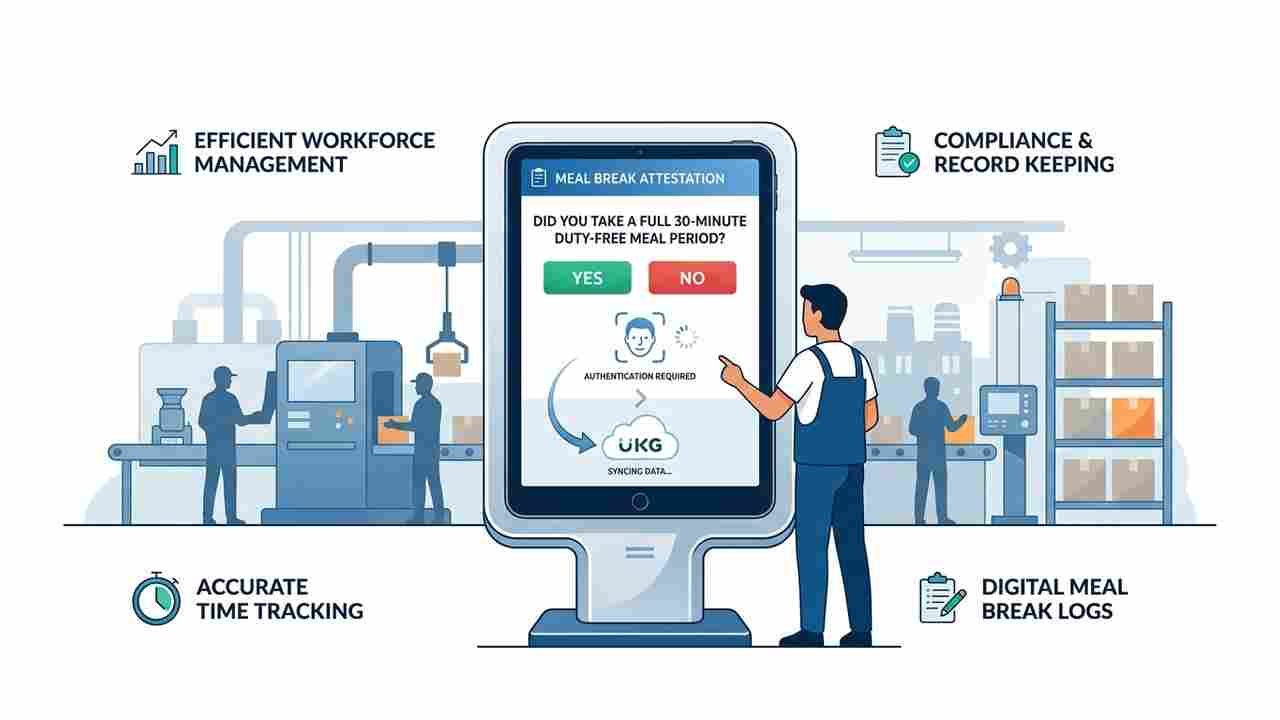
Meal period attestation at clock-in. When an employee clocks back in from a meal period, a configurable attestation prompt fires at the terminal: Did you take an uninterrupted, duty-free meal period of at least 30 minutes? The employee responds at the terminal. The response — yes or no, with timestamp and biometric identity — syncs to UKG as part of the time record. Under Donohue, a negative attestation creates the obligation to pay the premium; a positive attestation creates a contemporaneous record that the employer authorized and the employee received a compliant break.
Waiver capture at the terminal. For six-hour shifts where the employee requests to waive the first meal period, the terminal surfaces the waiver acknowledgment before the shift begins and records the employee’s acceptance. For second meal period waivers on ten-to-twelve-hour shifts, the same workflow applies. The waiver is tied to the employee’s biometric identity, timestamped, and retained in the record synced to UKG.
On-duty meal period workflow. For job classifications that qualify for on-duty meal periods, CloudApper AI TimeClock can be configured to surface the on-duty meal agreement at the terminal, confirm the employee’s acknowledgment of revocability, and record the agreement for the specific shift. The terminal becomes the point where the on-duty meal period is documented rather than a paper form.
Rest period acknowledgment at clock-out. At the end of a shift, a configurable prompt asks employees to confirm whether their scheduled rest periods were taken. Employees who were unable to take a rest period are identified at the terminal, creating both the premium pay trigger in UKG and a contemporaneous record of the missed break. The short break notification setup in UKG Pro WFM Dimensions handles the alerting layer; CloudApper AI TimeClock adds the employee-facing acknowledgment record at the terminal.
Multi-location configuration for California-specific rules. For organizations with California and non-California locations running the same UKG instance, CloudApper AI TimeClock configures attestation prompts at the location level. California locations get the full California attestation workflow — the same approach applied for Colorado’s meal break rules and other state-specific configurations. The configuration follows the jurisdiction without requiring a separate UKG deployment.
For California retail, manufacturing, healthcare, and logistics operations running UKG, CloudApper AI TimeClock for UKG provides the terminal-level documentation layer that PAGA exposure demands — at 25% of the cost of proprietary Intouch hardware, on any standard Android tablet or iPad already deployed or easily procured.
Frequently Asked Questions
Q: Does UKG automatically calculate California meal period premium pay?
UKG Ready and Pro WFM can be configured to calculate the one-hour meal period premium automatically, but the pay rules must be built explicitly for California locations. A UKG deployment with generic break rules will not generate California premium pay without additional configuration. UKG admins should test the pay rule calculation against a known exception scenario before assuming it is working correctly for their California-specific locations.
Q: What documentation does California require for a second meal period waiver?
California requires written mutual consent between the employer and the employee for each workday where the second meal period is waived. Two conditions must be met: the shift must be between ten and twelve hours, and the first meal period cannot have been waived on that same day. A blanket policy waiver signed at onboarding is generally insufficient — the documentation needs to be contemporaneous with the specific shift it covers.
Q: What is the PAGA penalty for missed meal periods in California?
The meal period premium itself is one additional hour of pay at the employee’s regular rate for each missed or noncompliant meal period. PAGA civil penalties are separate: $100 per aggrieved employee per pay period for the initial violation, $200 per employee per pay period for subsequent violations. PAGA actions allow one employee to sue on behalf of all similarly situated employees, meaning exposure scales with workforce size and the lookback period, not just the individual claim.
Q: Can an employee voluntarily skip their meal period without creating a violation?
Yes, but only with a properly documented waiver and only in circumstances where California law permits it. For shifts of six hours or less, the meal period may be waived by mutual consent. The burden of proving the waiver and that it was voluntary falls on the employer. The Donohue ruling means that a punch record showing no meal period is presumptively a violation — the employer must produce the waiver documentation to rebut that presumption.
Q: How far back can a PAGA claim go in California?
PAGA claims carry a one-year statute of limitations for the PAGA action itself, but the underlying Labor Code violations can have a three-year lookback for the civil penalty calculation depending on how the claim is structured. Organizations facing a PAGA demand should treat a three-year lookback as the practical exposure window for documentation and records retention purposes.
Q: Does California’s meal break law apply to exempt employees?
No. California’s meal and rest break requirements apply to non-exempt (hourly) employees under the applicable IWC wage order. Properly classified exempt employees are not entitled to meal or rest break premiums. However, misclassification is a parallel PAGA risk in California — exempt status is regularly challenged in wage litigation, and an employer that cannot document an exempt employee’s actual duties may face exposure on both the classification and the break premium claims simultaneously.
Q: What is an on-duty meal period and when is it permitted in California?
An on-duty meal period is one where the employee continues to perform work duties during the break. California wage orders allow on-duty meal periods only when the nature of the work prevents the employee from being relieved of all duties, a written agreement exists between employer and employee, and the agreement is revocable at any time by the employee. The conditions are narrow — most retail, manufacturing, and logistics roles do not qualify. Security guards and certain single-employee operations are the most common qualifying classifications.
Closing
California’s meal and rest break law is not a compliance technicality — it is one of the most actively enforced labor statutes in the country, with PAGA giving individual employees the mechanism to bring class-wide claims that carry seven-figure exposure for mid-size operations. UKG gives California employers the time records and the pay rule calculation. What it does not give them is the terminal-level documentation that Donohue requires when those records show a short or missed break.
If your California UKG locations are not collecting meal period attestation, waiver documentation, and rest period acknowledgment at the time clock, the documentation gap is the exposure. Explore how CloudApper AI TimeClock handles California’s terminal-level compliance requirements at https://ukg.cloudapper.ai/affordable-ukg-kronos-time-clock/



October 12, 2026
Donning and Doffing Time in UKG: Where the Workday Starts for PPE-Heavy Crews
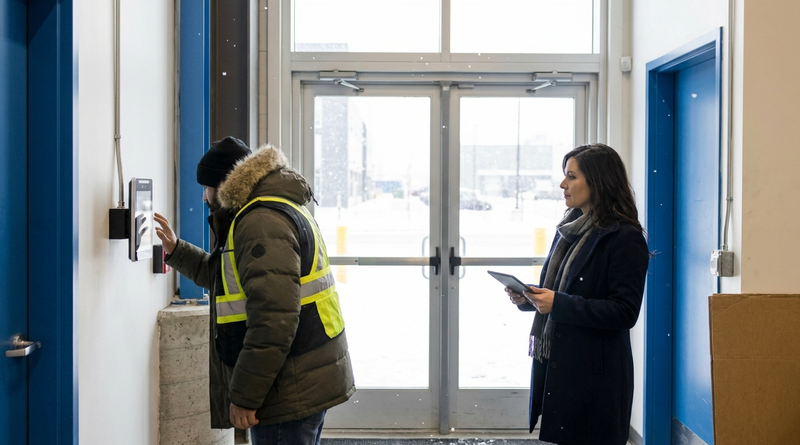
Donning and doffing PPE can be compensable time under the FLSA. Learn how UKG Ready and UKG Pro WFM handle it natively, what to configure first, and how CloudApper AI TimeClock puts an affordable tablet time clock in every changing room so the first punch matches the start of the workday.
October 9, 2026
Biometric Time Clocks in Canada: Quebec Law 25, PIPEDA, and Provincial Rules for UKG Sites
Biometric time clock rules in Canada change at provincial borders. Learn what Quebec Law 25 and its 60-day CAI notice require, when PIPEDA applies, how Alberta and BC PIPA treat employee information, and a five-step plan for consent and audit at UKG sites using Intouch devices or CloudApper AI TimeClock.

October 8, 2026
Locking a Tablet Down as a Dedicated UKG Time Clock: Kiosk Mode with Jamf, Intune, and Android Enterprise
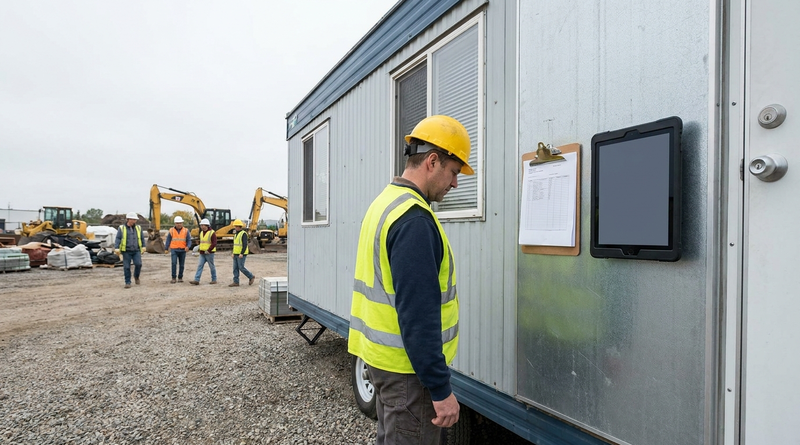
IT's first objection to a tablet time clock is that someone will misuse it. Learn how to lock an iPad or Android tablet into a dedicated UKG time clock with Jamf, Intune, or Android Enterprise, a five-step day-one checklist, and what IT should manage after go-live alongside Intouch DX devices.
October 7, 2026
Moving Sites Off Paper Timesheets into UKG Without Buying Terminals
Some UKG sites still run on a clipboard because mobile punching and dedicated terminals never fit. Learn how to match each site to the right UKG capture method, why paper creates FLSA recordkeeping risk under 29 CFR 516, and a five-step cutover plan that includes a shared tablet kiosk option.