A large public transit authority automated CBA-compliant seniority-based shift substitution bidding in UKG Pro WFM with CloudApper, eliminating manual supervisor interpretation, reducing union grievance exposure, and creating a timestamped audit trail for every assignment decision.


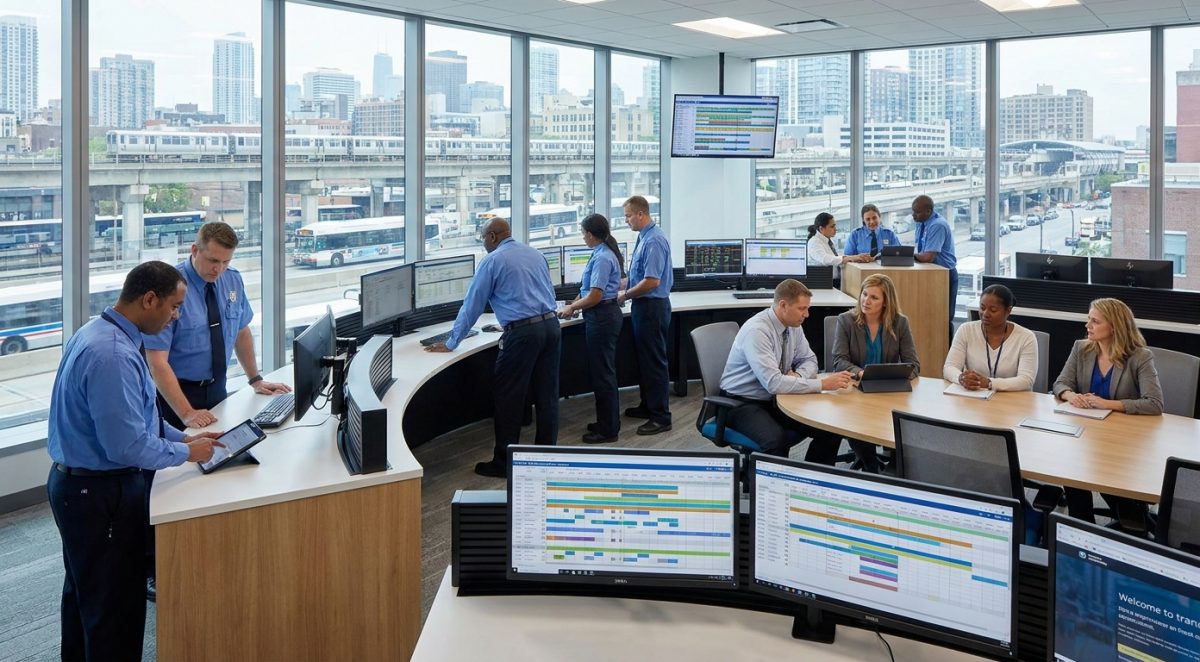
Table of Contents
At a large public transit authority, the HRIS Director wasn’t dealing with a scheduling problem — she was dealing with an eligibility problem. Every time a job substitution shift came open, the collective bargaining agreement defined precisely who could bid: seniority rank, active certifications, route qualifications. What happened next was a manual process: supervisors worked down paper lists, made judgment calls on borderline eligibility, and notified workers through phone chains. When those judgment calls didn’t track the CBA exactly, the result was a union grievance. The authority ran UKG Pro WFM. What it needed was a way to move the contract’s bidding rules into the system — without rewriting the contract or modifying UKG itself.
When Manual Eligibility Becomes a Grievance Exposure
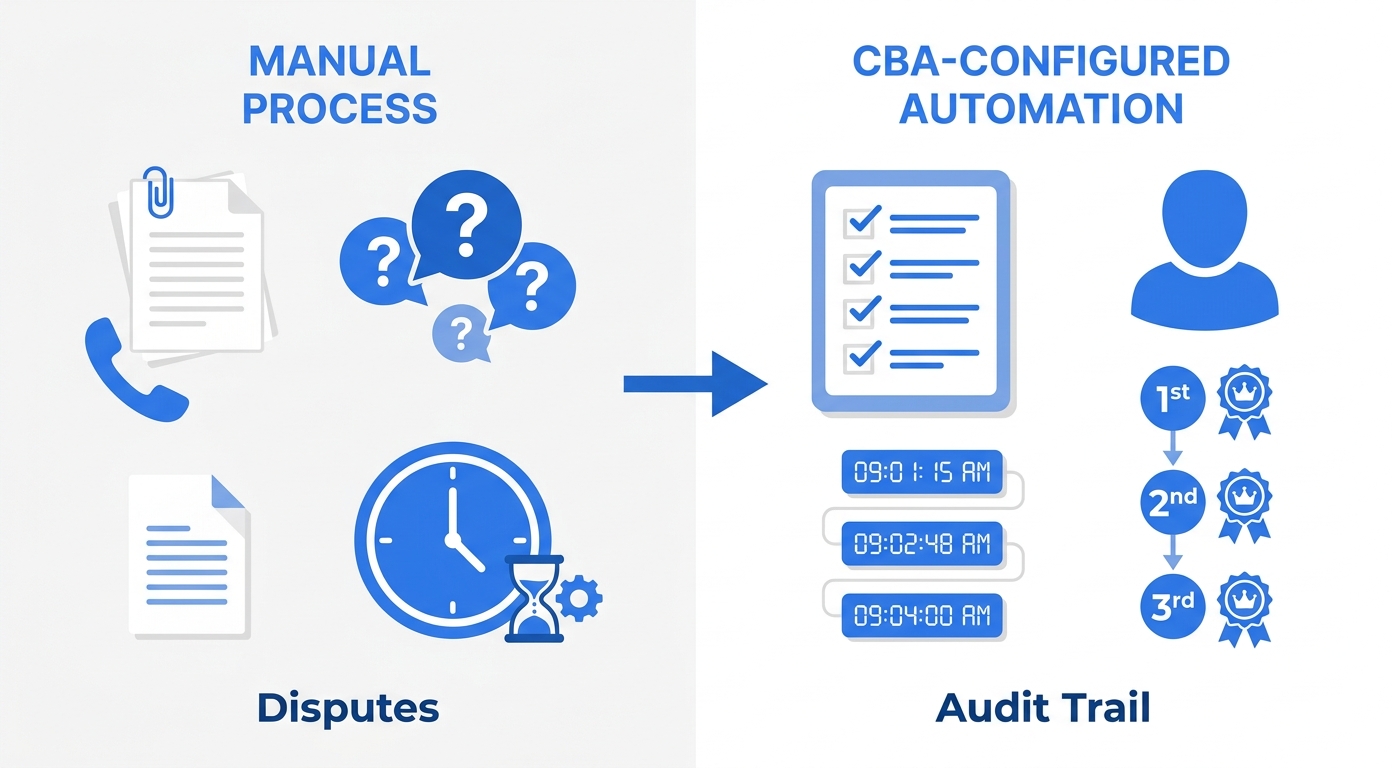
The process in theory was simple: post an open shift, identify eligible workers by seniority, notify them in order, assign the first taker. In practice, “eligible” was the point of dispute. Seniority date calculation, certification currency, route classification — each one was an interpretation the contract governed and a supervisor had to apply manually, under time pressure, with no system record of the decision. The authority’s inability to produce an auditable notification sequence in grievance proceedings was a persistent vulnerability.

“Every time a supervisor made a judgment call on who was eligible, we were one step away from a grievance,” the HRIS Director explained. “The problem wasn’t that people didn’t know the contract — it was that the process gave too much room for interpretation.”
Shift fill speed was a secondary problem with direct operational consequences. Open positions that could have been dispatched in minutes were taking hours to work through paper lists and phone chains — a meaningful problem for an agency maintaining minimum service levels.
Building the CBA Into the System, Not Around It
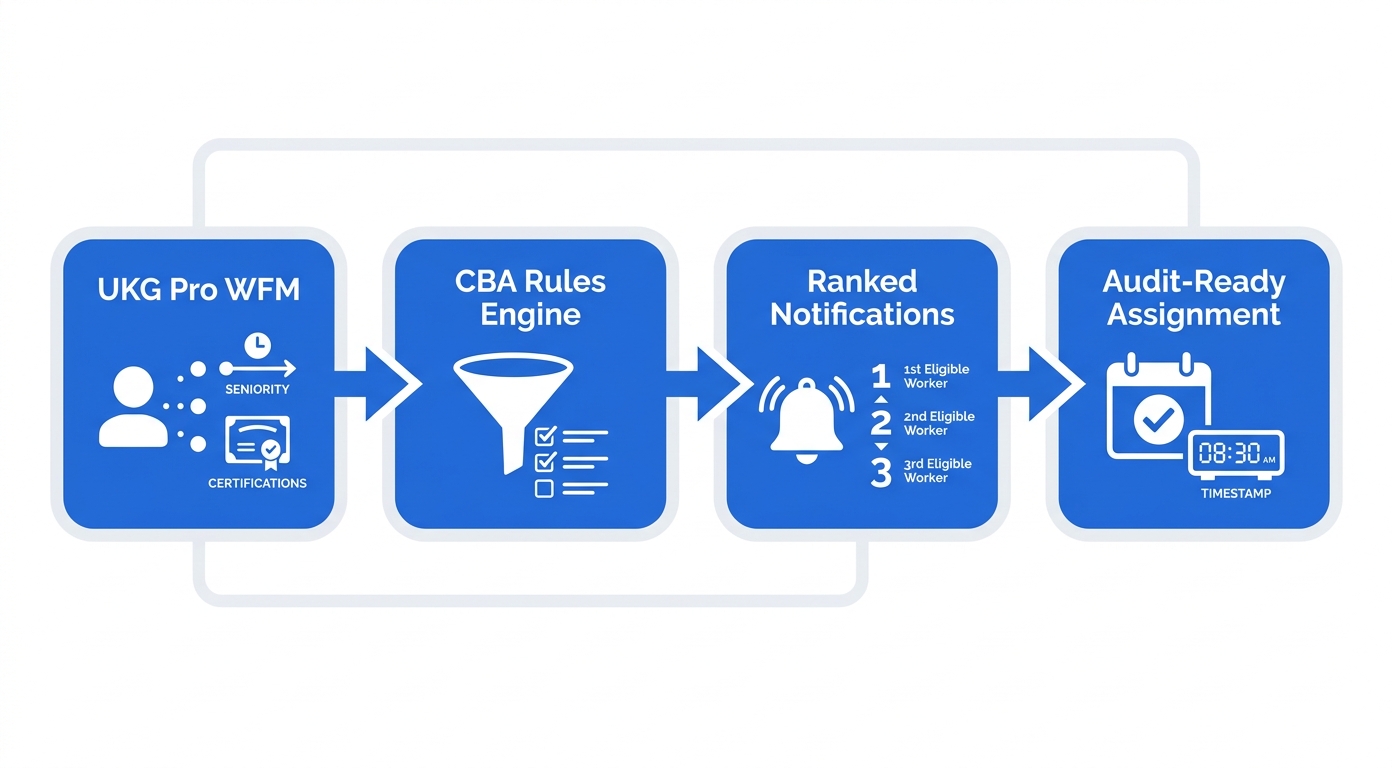
CloudApper’s Bidding Solution for UKG was configured as a layer on top of UKG Pro WFM, pulling employee data — seniority dates, qualifications, active certifications, assignment history — directly from the system and applying it against the eligibility rules from the CBA. When a shift opened, the platform filtered the eligible pool in real time, rank-ordered by seniority, and notified workers in the correct sequence. Workers could bid through a self-service interface. Every step — notification, bid, outcome — was timestamped and logged against the employee record.
The implementation required no changes to UKG Pro WFM itself. CloudApper AI for UKG adds the bidding logic as a configured extension on top of the existing platform — the same model the authority was seeing applied elsewhere in public sector UKG deployments to handle complex pay cycle rules and collective agreement overtime configurations that sit outside native scheduling functionality.
There was one requirement the authority held firm on from the first scoping conversation: the eligibility rules in the system had to mirror the CBA language exactly — not approximate it, not simplify it for system convenience, but reflect the same definitions the contract used.
“The union’s concern was always that an algorithm would interpret the contract differently than the language said. We showed them the rule configuration side by side with the CBA text. There was nothing to argue about.”
— Director of HR, large public transit authority
What the Audit Trail Changed
The most immediate change was in labor relations. The grievance category tied to shift assignment didn’t disappear, but the nature of the conversation shifted. Before, a grievance over who got a shift required reconstructing a paper trail — call logs, sign-up sheets, supervisor recollections — that was rarely complete. Now the system produced a timestamped record: who was in the eligible pool, when they were notified, whether they bid, and what the outcome was.
“Our labor relations team had been asking for an auditable trail for years,” the Labor Relations Manager said. “With a paper process, you couldn’t prove the notification sequence. Now every step is timestamped and tied to the employee record in UKG.”
Fill speed improved because eligible workers received notifications the moment a position opened, rather than waiting while a supervisor worked down a list. Supervisors who had been spending time in grievance meetings defending assignment decisions were spending it elsewhere.
“My supervisors were spending real time defending assignment decisions in grievance meetings. Now the system documents the decision. That conversation doesn’t happen the same way anymore.”
— VP of Operations, large public transit authority
The Broader Case for Configuring CBA Rules in UKG
For UKG Pro WFM customers in transit and other heavily unionized environments, the connection between shift fill process and labor relations exposure is direct. A manual bidding process that works at low volume becomes increasingly difficult to defend at arbitration as workforce size grows and shift counts multiply. The same eligibility rules that produce a grievance once, produce it repeatedly — until the process changes.
CloudApper’s integration with UKG Pro WFM keeps the eligibility logic aligned with the contract, the audit trail inside the system of record, and the assignment outcome attached to the same employee data that drives payroll. No separate tracking tool, no post-hoc reconstruction, no paper trail to locate if a grievance escalates to arbitration. For organizations whose CBA rules govern workforce decisions at every level — scheduling, overtime, substitution — keeping those rules inside UKG rather than applied around it changes what the system can defend.
To explore how CloudApper can extend UKG Pro WFM with CBA-compliant shift bidding for your transit or unionized workforce, contact the CloudApper team.



September 30, 2026
When Your Best Candidates Already Worked for You: How a 50,000-Employee Home Care Organization Automated Rehire Campaigns and Geographic Filtering in UKG Pro
A 50,000-employee home health care organization extended UKG Pro Recruiting with CloudApper AI Recruiter to add geographic zip-code filtering, automated rehire outreach campaigns for former employees, and blind-ranking — reducing recruiter workload and improving hiring quality at scale.

September 29, 2026
If Your HR Events Aren’t in Slack, They Don’t Exist: How a 260-Person HR Tech Company Connected UKG Ready to Where Work Actually Happens
A 260-person HR tech company with a Slack-first culture connected UKG Ready lifecycle events to Slack using CloudApper iPaaS — so new hires, promotions, and PTO approvals appear where the organization already pays attention.
September 28, 2026
4 Integrations, One Migration Window: How a Healthcare Products Distributor Kept Every Critical System Live When They Moved to UKG Pro
A healthcare products distributor migrating from ADP to UKG Pro built four critical enterprise integrations at go-live using CloudApper iPaaS — not after cutover. Here is how treating integrations as a parallel workstream changed what migration day actually meant.

September 17, 2026
How a Large Concrete Construction Firm Got Full Crew Labor Data from UKG Pro WFM into Trimble Vista for Real Job Costing
A large concrete construction firm extended UKG Pro WFM with CloudApper hrPad and iPaaS to deliver full crew punch detail into Trimble Vista — giving project managers cost-code-level labor data in the ERP they already use.