Unplanned absences and last-minute shift changes can quickly disrupt manufacturing operations. This article explains how UKG manufacturers use hrPad to automate shift substitutions, reduce downtime, and keep production lines fully staffed through employee self-service and smart shift bidding.

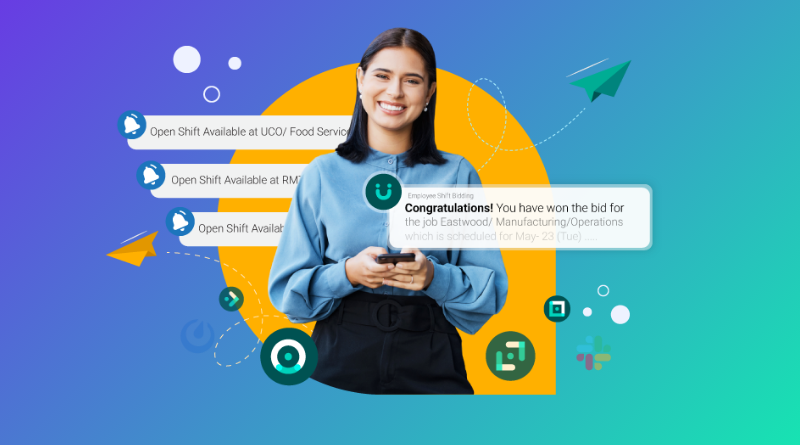
Table of Contents
Unplanned absences and last-minute shift changes don’t just create an HR problem in manufacturing—they create a production problem. When a line is short-staffed, the cost isn’t limited to payroll adjustments or a few emails to supervisors. It can mean delayed orders, scrap risk, overtime spikes, quality issues, and missed throughput targets.
That’s why many manufacturers treat “coverage speed” like a KPI. The faster you can fill a gap with a qualified worker—without breaking overtime rules or creating payroll exceptions—the more resilient your operation becomes.
This matters because downtime is expensive in almost every manufacturing environment, and multiple studies and industry reports estimate costs ranging from thousands to hundreds of thousands per hour, depending on the operation and sector. In large automotive environments, some analyses estimate that downtime can reach millions per hour.
The hard truth: when coverage relies on managers texting around or calling down a list, you lose time before the recovery even starts.
The real issue isn’t “absence.” It’s the manual coverage workflow.
Most manufacturers already have UKG/Kronos in place for scheduling, timekeeping, and workforce rules. The breakdown usually happens in the last mile:
- Employees aren’t sure who to notify (or when).
- A substitution request becomes a chain of phone calls.
- Managers scramble to find a qualified replacement.
- Overtime and work rules get violated in the rush.
- Payroll exceptions pile up later.
Even when UKG supports shift swap requests, many organizations still struggle with adoption across frontline teams—especially when employees don’t sit at a desk or regularly log into a portal.
That’s where an employee self-service kiosk model becomes practical: it meets frontline employees where they already are—at the time clock or shared device—and turns scheduling changes into a consistent, guided process.
What hrPad changes for UKG manufacturers
CloudApper hrPad is an employee self-service kiosk and HR service delivery layer that integrates with UKG/Kronos. The goal is simple: make shift changes and substitution coverage fast, structured, and employee-driven—without losing UKG rule control.
Instead of treating substitution as a manager-only task, hrPad turns it into a controlled workflow that employees and managers can complete in minutes.
1) UKG-connected, real-time scheduling context
hrPad syncs with UKG workforce data and schedules so requests and approvals don’t live in a separate spreadsheet or side channel. When the workflow runs on top of the same scheduling reality, it’s easier to avoid the “we filled it, but payroll is wrong” scenario.
2) A kiosk-first experience for frontline teams
Frontline adoption is often the silent reason shift coverage workflows fail. A kiosk on a shared iPad/Android/Windows device reduces the friction of “log in later when you get home.” In practice, kiosks are frequently used to streamline routine tasks for frontline staff because they fit the flow of work better than email or desktop portals.
3) Automated substitution requests that don’t require manager chasing
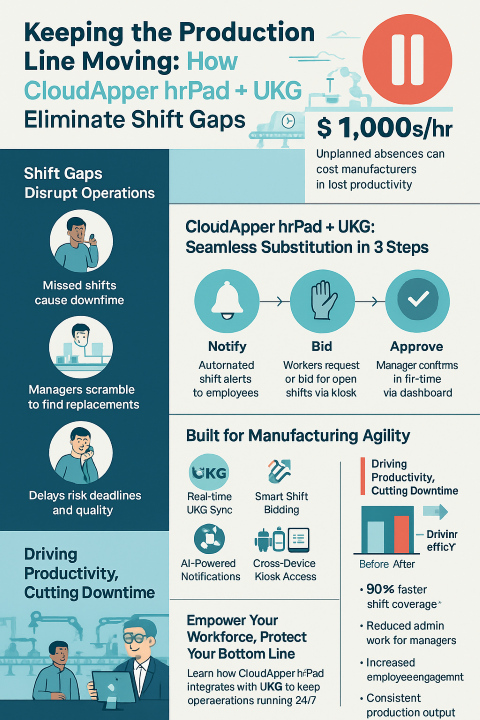
When an employee needs coverage, the request can be initiated through the kiosk (or device). That request is structured, time-stamped, and consistent—so managers aren’t deciphering partial information in texts.
4) Smart shift bidding for faster fills
The fastest way to fill a shift is to notify the right people automatically—those with the correct role/skills—and let them claim it within guardrails. Many workforce platforms (and marketplaces built around them) have moved toward open-shift and swap models because it improves fill speed and reduces admin overhead.
-
hrPad applies this same concept in a UKG environment: when a shift opens due to a substitution request, eligible employees are notified and can bid/accept based on configured rules.
A practical “day of operations” example
Here’s what this looks like on a real production week:
An operator calls out 2 hours before shift start.
Without a system: the supervisor texts a few names, calls two people, waits for replies, then fills the shift with whoever answers first—often causing overtime or skill mismatch.
With UKG + hrPad:
The operator submits a substitution request through the kiosk workflow. hrPad triggers notifications to qualified employees. Interested employees bid/accept the open shift. The manager sees who accepted, reviews eligibility and coverage impact, and confirms—without running a manual phone tree.The difference isn’t that “AI makes schedules.” The difference is that the coverage process becomes repeatable, fast, and auditable.
What managers get: less chaos, more control
When shift coverage moves from “manager chasing” to “employee self-service + approvals,” managers typically see three immediate gains:
First, they get real-time visibility into what’s happening—who requested coverage, who bid, and what’s pending.
Second, they reduce the administrative drag of constant adjustments. Absence management and scheduling admin are well-known productivity drains in manufacturing environments, especially when they happen daily.
Third, they improve retention dynamics. When employees can see shift opportunities and pick up hours transparently, scheduling feels less like “favorites” and more like a fair system.
FAQ
How much can downtime cost manufacturers per hour?
Costs vary widely by sector and plant size—from thousands per hour in some environments to hundreds of thousands per hour, and in certain large operations, even higher.
Does UKG support shift swaps and substitution requests?
Yes—UKG Workforce Dimensions includes shift swap request capabilities for employees.
What’s the advantage of an employee self-service kiosk for manufacturing?
A kiosk model improves adoption for deskless teams because it’s available in the flow of work (clock-in areas, shared devices) and reduces reliance on email or at-home logins.
What is “shift bidding,” and why does it matter?
Shift bidding is a controlled way to offer open shifts to eligible employees, allowing them to claim shifts within rules. It speeds up coverage and reduces scheduling admin.
Why does this also improve payroll accuracy and compliance
Manufacturing coverage isn’t just about filling the shift. It’s about filling it correctly—with the right person, under the right rules, with the right pay codes.
When coverage is handled informally, compliance risk rises: rest window issues, overtime thresholds, union constraints, and missed attestation requirements can get ignored in the rush.
A structured workflow tied to UKG data helps reduce that risk because the same rules that govern scheduling and timekeeping can be reflected in how shifts are offered and confirmed—rather than being decided ad hoc on a phone call.
Explore hrPad for UKG/Kronos to see how a kiosk-first HR service delivery model works in real operations.

October 23, 2026
No Tax on Overtime: What It Means for Your UKG Payroll
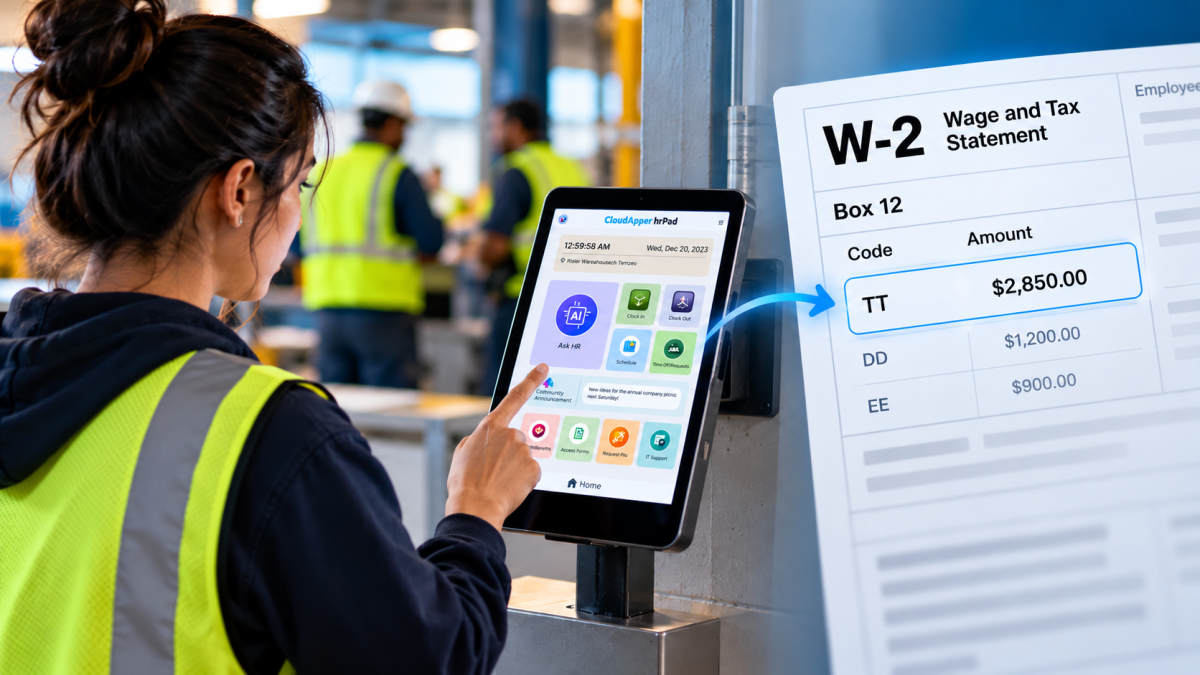
Starting with 2026 wages, employers using UKG must report qualified overtime in W-2 Box 12 (code TT), and only part of the overtime you pay counts. hrPad by CloudApper AI helps capture the details at the time clock.

October 23, 2026
Barcode Labor Tracking on UKG Ready: Two Clocks, One Labor Record, and an ERP-Validated Hierarchy
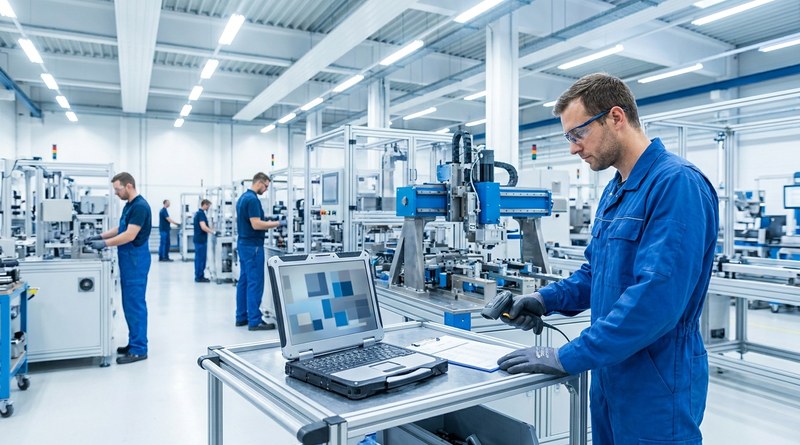
Some plants keep attendance on the clocks at the door and capture job labor at the workstation. This piece looks at that two-clock model on UKG Ready: scan-only capture for gloved operators, work orders validated against the ERP, and how CloudApper adds that layer using the PCs and scanners already on the line.
October 13, 2026
Paperless HR for Rural Hospitals on UKG: Extending One Kiosk to Documents, E-Signatures and Benefits Data
A rural hospital using CloudApper hrPad as its UKG time clock still handled much of HR on paper. Its next step is extending the same kiosk to documents, e-signatures and transfers, with CloudApper iPaaS moving benefits data to providers, all within network rules that block external AI services.
October 7, 2026
Shared Tablet SSO in UKG: One Time Clock for Every Login Type
Hourly staff on basic UKG logins and managers on SSO can share one tablet time clock without login mix-ups. This guide explains each login type in plain English, compares three shared-tablet setups and shows how hrPad by CloudApper AI makes it work.