Non-clinical healthcare hiring often diverts recruiter hours away from critical clinical roles. By automating high-volume screening, scoring, and interview scheduling, CloudApper AI Recruiter for UKG keeps essential support positions staffed while your clinical talent team stays focused on patient-care hiring.



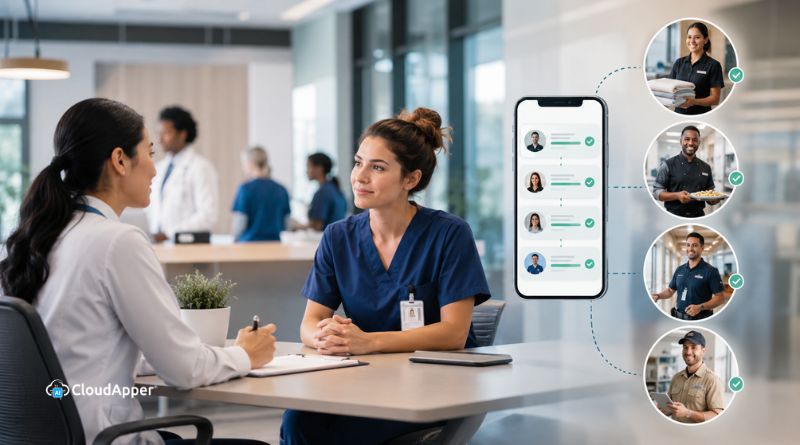
Table of Contents
- TL;DR:
- Why Non-Clinical Hiring Consumes So Much Clinical Recruiting Time
- The Real Cost: Support Roles Stay Open and Clinical Hiring Slows Down
- How CloudApper AI Recruiter Automates Non-Clinical Hiring in UKG
- Benefits of Automating Non-Clinical Hiring for Health Systems
- Frequently Asked Questions
- Staff Both Pipelines, Divert No One
Health systems run their highest-volume, fastest-churning requisitions through the same recruiters responsible for their hardest ones. Housekeeping, food service, patient transport, and facilities generate a constant stream of applicants, and every hour your team spends phone-screening them is an hour not spent closing an RN. That is the real cost of non-clinical healthcare hiring. CloudApper AI Recruiter for UKG automates that pipeline end to end through an automated pre-screening conversation that screens and scores candidates and books their interviews, so support roles stay staffed while your clinical recruiters stay on clinical hiring. Here’s where the time goes, and how to get it back.
TL;DR:
-
The Problem: High-volume support hiring steals recruiter hours from critical clinical roles like RNs.
-
Fast Apply: Candidates apply in minutes via text or QR code—no resumes or login portals needed.
-
Instant Scheduling: AI screens applicants against your criteria and books qualified interviews on the spot.
-
Fewer No-Shows: Automated SMS reminders cut missed interviews and keep a backup talent pool ready.
-
UKG Sync: Screening data and interview schedules sync seamlessly into UKG while recruiters retain final hiring control.
Why Non-Clinical Hiring Consumes So Much Clinical Recruiting Time
The strange thing about support-role hiring is that none of it is hard. It eats recruiter time anyway, for four reasons.
The Highest-Volume Requisitions in the Building
Hospital support staff hiring never stops because support staff turnover never stops. These roles turn over faster than almost any other category in the building, so your EVS, food service, and transport requisitions don’t really close. They refill. A mid-size hospital carries dozens of open support positions at any moment, each generating applications someone has to review, call, and schedule. Volume, not difficulty, determines how much recruiter time these roles consume.
Applicants Who Decide in Days, Not Weeks
The people applying for these healthcare support roles are hourly workers comparing your hospital against every warehouse, hotel, and retailer in the area, often for similar pay. They apply to several employers in one sitting and take the first offer that responds. If your process needs three days to return a phone call, you didn’t lose the candidate to a better offer. You lost them to a faster one.
Screening That’s Repetitive but Unavoidable
Think about what a phone screen for a patient transport or food service role actually covers. Availability. Shift flexibility. Physical requirements. A food handler card, maybe. Reliable transportation. None of those answers needs a recruiter’s judgment to collect, yet a recruiter collects them anyway, one call at a time, across hundreds of applicants a month.
No-Shows That Restart the Whole Cycle
Interview no-shows run high in hourly support hiring, and every empty slot sends a recruiter back into the pile: find a new candidate, run another phone screen, coordinate another slot. The missed meeting is the cheap part. The expensive part is the whole cycle running again behind it.
The Real Cost: Support Roles Stay Open and Clinical Hiring Slows Down
Two costs stack on top of each other. The first is operational. When support functions run short, their work lands on clinical staff. Slow bed turnover from an understaffed EVS team backs up the emergency department. Nurses end up pushing wheelchairs when transport is thin. Late trays turn into patient complaints. The people you hired for patient care spend their shift covering gaps, which feeds the burnout that drives clinical turnover, which makes clinical hiring even harder.
The second cost sits inside the recruiting team itself. Your TA team is sized around the clinical shortage, where recruiter skill changes outcomes and every RN hire is worth tens of thousands in avoided turnover cost. Yet high-volume healthcare recruiting for support roles claims those same recruiters’ hours in proportion to its volume. You end up paying for your cheapest hires with your most expensive recruiting attention. None of this makes support roles less important. Those teams keep the hospital running, and they deserve a fast, respectful hiring process. The problem is the process, not the people, and the process is almost entirely automatable.
How CloudApper AI Recruiter Automates Non-Clinical Hiring in UKG
CloudApper AI Recruiter works alongside your UKG Pro or UKG Ready Recruiting system and takes over the repetitive front half of the funnel. Here’s the workflow.
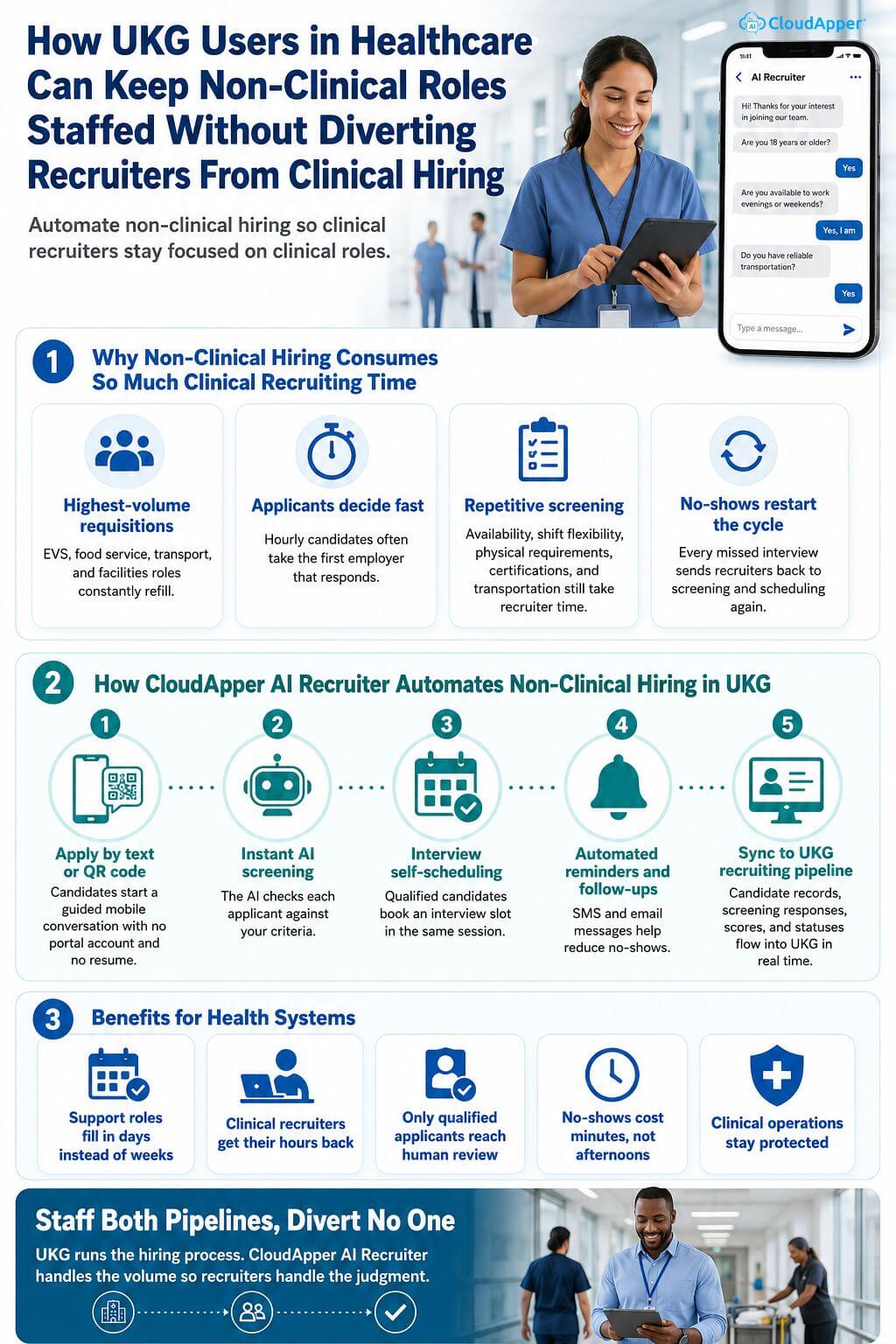
Step 1: Candidates Apply Through a Text or QR Code Conversation
Candidates start by scanning a QR code on a job posting, a flyer, or a community board, or by sending a quick text. The application runs as a short, guided conversation on their phone, with no portal account and no resume. For hourly applicants, that’s the difference between finishing the application on the bus and abandoning it at the login screen.
Step 2: The AI Screens Every Applicant Against Your Criteria Instantly
You configure the knockout rules for each requisition: availability windows, shift flexibility, physical requirements, certifications like a food handler card, and transportation. The AI applies them to every applicant identically, the moment they apply, at any hour. Applicants who don’t qualify receive a respectful automated response, and nobody on your team ever phone-screens them.
Step 3: Qualified Candidates Book an Interview Slot in the Same Session
Candidates who pass screening immediately see the time slots your recruiters have set as available and pick one right in the application flow. The applicant who was comparing five employers now has an interview with yours on the calendar minutes after applying, while everyone else is still queuing callbacks.
Step 4: The AI Sends Confirmations, Reminders, and Follow-Ups Automatically
Confirmations, reminders, and follow-up nudges go out automatically by SMS and email between booking and interview day, which cuts no-shows in a workforce known for them. When someone does no-show, the pipeline has already screened the next candidates, and your talent pool holds previously screened applicants you can re-engage for the next opening instead of starting from zero.
Step 5: Screened Candidates Sync Into Your UKG Recruiting Pipeline
Candidate records, screening responses, scores, and statuses flow into your UKG recruiting pipeline in real time. Your recruiters keep full control: they set the criteria, define the interview slots, and make every hiring decision inside UKG. Post-offer steps like background checks, health screenings, and immunization records follow your existing onboarding process as they do today.
Benefits of Automating Non-Clinical Hiring for Health Systems
Here’s what changes when the support-role funnel runs itself:
- Support roles fill in days instead of weeks, because screening and scheduling happen at the point of application.
- Clinical recruiters get their hours back for the RN, allied health, and physician requisitions where their skill actually changes who you hire.
- Only qualified applicants reach human review, with availability, certifications, and requirements settled at the application stage.
- No-shows cost minutes, not afternoons, thanks to automated reminders and a pre-screened talent pool ready behind every opening.
- Clinical operations stay protected, because when transport, EVS, and food service stay staffed, beds turn, trays arrive, and nurses stay on patient care.
Frequently Asked Questions
How Do Hospitals Hire Non-Clinical Staff Faster?
By removing the wait at every stage. CloudApper AI Recruiter lets candidates apply by text or QR code in minutes, screens them instantly against recruiter-set criteria, and books interviews in the same session, so qualified support-role candidates reach UKG within minutes of applying instead of days.
Can AI Screening Handle Certifications Like Food Handler Cards?
Yes. You configure certification requirements per requisition in CloudApper AI Recruiter, alongside availability, physical requirements, and other criteria. Applicants confirm their certifications during the screening conversation, and those who don’t meet a required criterion are filtered out automatically.
Does CloudApper AI Recruiter Replace Background Checks Or Health Screenings?
No. It automates application capture, screening, scoring, and interview scheduling. Post-offer requirements like background checks, health screenings, and immunization records continue through your organization’s existing onboarding and compliance process.
Does Automating Support-Role Hiring Take Control Away From Recruiters?
No. Recruiters define the screening criteria, set the available interview slots, and make every hiring decision inside UKG. The automation removes the repetitive collection and coordination work, not the judgment.
Staff Both Pipelines, Divert No One
Non-clinical healthcare hiring and clinical hiring were never supposed to compete for the same recruiter bandwidth, and automation ends the competition. UKG runs your hiring process and holds every candidate record. CloudApper AI Recruiter handles the volume so your recruiters handle the judgment. If your clinical recruiters spend their afternoons phone-screening food service applicants, book a demo of CloudApper AI Recruiter for UKG and see how much of that pipeline can run itself.



October 26, 2026
Candidate Disposition Automation in UKG Pro Recruiting: The Decision Layer Between the Requisition and the Hire
At a growing healthcare network, UKG Pro Recruiting handles posting and onboarding well, but screening, status changes and manager review pile up in the middle. This piece looks at 14 manual dispositions, missing drop-off data and clinical hiring managers, and how CloudApper adds a decision layer on top of UKG Pro Recruiting.
October 8, 2026
Multi-Round Interviews in UKG Pro Recruiting: Automating Executive Panel Scheduling for Fund Administrators
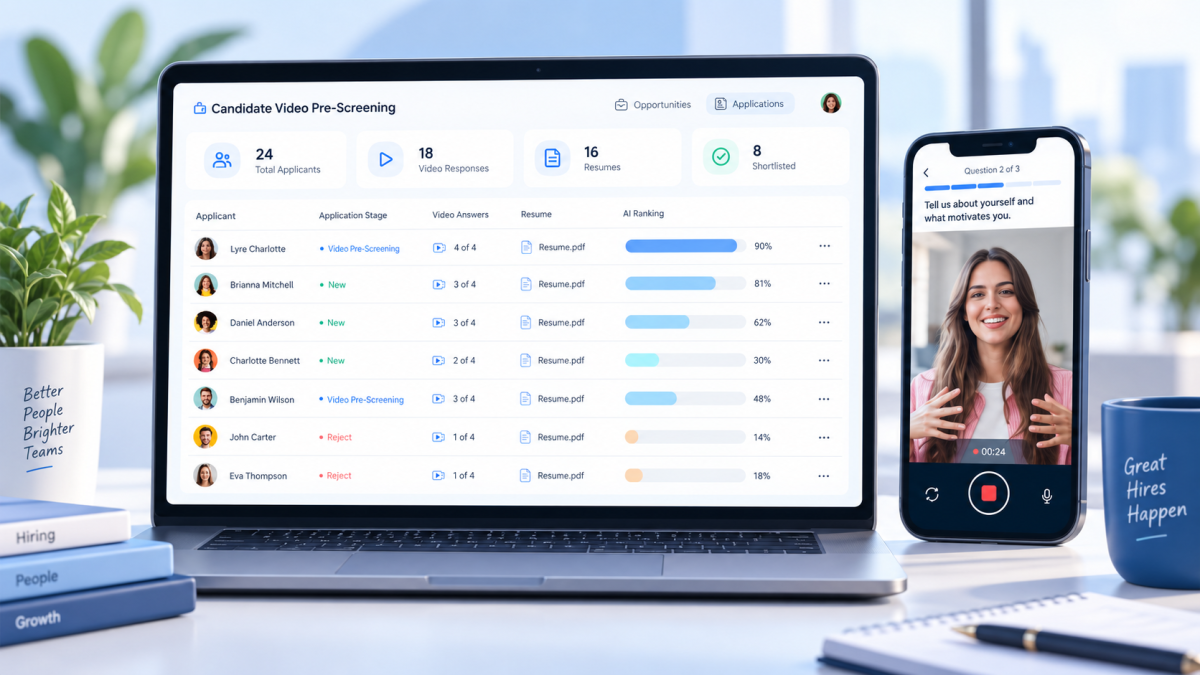
Senior hiring at a global fund administrator runs through many interview rounds and executive calendars across time zones. CloudApper AI Recruiter extends UKG Pro Recruiting to support every round, schedule executive panels through Outlook and Teams, and give recruiting leadership real-time KPIs on where each search stands.

September 15, 2026
One-Way Video Interviews in UKG: Know Who’s Worth Interviewing Before the Interview
UKG video interviews let shortlisted candidates record answers on their phone, on their own time, so recruiters hear from a real person before booking any interview. The step runs alongside UKG Pro Recruiting or UKG Ready, and the ratings, transcripts, and recordings write back to the applicant record.

September 9, 2026
License-Based Onboarding in UKG Ready: Assigning Broker Forms by Line of Authority
An insurance brokerage's obligations start the moment a broker's hire record is created. Here is why license and location should decide each new broker's onboarding forms in UKG Ready, and how CloudApper derives that path from license data instead of relying on a choice among twenty static checklists.