UKG users often struggle with job role visibility across locations. This story shows how hrPad helped one manager automate role tracking, streamline reporting, and make smarter staffing decisions.



Lisa Davis wasn’t new to workforce challenges. As an operations manager overseeing a multi-site retail chain, she had mastered everything from staffing logistics to schedule adjustments on the fly. But there was one issue she couldn’t solve with experience alone—Job Role Reporting in UKG. Every Monday, Lisa’s HR team wrestled with spreadsheets and exports to address what should have been a simple task: understanding which job profiles were used most across locations. The lack of real-time visibility and manual effort required exposed a deeper flaw in Job Role Reporting in UKG—it wasn’t built for dynamic environments where employees moved fluidly between roles.

Every Monday, Lisa’s HR team wrestled with UKG Pro to figure out a basic operational question: “Which job profiles are used most in each location?” They could pull the assigned job roles from the system, yes—but that didn’t reflect how those roles were actually functioning in the field. Employees rotated between multiple positions. Some were cross-trained; others filled in during peak hours. The system knew what they were supposed to do—not what they actually did.
UKG’s reporting tools offered a static view. They could assign roles, but couldn’t dynamically rank them based on real-world usage. So the team would resort to exporting data into spreadsheets, trying to tally up which positions were used most often. It was messy, manual, and hours-consuming.
To make things worse, the exported data wasn’t always reliable. Some employees would clock in under the wrong role. Others would switch roles mid-shift, and there was no clean audit trail to reflect that. Lisa realized she wasn’t just chasing data—she was building assumptions off incomplete information.
That’s when a colleague introduced her to hrPad.
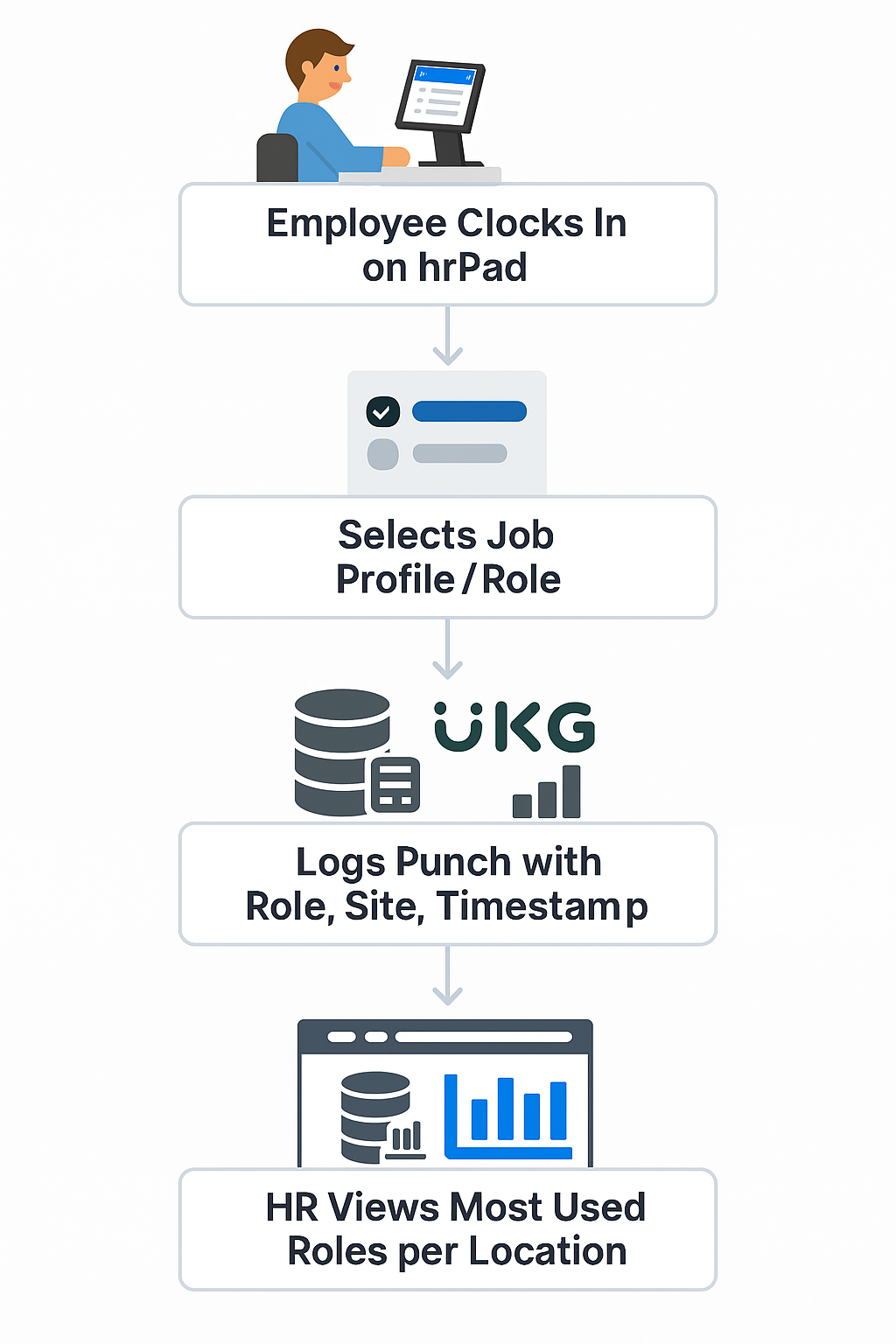
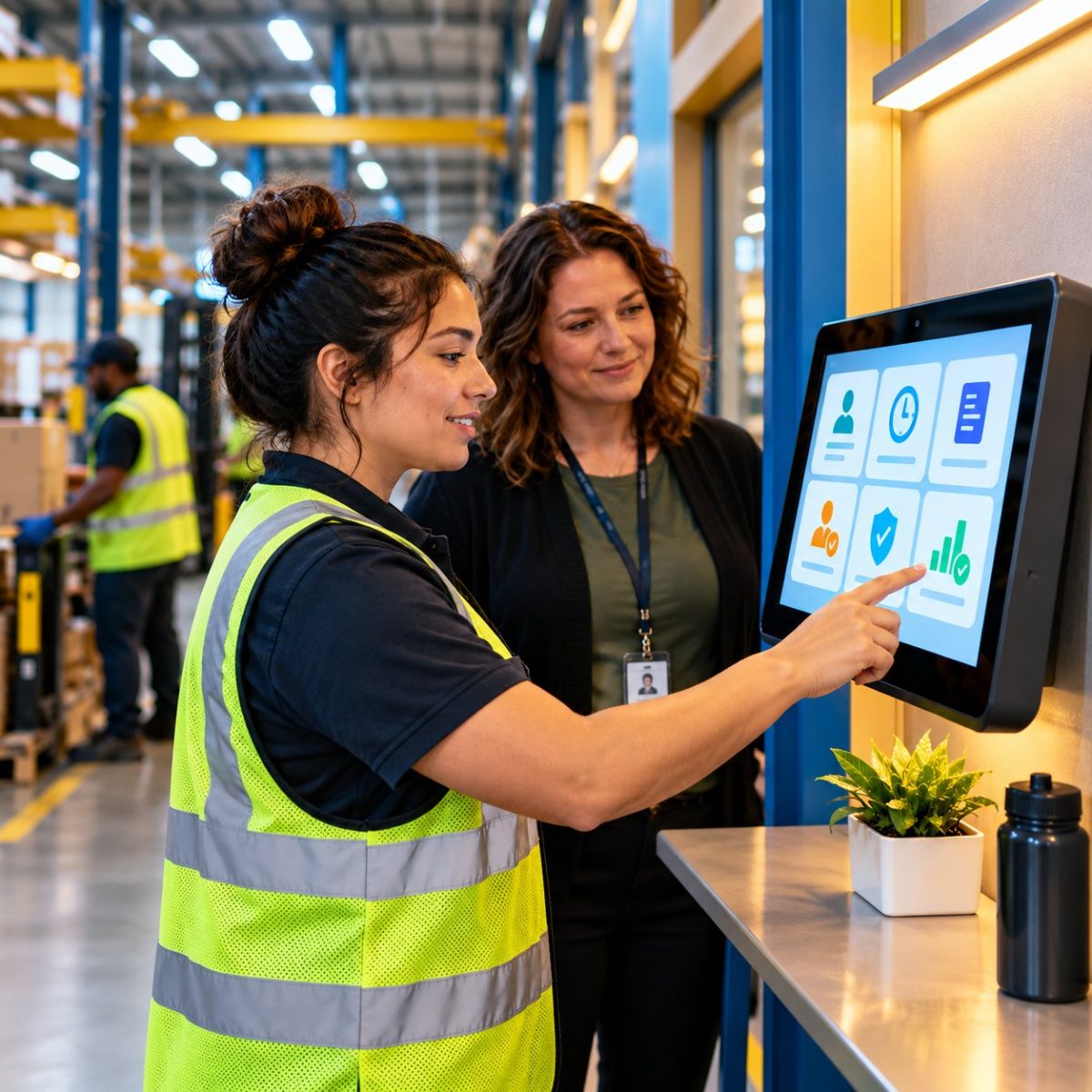
At first, Lisa assumed hrPad was just another time clock app. But within a few minutes of exploring it, she saw something different. hrPad didn’t just replace the physical time clock—it redefined it.
Employees could select their job profile at the point of clock-in, and hrPad would log that selection along with the employee’s location, timestamp, and even shift type. This wasn’t passive data—it was live interaction metadata, captured right where it happened.
The transformation began almost immediately. Within the first week, Lisa’s team had accurate logs of which roles were being selected in real time. By the second week, hrPad’s dashboard displayed usage trends—showing the most used job roles per location and per shift type. Suddenly, Lisa didn’t need to request custom reports or run pivot tables. The answers were in front of her.
Here’s a snapshot of how things changed for her team:
| Before hrPad | After hrPad |
|---|---|
| Hours spent exporting job role data from UKG weekly | Zero manual exports needed |
| Unreliable role usage data based on assignments | Live role selection logs at clock-in |
| No way to rank most-used job profiles per location | Automated dashboards displaying usage trends |
| HR manually tracking shifts and correcting errors | System-driven tracking with compliance checks |
What impressed Lisa most wasn’t just the efficiency—it was the clarity. She could now walk into any store, pull up a simple report, and see which job roles were used most often over the past week. That insight helped her rebalance staffing, optimize training focus, and reduce scheduling conflicts.
Her district leads were equally thrilled. Instead of guessing which departments were overloaded or understaffed, they had hard data to back every shift adjustment. The team moved from reactive to proactive in a matter of weeks.
Lisa often says the change didn’t come from replacing UKG. It came from extending it. hrPad filled a gap that UKG wasn’t built to handle—real-time, on-the-ground decision data. And it did so without disrupting the system they already trusted.
Today, Lisa can answer that once-frustrating question—“Which job profile is most used?”—in seconds. Not because UKG suddenly changed. But because hrPad brought visibility to what was already happening.
And that, as she’ll tell you, changed everything.


October 13, 2026
Paperless HR for Rural Hospitals on UKG: Extending One Kiosk to Documents, E-Signatures and Benefits Data
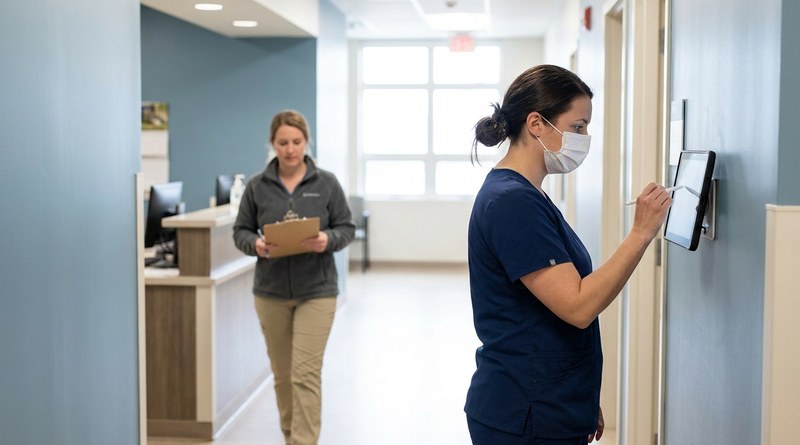
A rural hospital using CloudApper hrPad as its UKG time clock still handled much of HR on paper. Its next step is extending the same kiosk to documents, e-signatures and transfers, with CloudApper iPaaS moving benefits data to providers, all within network rules that block external AI services.

October 7, 2026
Shared Tablet SSO in UKG: One Time Clock for Every Login Type
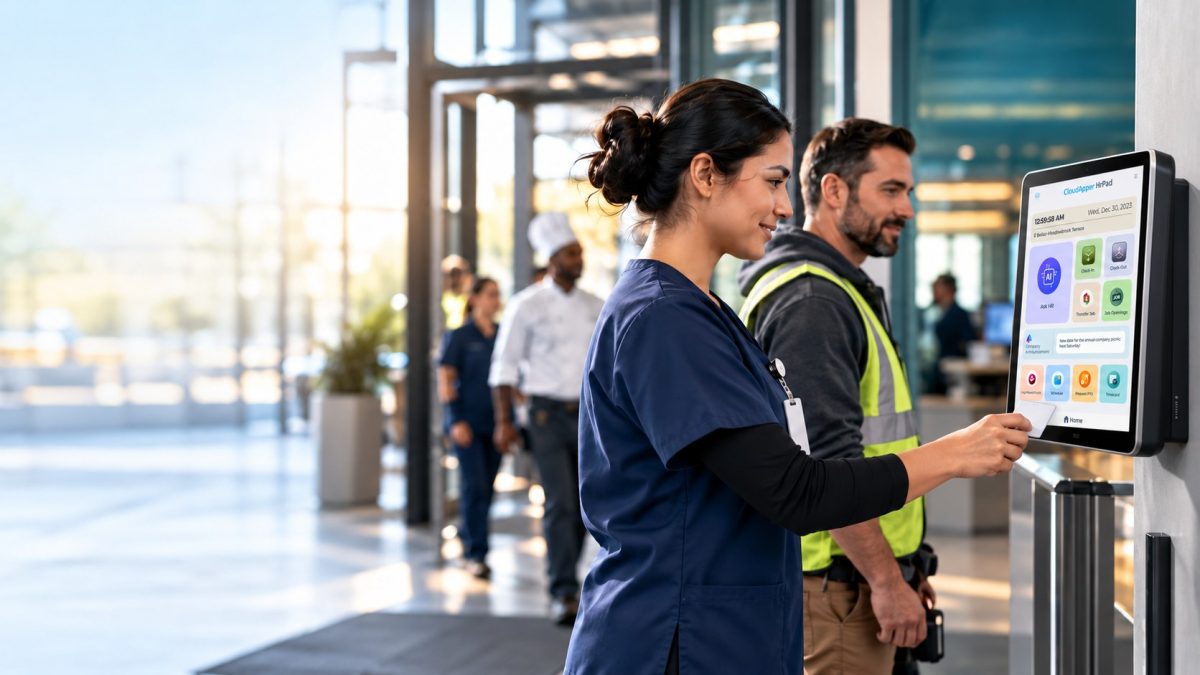
Hourly staff on basic UKG logins and managers on SSO can share one tablet time clock without login mix-ups. This guide explains each login type in plain English, compares three shared-tablet setups and shows how hrPad by CloudApper AI makes it work.
October 5, 2026
Why Is My Paycheck Wrong? Tracing UKG Payroll Errors to Six Upstream Causes
Most UKG payroll questions start upstream of payroll: in employee details, attendance, deductions, approvals, compliance or reconciliation. hrPad by CloudApper AI catches each one at the time clock.


October 2, 2026
Offline Self-Service in UKG Ready: How Requests Queue and Sync
Frontline sites with little or no internet leave employees unable to reach HCM self-service. With offline self-service, CloudApper AI's hrPad lets workers submit requests from any iPad or Android tablet, keeps the time each request was made, and syncs it to UKG Ready for HR approval once connected.