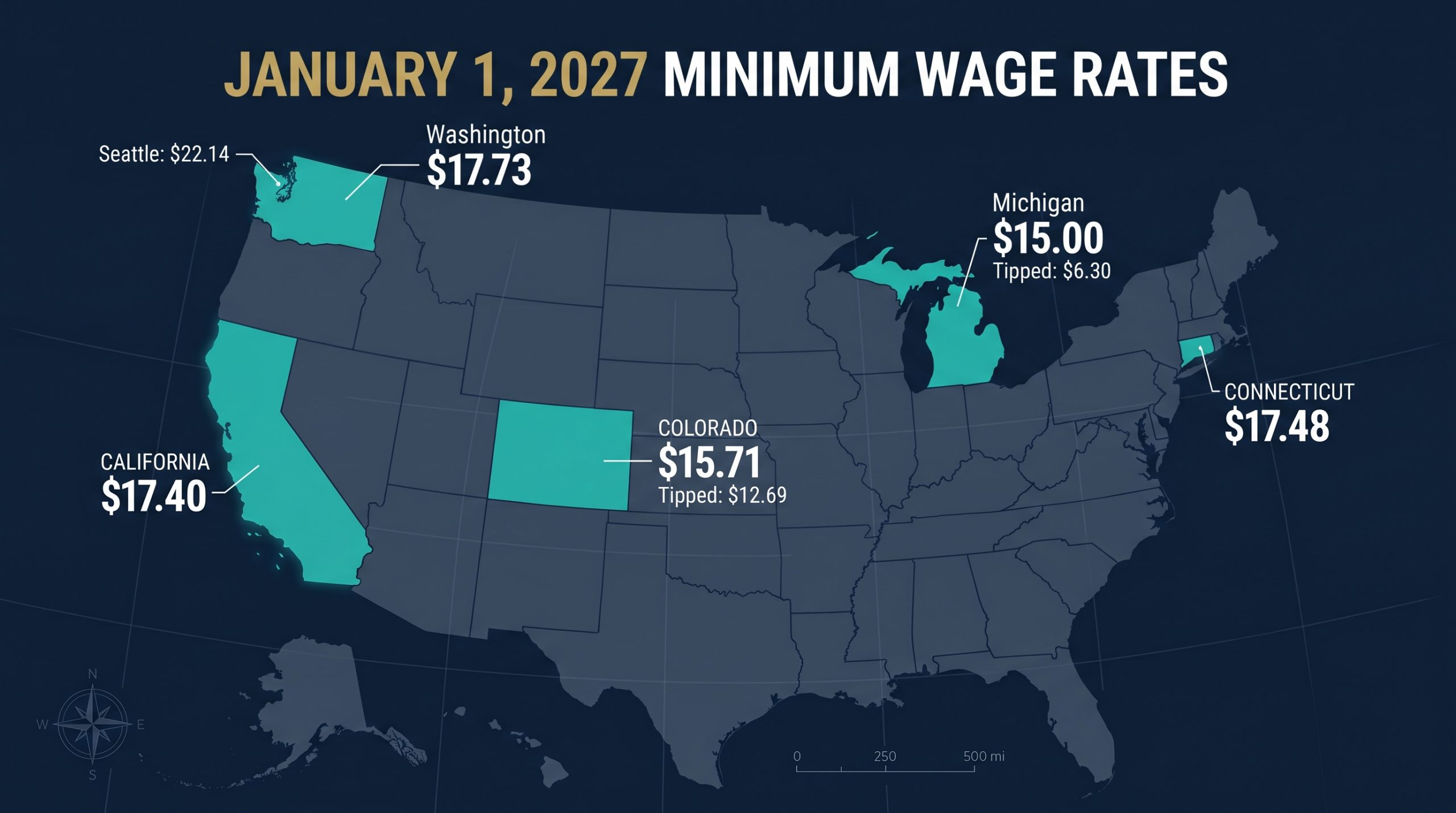
Minimum wage rises on January 1, 2027 in Washington, California, Connecticut, Colorado, Michigan and Seattle. This dated UKG runbook shows what to map, load, test and verify, from November through the first payroll of the new year.



Table of Contents
- What changes on January 1, 2027
- By November 20: map every employee to a work location
- By December 4: find who falls below the new floor
- By December 14: load rates and test them
- Week of December 21: test the pay period that crosses January 1
- December 28 to January 1: freeze, notify and brief
- January 1 to 8: check the first punches and the first register
- By January 15: audit and keep the evidence
- Who owns which step
- Where hrPad by CloudApper AI fits in the cutover
- Frequently asked questions
- Want a second set of eyes on your January cutover?
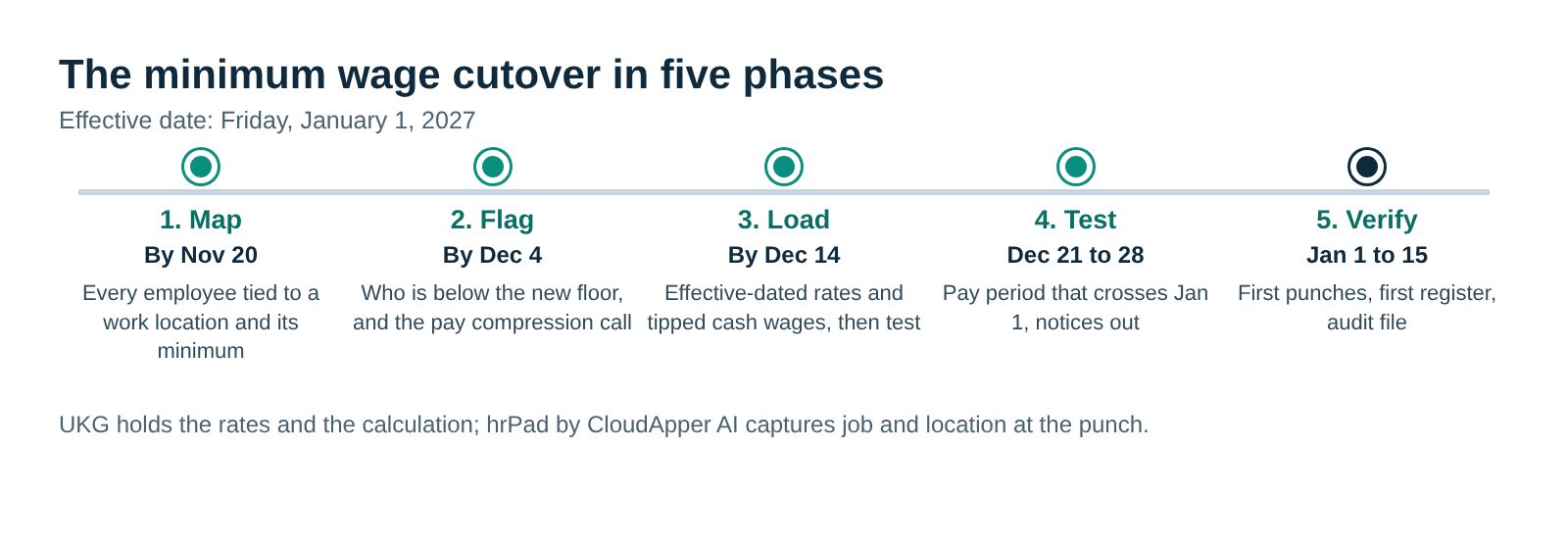
When the minimum wage rises on January 1, 2027, payroll has to move from last year’s rates to the new ones on exactly that date. That switch is the minimum wage cutover, and in 2027 the date is a Friday. For UKG customers it comes down to five jobs in order: map every employee to a work location, find who falls below that location’s new minimum, load the new rates with an effective date of January 1, test a pay period that crosses the date, and check the first register before anyone is paid. This checklist puts each job on a calendar.

Rates last checked October 28, 2026. Several cities and states announce their figures late in the year, so confirm each one with the agency before you load it.
Cutovers usually go wrong when a correct rate lands on the wrong person, site or day. A server who covers a shift in a higher-wage city, an employee whose home location is in another state, or a pay period that starts in December and ends in January will all slip through a rate table that looks perfect.
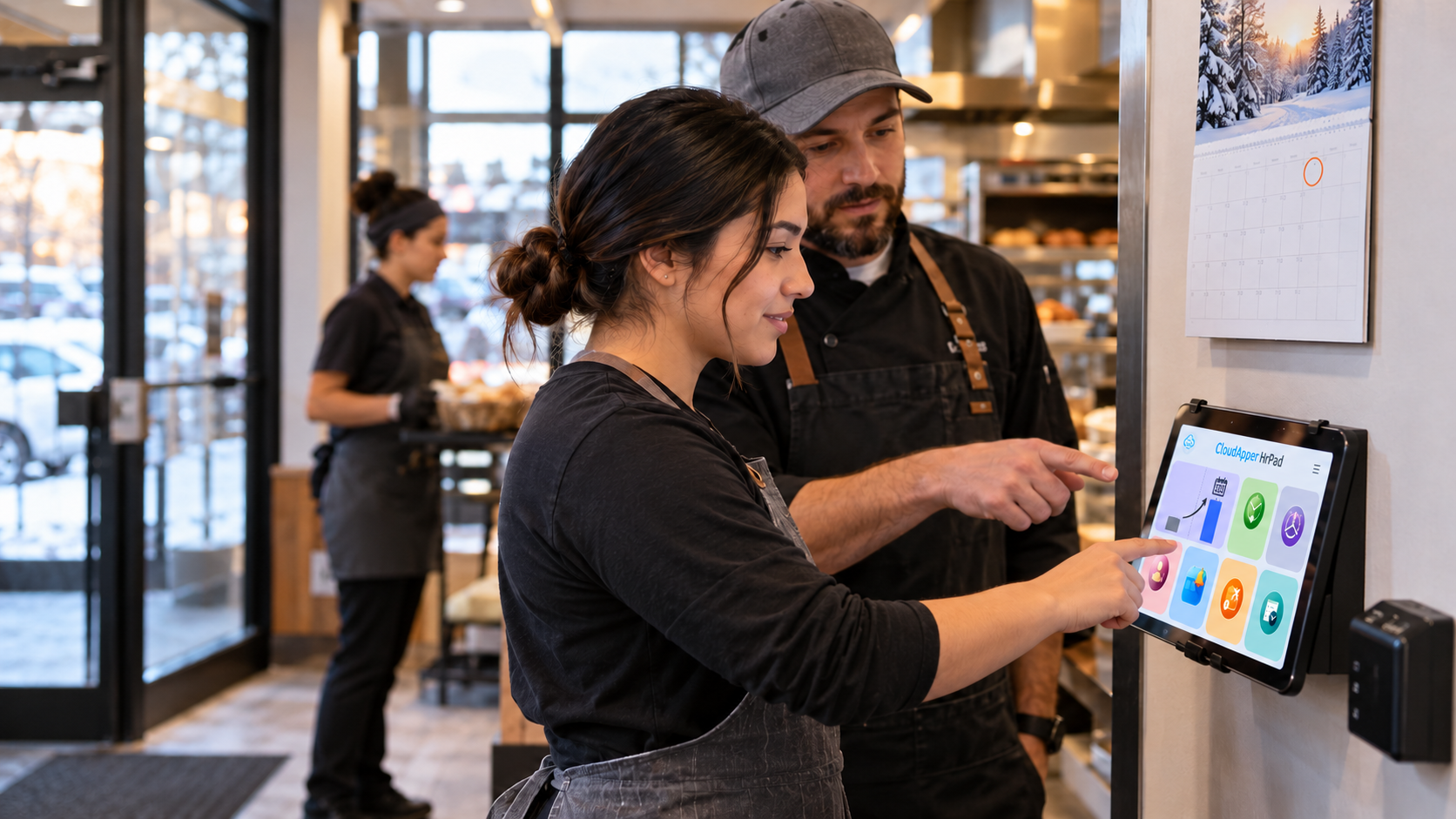
This is where hrPad by CloudApper AI comes in. hrPad is a time clock and self-service kiosk that runs on tablets you already own and syncs with UKG. At the punch it can ask the employee which job and which location they are working, so hours land under the site whose minimum applies. UKG still owns the rates and the pay calculation. hrPad makes sure the information feeding them is right from the first punch of the year.
What changes on January 1, 2027
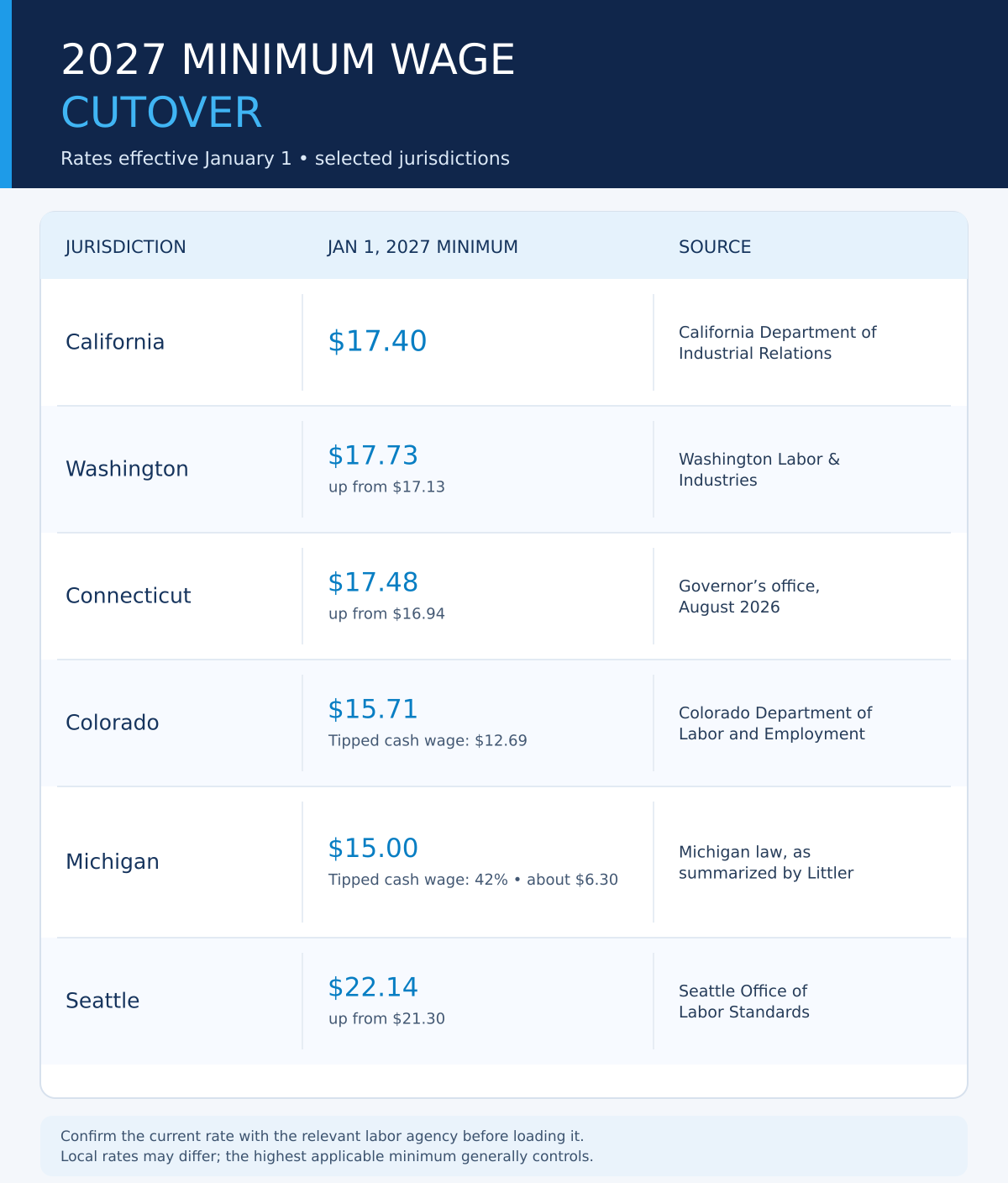
The federal minimum stays at $7.25, so the state or city figure sets the floor where it is higher. These are the rates we could confirm from agency and city announcements:
Where a city sets a higher minimum than its state, the higher one applies to work done inside the city. The Employers Council reports $19.84 for Denver in 2027. Your list will have more rows than this table does, so build it from your own locations.
By November 20: map every employee to a work location
List every state, county and city where someone works for you and write down the January 1 minimum for each. Then check how UKG knows where each person works. If the answer is a home location set at hire, the rate table will be wrong for anyone who picks up shifts elsewhere. Decide now how work location will be captured, and turn on the job and location prompt at the punch for sites that share staff.
By December 4: find who falls below the new floor
Run a pay-rate report by location and filter to anyone under the 2027 minimum. You will find employees sitting at last year’s floor, mid-year hires brought in at the old rate, and people paid by a pay code that still points to an old number. Raising only those people squeezes the gap with coworkers just above them, so decide at this point whether you will adjust those rates too, and get the budget approved while there is still time.
By December 14: load rates and test them
Load each new rate as an effective-dated change for January 1, 2027, not as an edit made on the day payroll runs. Update tipped cash wages in the same pass. Colorado’s becomes $12.69, and Michigan raises its tipped share from 40% to 42% of the minimum, about $6.30 on a $15.00 floor. Then test. Use a test environment if you have one, or a small pilot group if you do not, and compare what UKG calculates with a hand calculation. We would rather find a bad rate on December 14 than in the register on January 7.
Week of December 21: test the pay period that crosses January 1
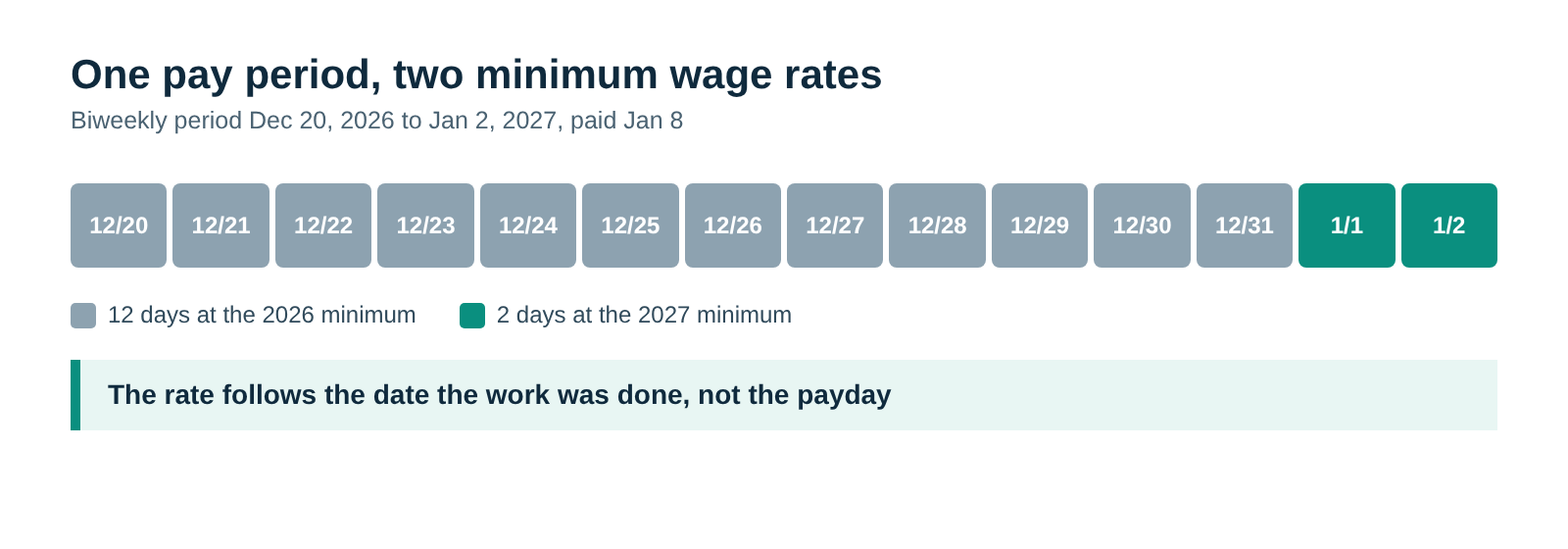
Take a biweekly period that runs December 20 through January 2 and is paid January 8. It holds twelve days at the old rate and two at the new one. The new minimum generally follows the date the work was done, not the date of the check, so hours worked January 1 and 2 need the new rate even though the payday comes later. Confirm the exact rule for each state with its labor agency or your counsel.
Two mistakes show up here. A rate keyed to the pay date underpays the first two days. A rate keyed to the period start overpays the whole period. Run one employee through the period, in each jurisdiction you cover, and check both ends.
December 28 to January 1: freeze, notify and brief
Stop non-essential rate edits so the test results still hold. Send affected employees their new-rate notice, and keep a record that they got it. Some states and cities require a notice, and the kiosk is a practical place to deliver one to frontline staff, which we cover in our guide to pay rate change notice acknowledgments in UKG. Brief site managers on what employees will ask on the first day.
January 1 to 8: check the first punches and the first register
On January 1 and 2, spot-check timecards from each location: is the right job and site on the punch, and is the new rate attached? Before the January 8 payroll closes, review the register by jurisdiction and look for anyone paid under the floor, including tipped employees whose cash wage plus tips falls short for the period. Fixing it before the checks go out is easier than correcting it afterward.
By January 15: audit and keep the evidence
Compare a sample of the first payroll against your rate map. Keep the map, the test results, the notices and the register review in one folder. If an agency asks how you handled the change, that folder is your answer.
Who owns which step
Where hrPad by CloudApper AI fits in the cutover
Most of this plan lives in UKG and with your payroll team. hrPad covers the edge where hours are captured. It puts the job and location question on the punch screen, can add an attestation at clock-out where your policy calls for one, and shows employees a notice at the kiosk they already use. After January 1, when schedules shift and people cover for each other, that keeps the rate map accurate.
This article is general information based on publicly available announcements, not legal or tax advice. Rates and rules differ by jurisdiction and can change. Confirm them with the relevant labor agency, your payroll provider or counsel.
Frequently asked questions
What is a minimum wage cutover in payroll?
It is the switch from the old minimum wage rates to the new ones on the date they take effect. In payroll it means loading new rates with an effective date, checking who falls below them, and testing the first pay period that spans the date.
How do I update the minimum wage in payroll?
Load each new rate as an effective-dated change for January 1, 2027, update tipped cash wages and any pay codes tied to the old minimum, then test a pay period that crosses the date against a hand calculation before the first 2027 payroll. How you do this in UKG depends on your product and setup, so confirm the steps with your UKG representative.
When should I start preparing for January 1, 2027?
By mid-November. That leaves time to map locations, find employees below the new floor, load rates by mid-December and test a pay period that crosses the date before the first 2027 payroll.
What is the minimum wage on January 1, 2027?
The federal minimum stays at $7.25. Washington is $17.73, Connecticut $17.48, California $17.40, Colorado $15.71, Michigan $15.00 and Seattle $22.14. Employers must pay the highest minimum that applies where the work is done.
Do I pay the new minimum wage for the whole pay period?
Generally, no. Hours worked before January 1 are paid at the old rate and hours worked on or after it at the new one, regardless of the payday. Check each state’s rule and test a straddling period before running live payroll.
Does UKG update minimum wage rates automatically?
UKG applies the pay rates and rules you configure. Whether a rate or pay table updates for you depends on your UKG product, version and setup, so confirm it with your UKG representative and test it before the first 2027 payroll.
How does hrPad by CloudApper AI help with the cutover?
hrPad captures the job and work location at the punch, so hours are tied to the site whose minimum applies, and it can show employees a new-rate notice at the kiosk. The rates and pay calculation stay in UKG.
Want a second set of eyes on your January cutover?
Contact CloudApper and we will review how pay rates, locations and notices run in UKG today, tell you what to change before January 1, and show you where hrPad by CloudApper AI can help.



October 23, 2026
No Tax on Overtime: What It Means for Your UKG Payroll
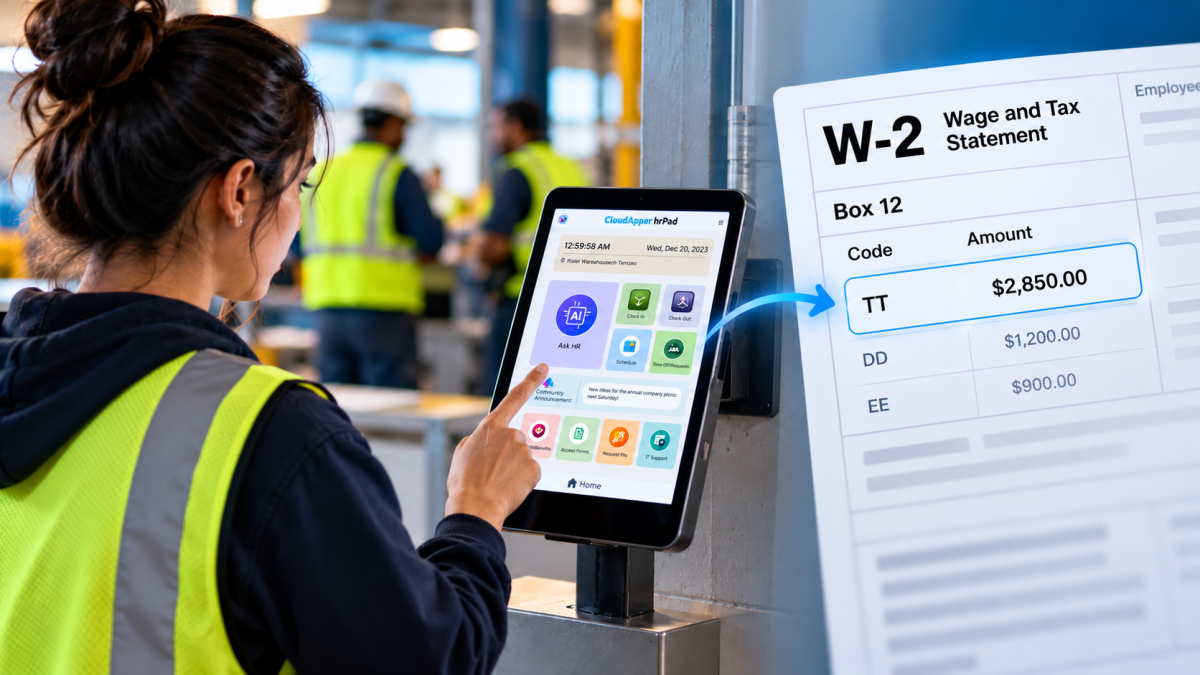
Starting with 2026 wages, employers using UKG must report qualified overtime in W-2 Box 12 (code TT), and only part of the overtime you pay counts. hrPad by CloudApper AI helps capture the details at the time clock.


October 23, 2026
Barcode Labor Tracking on UKG Ready: Two Clocks, One Labor Record, and an ERP-Validated Hierarchy
Some plants keep attendance on the clocks at the door and capture job labor at the workstation. This piece looks at that two-clock model on UKG Ready: scan-only capture for gloved operators, work orders validated against the ERP, and how CloudApper adds that layer using the PCs and scanners already on the line.
October 13, 2026
Paperless HR for Rural Hospitals on UKG: Extending One Kiosk to Documents, E-Signatures and Benefits Data
A rural hospital using CloudApper hrPad as its UKG time clock still handled much of HR on paper. Its next step is extending the same kiosk to documents, e-signatures and transfers, with CloudApper iPaaS moving benefits data to providers, all within network rules that block external AI services.

October 7, 2026
Shared Tablet SSO in UKG: One Time Clock for Every Login Type
Hourly staff on basic UKG logins and managers on SSO can share one tablet time clock without login mix-ups. This guide explains each login type in plain English, compares three shared-tablet setups and shows how hrPad by CloudApper AI makes it work.