Construction crews that earn per diem by the night raise a finance question: who declares that a night qualifies, and when does that stop being editable? This piece frames the decision for Controllers and VPs of Finance running UKG Ready.




Table of Contents
- Four Facts Behind One Night
- Why the Superintendent’s Screen Matters
- The Hard Stop Is a Policy, Not a Setting
- Work Moves Faster Than Paperwork
A regional commercial concrete contractor pays its field crews for more than hours. Employees who work more than 75 miles from their assigned home office earn per diem by the night, at one of two position-based rates, and they can take a drive-time stipend instead of a hotel. For a Controller or VP of Finance the arithmetic is the easy part. The harder question is who declares that a night qualifies, and at what moment that declaration stops being editable. CloudApper approaches it from the field, with CloudApper Crew Punch for UKG on shared iPads that extend UKG Ready.
Four Facts Behind One Night
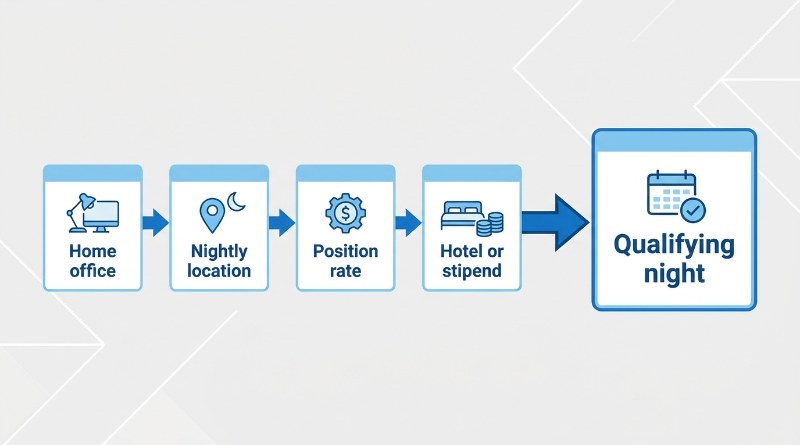
A qualifying night rests on four facts: the employee’s assigned home office, where they worked and stayed, their position, and whether they chose a hotel or the stipend. The VP of Finance put the rule plainly:

“Per diem is paid by the night so someone staying Monday to Friday would be paid 4 nights per diem. This would be over 75 miles from the employee’s home office. There are two rates depending on the employee’s position.”
VP of Finance, regional concrete contractor
The first fact sits in HR records. The others are known in the field. UKG Ready applies the rates, so what it needs is a clean eligibility value for each night. CloudApper sends per diem and drive-time stipend eligibility to UKG Ready as counters or cost-center values, and UKG Ready applies the rates, the same counter pattern described in how a trucking company feeds pay counters from a mobile record.
Why the Superintendent’s Screen Matters
Crew members clock in on whichever authorized iPad is nearest, so approval cannot assume one device per person. The HR Manager listed the requirement as “Approving time for employees on assigned jobs (jobs assigned to Superintendents, employees can clock in anywhere … need to be able to filter by device and/or Job/Superintendent).” That filter is also where the facts about a night come together.
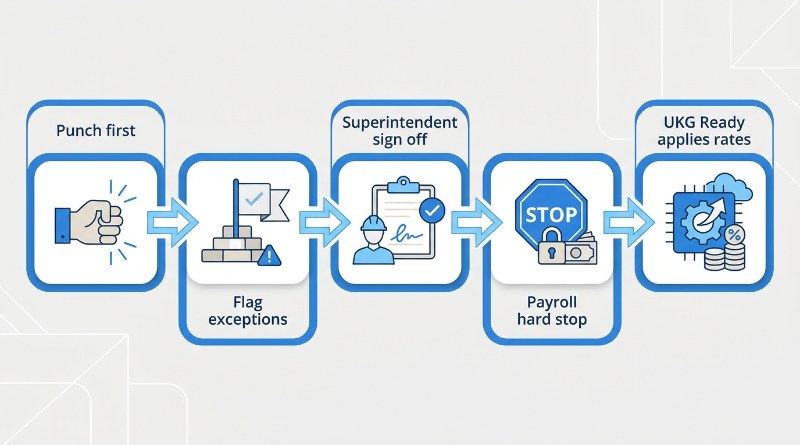
In CloudApper’s field capture, the punch happens first, any exception is flagged and cleared by the superintendent, the superintendent signs off the time, and only signed-off time moves to UKG Ready. The hardware side is covered in iPads as a construction time clock.
The Hard Stop Is a Policy, Not a Setting
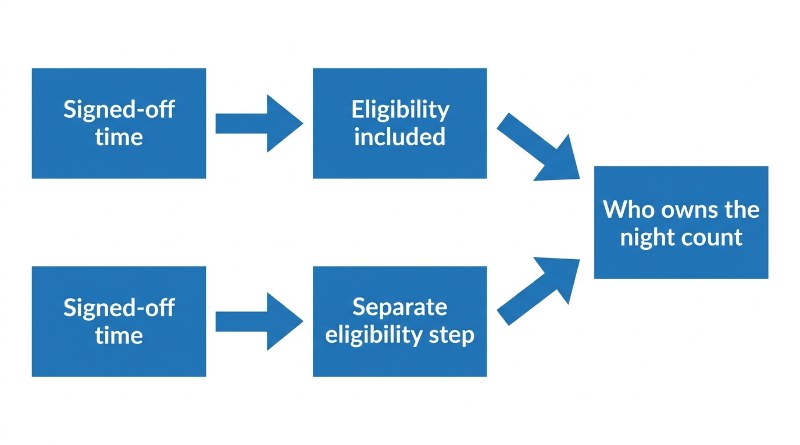
Payroll locks timecards before processing. If per diem eligibility travels with the signed-off record, the hard stop covers it without extra effort. If eligibility is treated as a later payroll adjustment, someone has to own that exception and the evidence behind it. Neither choice is wrong. The finance decision is which one the organization means, because it sets who is accountable for the night count.
Work Moves Faster Than Paperwork
“So I’m out in the field and I needed, we started doing some change order work. I need this new phase set up so I can assign people to that phase… Like I just need this one phase added.”
VP of Finance describing a superintendent’s scenario, regional concrete contractor
Phases and jobs change in the field, sometimes weekly. Eligibility should follow the person and the night, not the phase, so a mid-week change does not rewrite who qualified. That is a design rule worth stating before any tool is chosen.
Questions for Your Next Payroll Review
Ask who in your organization declares that a night qualifies. Ask whether that declaration is part of the signed-off time or a separate step. Ask who can change it after the hard stop, and what evidence they must attach. CloudApper builds on UKG Ready through the CloudApper AI Platform for UKG, so the answers live inside the payroll process your team already runs.
If field crews and per diem rules put pressure on your UKG payroll close, the CloudApper team can walk through how field capture and eligibility counters would fit your environment. Start the conversation with CloudApper.


August 6, 2026
The Timekeeping Problems That Only Exist in a Field: How One of the World’s Largest Berry Producers Manages Crew Time and Productivity Bonuses Across Remote Operations in Multiple Countries Using UKG
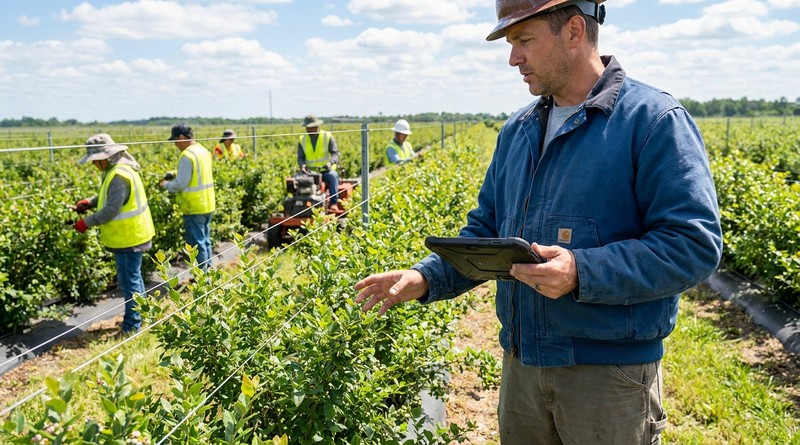
Agricultural field crews work without Wi-Fi, move as groups, and earn bonuses tied to harvest output across multiple countries. Here is how one of the world's largest berry producers solved all three challenges using UKG Pro WFM and CloudApper Crew Punch.
January 7, 2026
Understanding UKG/Kronos Roll Call: How AI-Powered Tablets Transform Group Time Tracking for Workforce Management
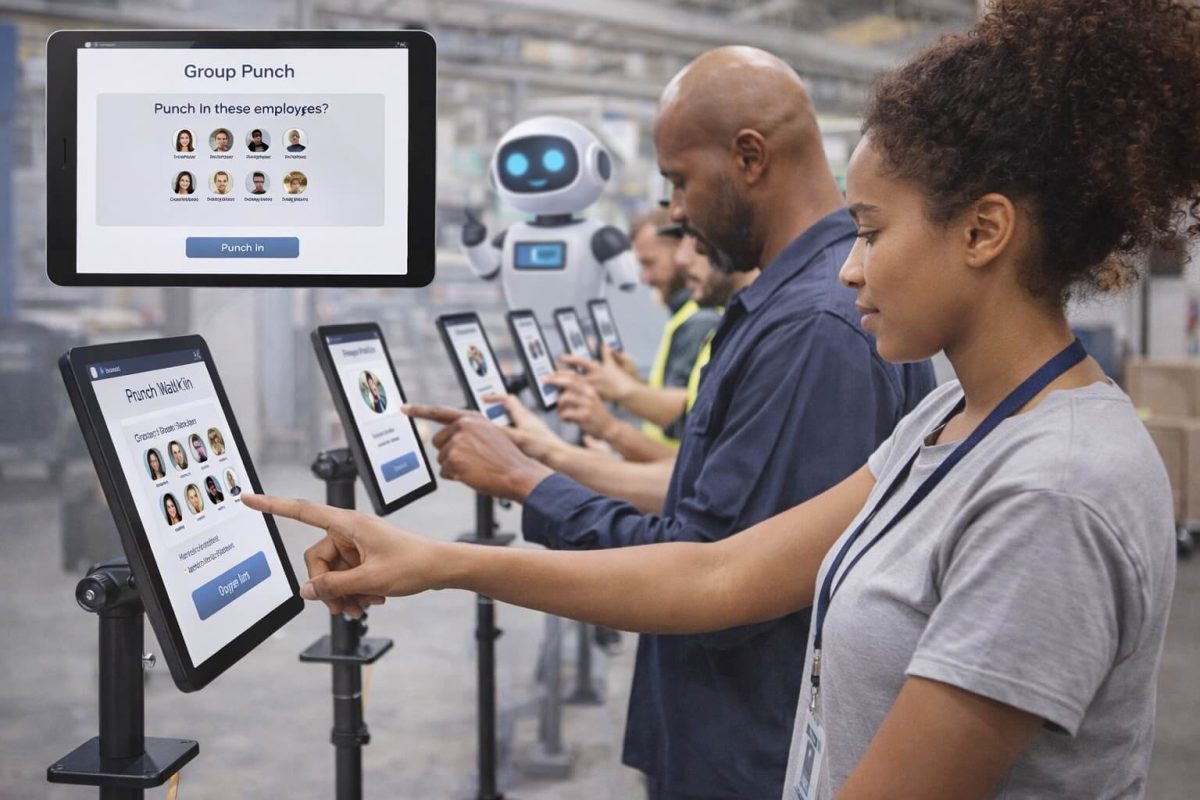
UKG/Kronos Roll Call enables rapid group attendance verification for emergencies and daily operations. CloudApper AI tablets supercharge UKG/Kronos Roll Call with secure one-tap group clock-ins, facial recognition, location controls, and instant UKG sync—delivering accurate muster reports, improved safety compliance, and operational efficiency.

December 26, 2025
Eliminating the Attendance “Blind Spot”: How UKG Customers Use CloudApper hrPad for Seamless Workforce Tracking
Many UKG customers struggle with tracking mobile workforces in transit. By deploying CloudApper hrPad with Group Punch, organizations can move attendance tracking from stationary clocks to mobile tablets. This ensures accurate, verified data from the moment workers leave their dormitory, eliminating "blind spots" and manual administrative bottlenecks in UKG.


April 18, 2024
Capture Group Punches Offline With Activity Transfers in UKG Pro WFM (Dimensions)
Easily capture group punches and job transfers offline with CloudApper AI. It integrates seamlessly with UKG Pro WFM (Dimensions) and enables supervisors to capture group punches and assign activities to employees offline, even in remote locations.