- What Are Pay Types and Pay Codes in UKG?
- How to Assign Paycodes to Employees for the Next Pay Period
- Automating Pay Code Assignment with CloudApper AI TimeClock
- Download: UKG Pay Codes Reference PDF
In UKG, pay types (also called pay codes or time codes) classify how worked or non-worked time is compensated — regular pay, overtime, vacation, medical leave, on-call, training, and similar categories. Managers assign paycodes for an upcoming pay period from the Hour Allocation portal under the Time menu. This guide explains the categories, the assignment steps, and how to automate pay code assignment.
What Are Pay Types and Pay Codes in UKG?
Pay Types, also known as pay codes or time codes, are crucial for managing employee schedules. They aid in the identification of instances in which personnel are unavailable, unable to work their assigned schedules, provided with special responsibilities, or involved in additional duties. Pay Types consist of the following categories: personal time, training, on-call responsibilities, vacation, medical leave, and overtime.

These Pay Types are automatically incorporated into an employee’s timecard when they are included in the schedule. Additionally, for an upcoming pay period, managers can assign an employee a Paycode to ensure that they are paid in accordance with the rules established for that period.
How to Assign Paycodes to Employees for the Next Pay Period
Here is how to assign Pay Types to employees in UKG Workforce Management for the next pay period.
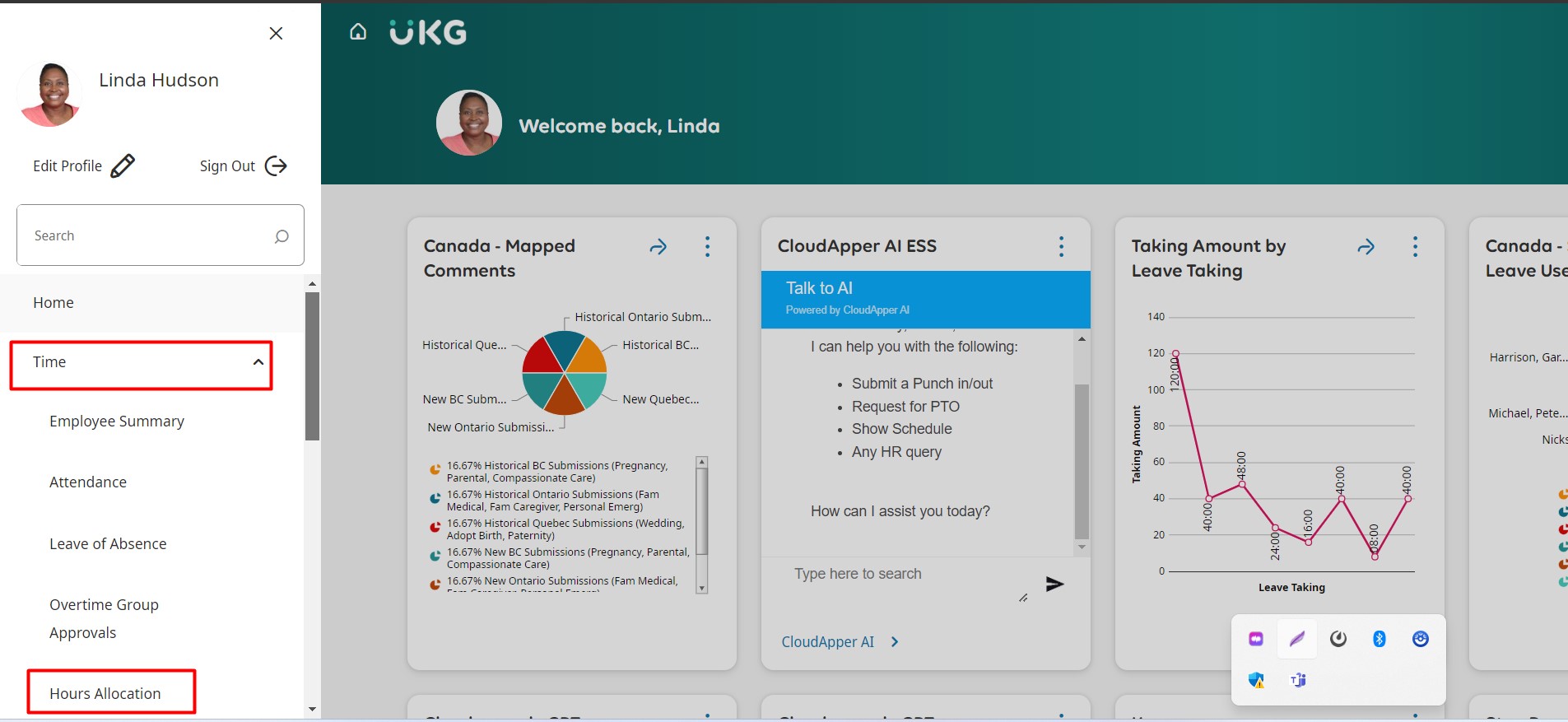
Navigate to the Hour Allocation option from the Time Menu to access the Hours Allocation portal. Here, you can efficiently assign Pay Types to any employee.
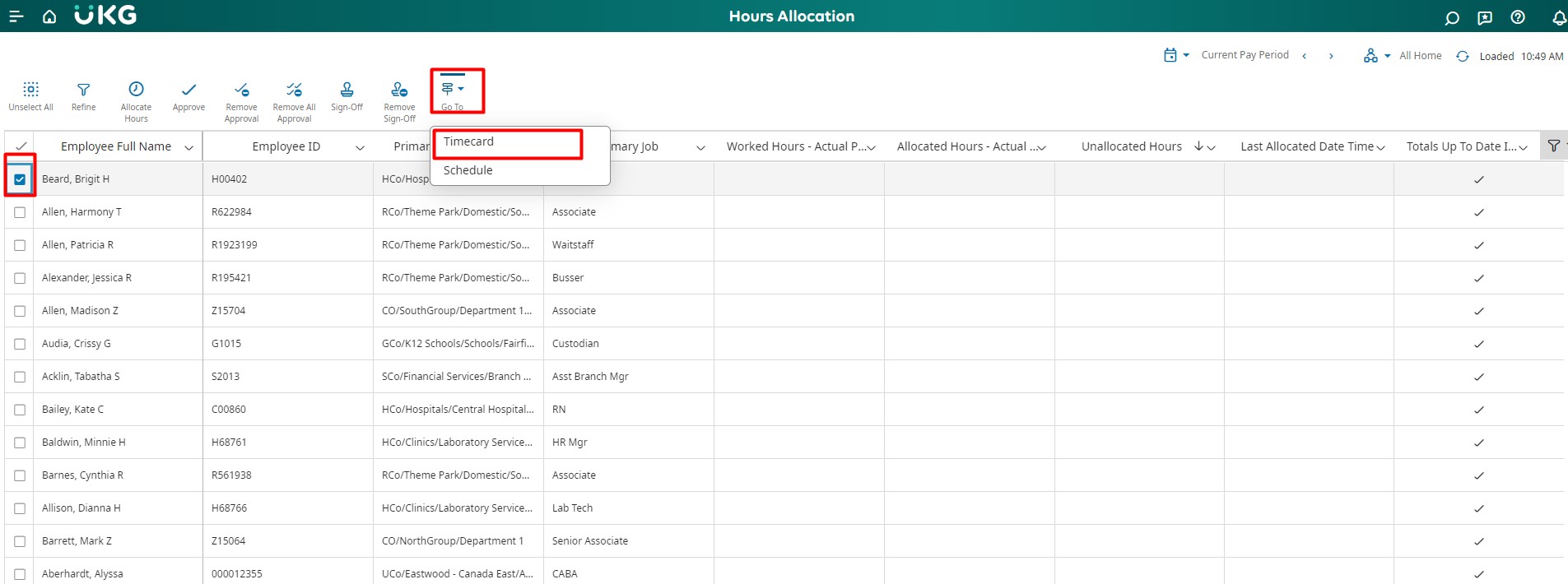
Choose the desired employee from the list. From the Go To Menu, opt for the TimeCard option.
Select the upcoming pay period from the Time Selection menu in the Employee Timecard portal. Pick a specific day from the calendar, triggering the appearance of the Add Paycode window.
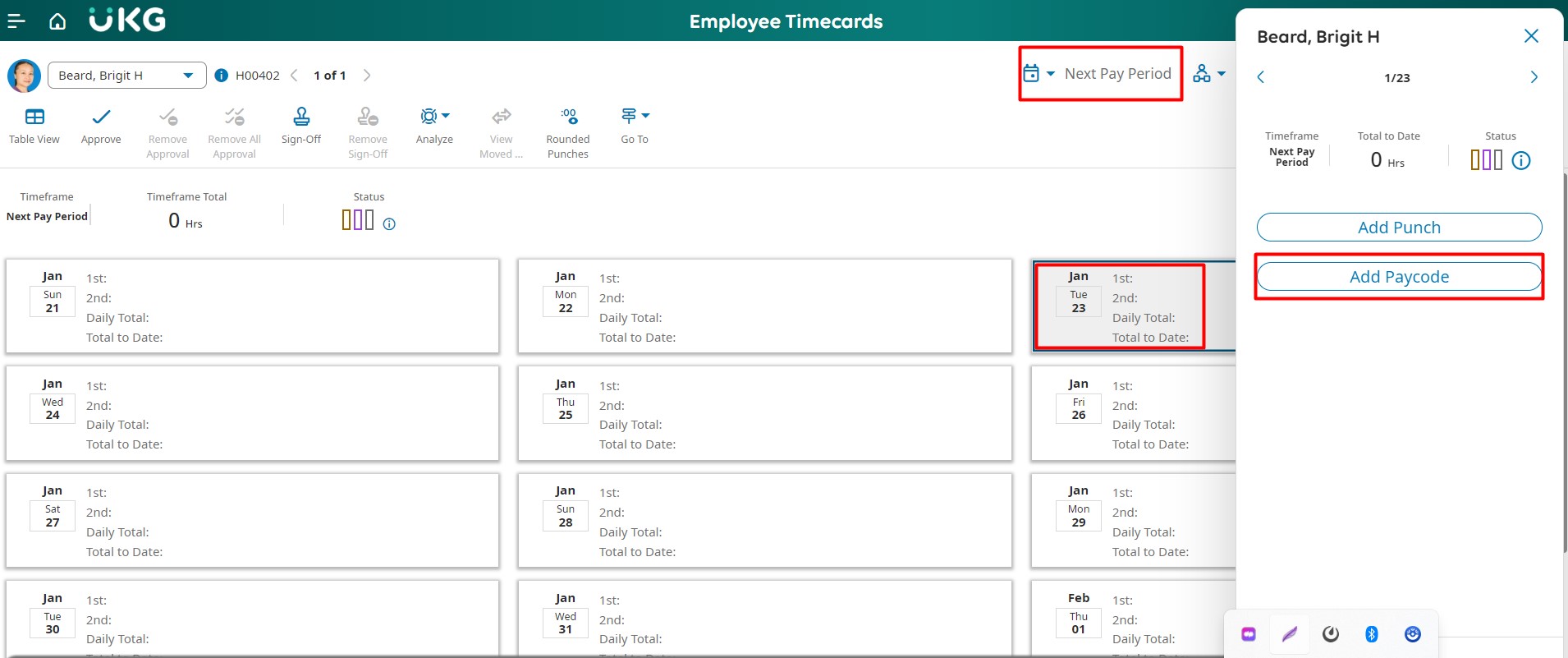
Click on the Add Paycode button within the window. Here, you can designate the preferred Paycode and allocated hours and time. Upon completion, hit the Apply button to save the assigned Paycodes and allocated hours.
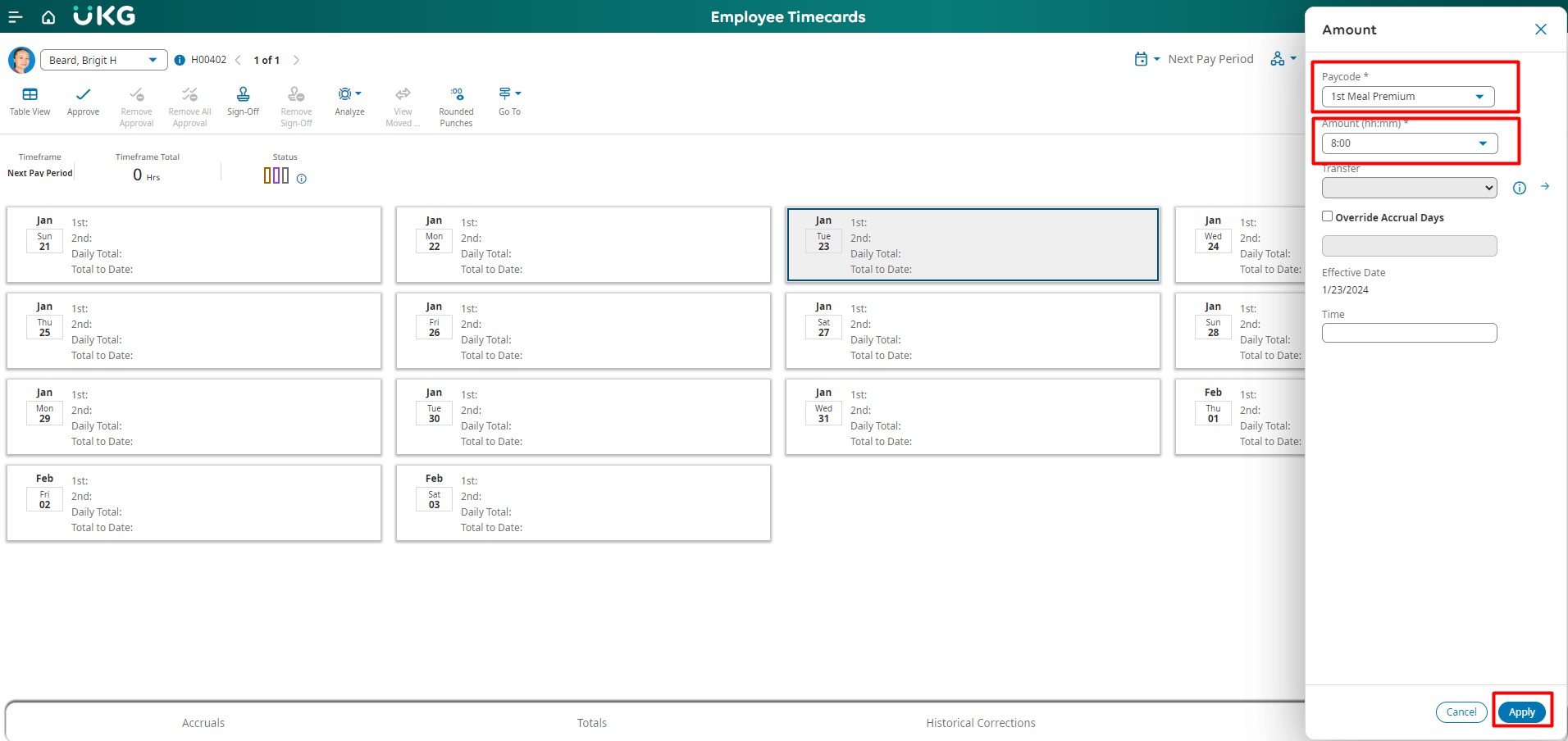
These straightforward steps streamline the process of assigning Pay Types to employees in UKG Workforce Management.
Automating Pay Code Assignment with CloudApper AI TimeClock
Manual paycode assignment scales poorly — every shift variation, site, and role multiplies the clicks. CloudApper AI TimeClock automates it inside UKG Pro WFM/Kronos Dimensions in three ways: custom workflow automation assigns pay codes automatically based on shift, task, or job role; geo-fencing assigns location-based pay codes when employees clock in at different sites; and task selection at the clock lets employees pick their task or role, which applies the corresponding pay code to that time. Centralized pay code data and real-time updates mean payroll calculations always run on current, accurate information — reducing errors and the administrative burden on HR.
Download: UKG Pay Codes Reference PDF
Want the quick version at your desk? Download the free UKG Pay Codes Reference PDF — a one-page cheat sheet covering the common pay code categories, where they are configured, and the assignment steps.
FAQ: UKG Pay Types and Pay Codes
What is the difference between a pay type and a pay code in UKG?
The terms are used interchangeably in UKG – pay types, pay codes, and time codes all refer to the classification applied to time so it is paid correctly, such as regular, overtime, vacation, medical leave, on-call, or training.
How do I assign a paycode to an employee in UKG for the next pay period?
Go to the Time menu and open Hour Allocation, choose the employee, select TimeCard from the Go To menu, pick the upcoming pay period and day, click Add Paycode, set the paycode, hours, and time, then click Apply.
Do pay codes appear on the employee’s timecard automatically?
Yes – pay types included in the schedule are automatically incorporated into the employee’s timecard. Manual assignment is for cases the schedule does not cover, such as special duties or upcoming-period adjustments.
Can pay code assignment be automated in UKG?
Yes. Solutions like CloudApper AI TimeClock automate pay code assignment based on custom workflows, clock-in location via geo-fencing, or the task the employee selects at the clock, posting the result to UKG Pro WFM/Kronos Dimensions.