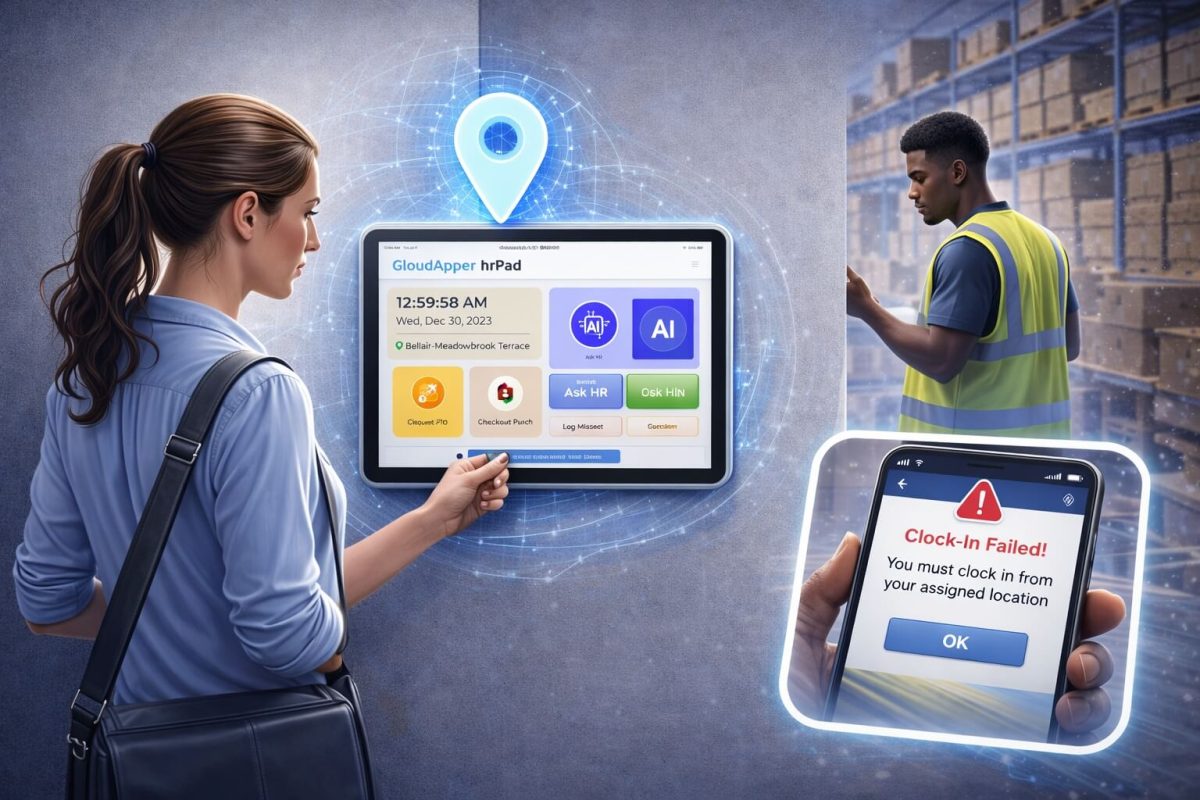

Hospitality shift scheduling problems create missed shifts, stressed managers, and higher labor costs. This article explains why chaos happens and how CloudApper AI TimeClock for UKG helps hotels and resorts improve coverage, reduce absences, and bring structure back to daily operations.



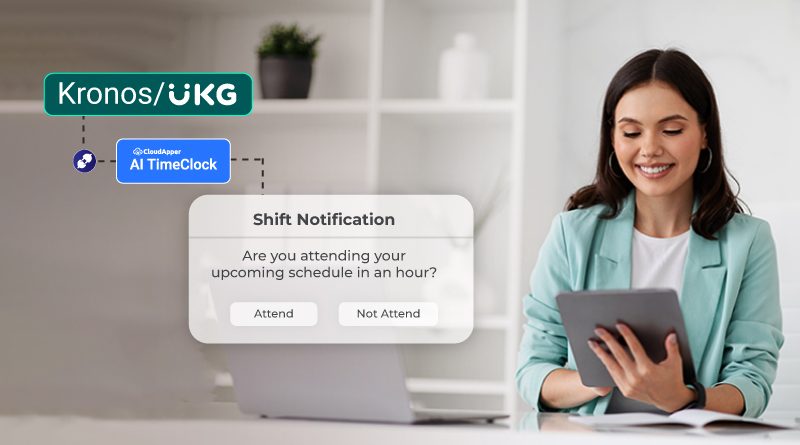
Table of Contents
Every hospitality manager I speak with deals with the same daily struggle. Someone shows up at the wrong time. Someone canceled last minute. And suddenly, your lobby, kitchen, or housekeeping floor is understaffed at the busiest hour of the day. These are the most typical hospitality shift scheduling problems. It’s not the employees’ fault. It’s the nature of hospitality. Things move fast, and schedules shift constantly.
This is why so many UKG users in hospitality now use CloudApper AI TimeClock. It helps bring structure to shift coverage and time tracking without changing how you work inside UKG. Your core system stays the same. CloudApper strengthens the day-to-day workflows that get messy during rush hours, staff shortages, and weekend peaks.
TL;DR
-
Shift chaos in hospitality comes from inconsistent communication, last minute changes, and manual follow ups, not poor staffing.
-
Missed shifts hurt guest service, overload staff, increase labor costs, and waste hours of supervisor time.
-
CloudApper AI TimeClock for UKG reduces missed shifts with automatic reminders, real time confirmations, and instant visibility of coverage gaps.
-
Managers save hours each week because the system alerts available staff, tracks attendance cleanly, and removes manual chasing.
-
Hotels and resorts improve coverage, stabilize payroll, and maintain stronger service levels without changing how they use UKG.
Why Shift Chaos Happens in Hospitality
Hospitality is not a static operation. It changes hour by hour. And when things change that fast, shift chaos becomes easy to trigger.
Departments Operate in Silos
Housekeeping confirms schedules one way. The front desk does it another way. F&B teams rely on WhatsApp messages. Banquet teams often use printed rosters. These inconsistent methods cause confusion, especially for employees who work across departments.
Last-minute Demand Changes
This is one ofthe most common hospitality shift scheduling problems. Guest count spikes. A catering event gets booked. A flight delay brings unexpected arrivals. All these changes require flexible staffing. But without a simple, central way to manage adjustments, chaos spreads quickly.
Supervisors Rely on Memory and Manual Checks
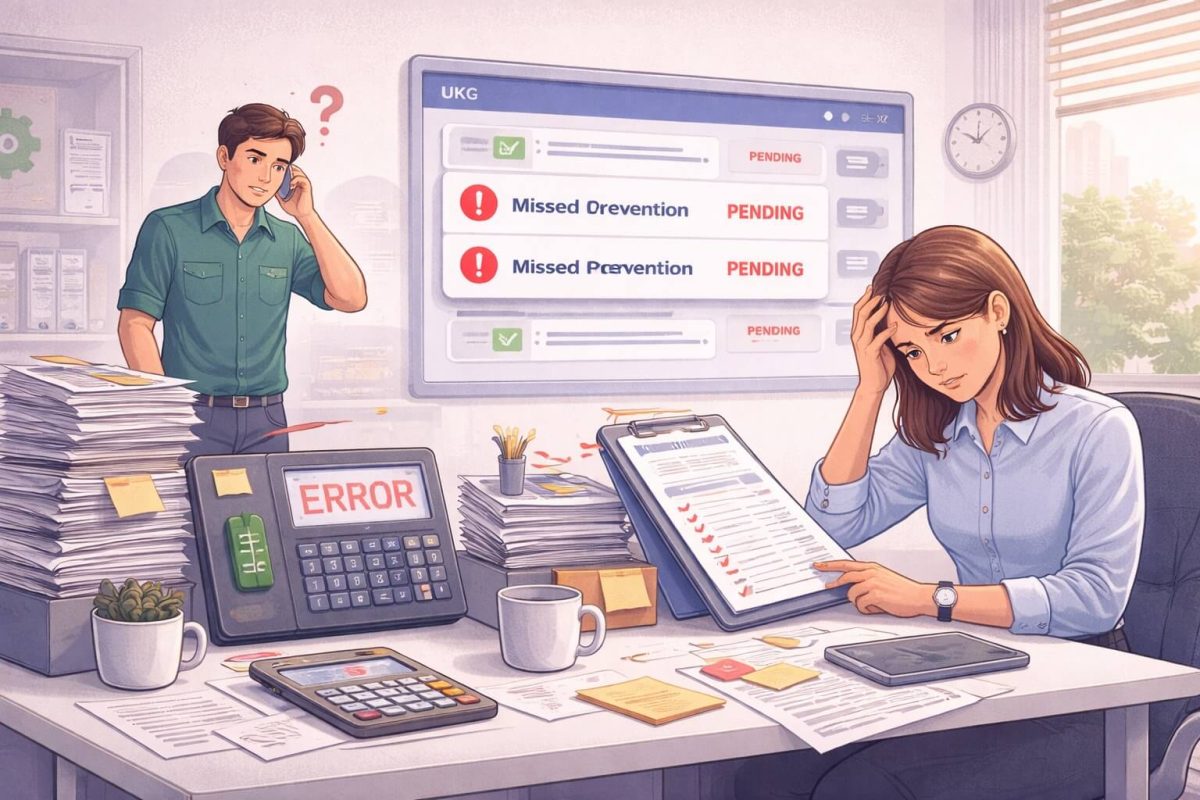
Managers already have too much on their plates. Confirming shifts manually becomes inconsistent. One forgotten reminder turns into a missed shift, which turns into a service delay, which becomes a guest complaint.
Shift chaos is rarely about poor management. It is a process that needs a stronger structure across busy departments.
The Real Cost of Missed and Uncovered Shifts
Shift gaps do not just become an inconvenience for managers. They directly affect operations, costs, and service outcomes.
Service Slows Down & Guest Experience Declines
A missing server during brunch increases wait times. A missing room attendant slows turnover. A missing barista creates morning lines. Guests feel these issues immediately, and they often mention them in reviews.
Existing Staff Feel Overloaded
When one person misses a shift, two or three people absorb the extra load. This creates burnout, faster turnover, and resentment among employees who consistently cover gaps.
Labor Becomes Unpredictable and Expensive
Last-minute replacements often come from overtime staff. Managers spend valuable time calling, texting, and reorganizing. Payroll corrections increase. These costs stack up over weeks and months.
Supervisors Lose Hours Every Week
A single missed shift can take 20 to 40 minutes to resolve. Multiply that by even a few misses per week, and managers lose hours they could spend on training, inventory, or guest service.
Shift chaos quietly drains both money and morale.
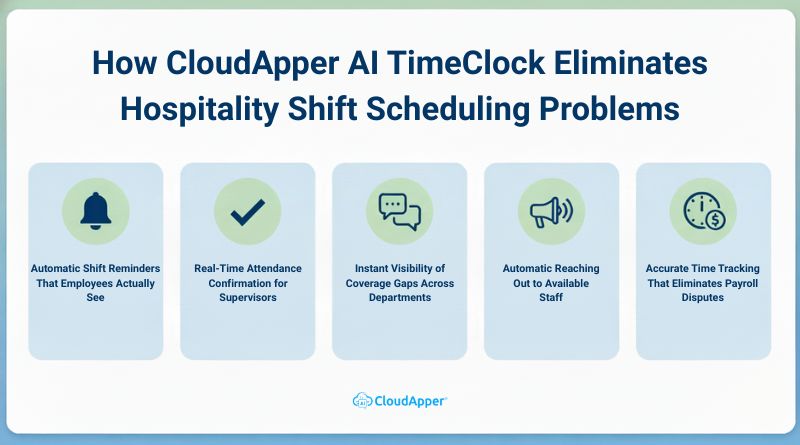
How CloudApper AI TimeClock Eliminates Hospitality Shift Scheduling Problems
From working with many hotel and resort Workforce Management, People Operations, and HR teams, I can tell you this with confidence: shift chaos does not disappear through stricter rules or longer schedules. It disappears when the system handles the small but critical tasks your managers do not have time to chase. This is exactly where CloudApper AI TimeClock for UKG makes the biggest impact.
Here is how it eliminates the root causes of missed shifts, late arrivals, and constant schedule confusion across departments.
Automatic Shift Reminders That Employees Actually See
CloudApper AI TimeClock for UKG automatically sends a shift reminder to the employee before their shift begins. It feels natural and keeps everyone aligned. Managers no longer rely on memory or manual texting, and employees feel supported instead of scolded.
Real Time Attendance Confirmation for Supervisors
The moment an employee confirms or declines a shift, supervisors see it. This gives managers something they rarely have today: time to react before a shift actually starts.
When someone cannot make it, you find out early instead of discovering it when the lobby gets busy or guests start checking in. This single feature reduces last-minute chaos more than anything else.
Instant Visibility of Coverage Gaps Across Departments
The AI Time Clock provides a holistic view of who is coming in, who declined, and where staffing gaps exist. You do not dig through texts or WhatsApp threads. You do not make assumptions. You see it all at once.
Front desk, housekeeping, banquets, F&B, spa, and security all follow the same process. This unified structure prevents the cross-department confusion that usually causes scheduling breakdowns.
Automatic Reaching Out to Available Staff
When a gap appears, CloudApper AI TimeClock for UKG helps managers alert other qualified employees who can fill the shift. It targets workers with the right job code, skill set, or department assignment.
This reduces the time supervisors spend calling multiple employees and hoping someone picks up. Instead, coverage becomes predictable and controlled.
Accurate Time Tracking That Eliminates Payroll Disputes
Clean shift coverage only works when the time data matches reality. CloudApper ensures:
-
Clock-ins happen at the right time
-
Clock outs reflect actual work done
-
Breaks and transfers follow the rules
-
All data flows into UKG without manual edits
This matters because payroll accuracy is tied directly to staff trust. When paychecks are clean, employees stay engaged and are more willing to pick up extra shifts.
Shift chaos does not fix itself. Give your managers the structure they need to stay ahead of daily coverage gaps.
Case Study: How a 500 Employee Hospitality Provider Reduced Shift Chaos With CloudApper
A major hospitality operator in the United States struggled with daily shift issues. Workers forgot their schedules. Managers sent dozens of texts per day. Rooms were delayed because housekeeping was short-staffed. Guest service scores started to slip.
After adopting the CloudApper AI TimeClock for UKG, reminders and confirmations became automatic. Employees knew their shift details ahead of time. Managers received confirmation updates instantly. If someone declined or did not respond, the supervisor knew early enough to adjust coverage.
Within a few months, the results were clear:
-
Missed shifts decreased noticeably
-
Supervisors spent far less time calling employees
-
Housekeeping turnover improved
-
Service levels stabilized
-
Payroll accuracy increased due to cleaner attendance data
Nothing about UKG changed. CloudApper enhanced the parts of the process where UKG users needed day-to-day visibility and structure.
Conclusion
Shift chaos is one of the most common hospitality shift scheduling problems. When reminders are automated, when confirmations happen early, and when attendance flows cleanly into UKG, the entire hospitality operation becomes easier to manage.
From years of helping UKG users in hotels and resorts, I can confidently say this: the right workflow makes shift coverage predictable, employee stress lower, and guest service stronger.
If shift coverage feels unpredictable, the right workflow can change everything for your team.
Frequently Asked Questions
-
What are the most common hospitality shift scheduling problems?
The most common issues include missed shifts, late arrivals, last minute cancellations, confusion across departments, and managers spending too much time chasing confirmations instead of focusing on guests and operations.
-
How do missed shifts affect hotels and resorts?
Missed shifts slow down service, increase guest wait times, overload the staff who do show up, raise labor costs through overtime, and create extra work for supervisors who must constantly reshuffle coverage.
-
Why is shift chaos usually a process issue, not a staffing issue?
Most employees do not miss shifts on purpose. Problems come from weak processes, such as no reminders, manual follow ups, and inconsistent communication between departments. Fixing the workflow reduces chaos without needing more staff.
-
How does CloudApper AI TimeClock for UKG help reduce shift problems?
CloudApper AI TimeClock for UKG sends automatic shift reminders, captures confirmations, shows live coverage gaps, reaches out to available staff, and syncs accurate time data into UKG. This brings structure and visibility to daily scheduling.
-
Can hotels use CloudApper AI TimeClock without changing how they use UKG?
Yes. UKG remains the core system, and CloudApper AI TimeClock works alongside it. It enhances workflows around reminders, confirmations, and time capture so hotels can improve coverage and reduce missed shifts without replacing their existing platform.