
High-volume hiring in UKG doesn’t have to mean manual screening, endless scheduling emails, and candidate drop-off. Conversational AI automates resume screening, ranking, and interview scheduling while improving candidate experience. Learn how AI-powered recruiting transforms UKG Pro & Ready workflows without replacing your existing system.



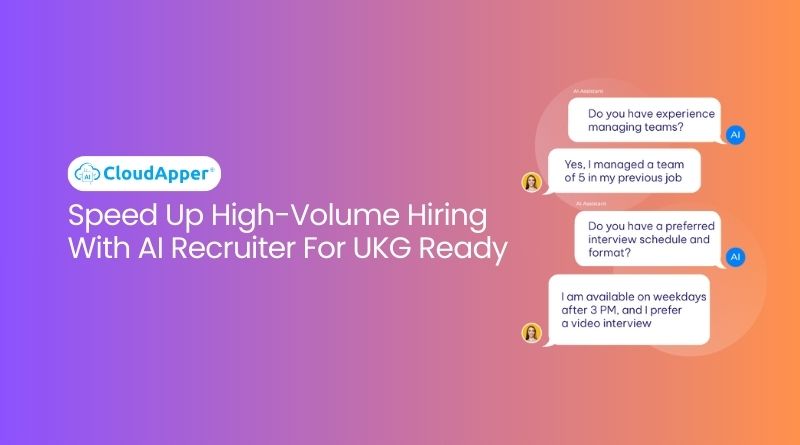
Table of Contents
If you’ve ever walked into a seasonal hiring surge (retail, healthcare, hospitality, logistics, call centers—you name it), you already know the pattern: applications spike, inboxes explode, and the hiring team gets pulled into a never-ending loop of screening, follow-ups, and scheduling.
The hardest part isn’t that you don’t have candidates. It’s that you have too many steps between “I’m interested” and “I’m scheduled.” Every extra step creates delays, drop-off, and missed talent.
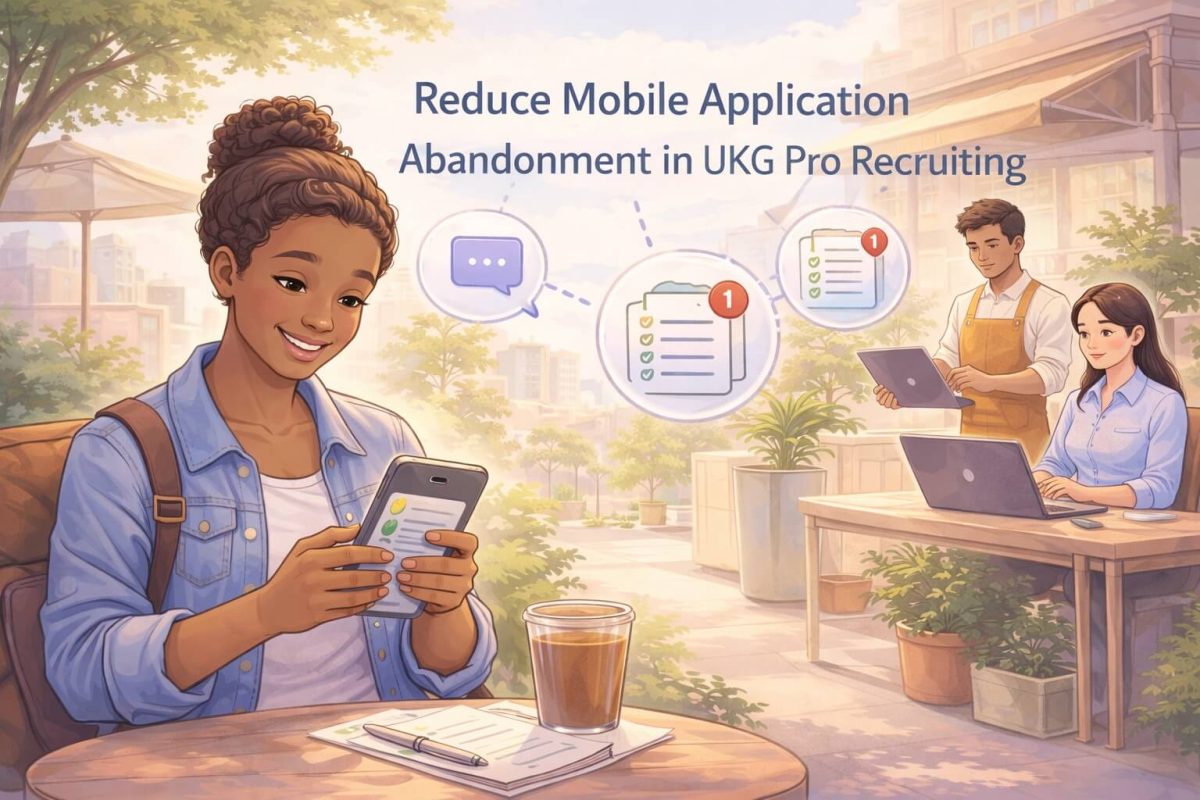
And the drop-off is real: SHRM has cited that 92% of people who click “Apply” don’t complete the application in many online job processes.
That’s exactly where CloudApper AI Recruiter for UKG Pro/UKG Ready recruiting becomes practical—not futuristic. When your workflow removes friction (and responds fast), high-volume hiring stops feeling like chaos and starts feeling manageable.
Why high-volume hiring breaks “normal” recruiting workflows
Traditional high-volume hiring usually fails for predictable reasons:
When applications come in by the hundreds (or thousands), recruiters can’t keep up with:
- Manual screening (even a “quick” review becomes hours)
- Back-and-forth scheduling
- Candidate questions and follow-ups
- Status updates
- Keeping candidates warm until the interview
Meanwhile, time keeps moving. And when time-to-fill stretches, the business feels it immediately.
SHRM has noted that median time-to-fill in 2025 is roughly about a month and a half (requisition to offer acceptance) in their recruiting benchmarking discussion—meaning delays are common even before you add high-volume pressure.
High-volume makes those delays worse—and candidates don’t wait.
What “conversational AI for UKG” actually means
In plain terms, conversational AI in recruiting replaces the most fragile parts of hiring—the parts where candidates get stuck or ignored—with an always-on, guided flow.
Instead of a long form and slow follow-up, candidates can:
- start the application quickly,
- answer a small set of relevant questions conversationally,
- get an immediate next step,
- and schedule an interview without waiting days.
For UKG customers, the value is even clearer when it works with your existing UKG recruiting environment rather than forcing a replacement.
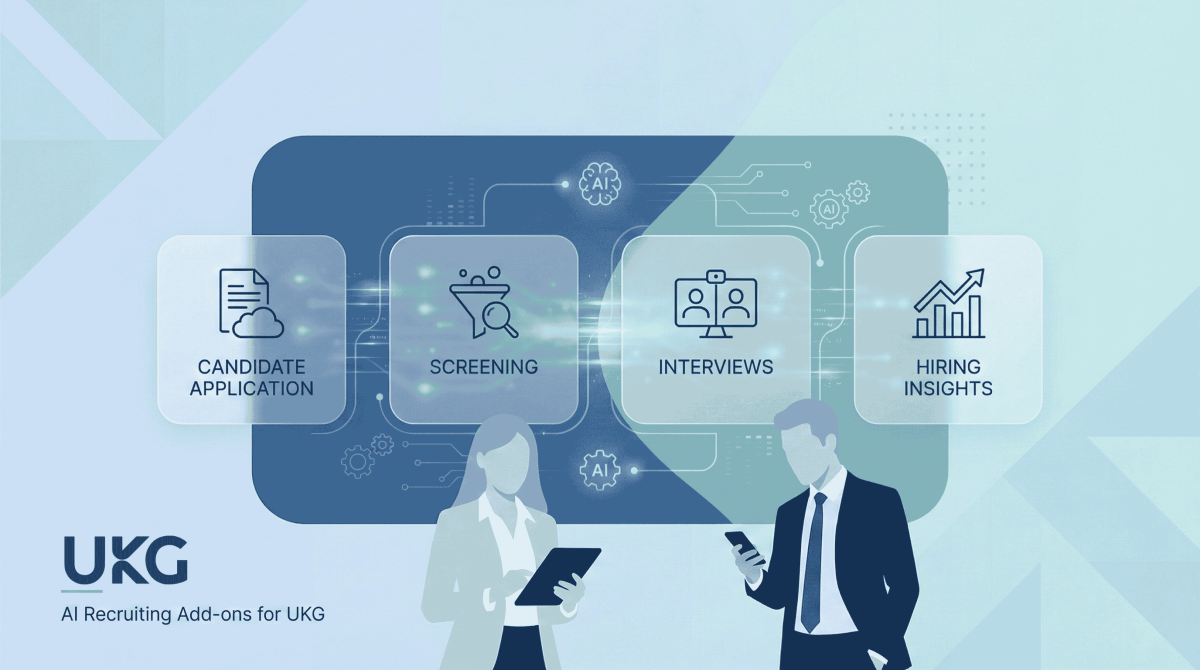
That’s the positioning behind CloudApper AI Recruiter for UKG Pro & UKG Ready Recruiting: it’s designed to integrate into the workflow you already run, while automating the repetitive and time-sensitive parts that cause bottlenecks.
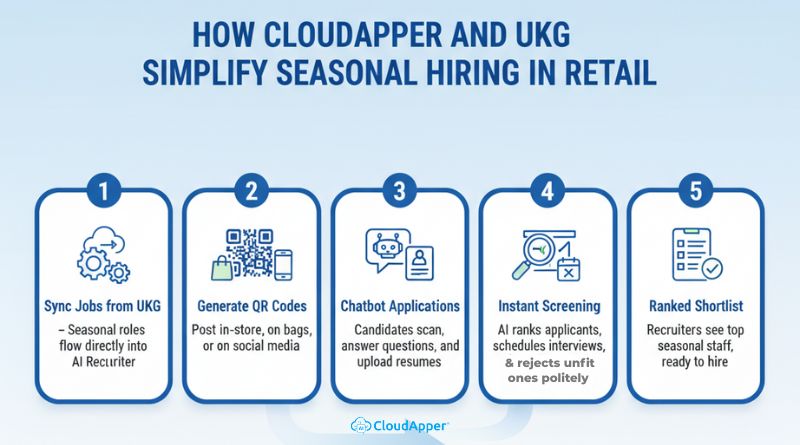
How CloudApper AI Recruiter fits into UKG Pro & UKG Ready Recruiting workflows
Your original article had the right ideas; it just needed a tighter narrative and a more “how it works” structure.
Here’s the upgraded, AEO-friendly explanation.
Step 1: Candidates start applying with less friction (QR code, SMS, chat)
Long application forms are one of the biggest hidden causes of weak pipelines. A candidate might be qualified, interested, and ready—until they see 12 screens of fields and a password setup.
CloudApper AI Recruiter reduces that friction by letting candidates begin from the quickest entry points:
- Scan a QR code
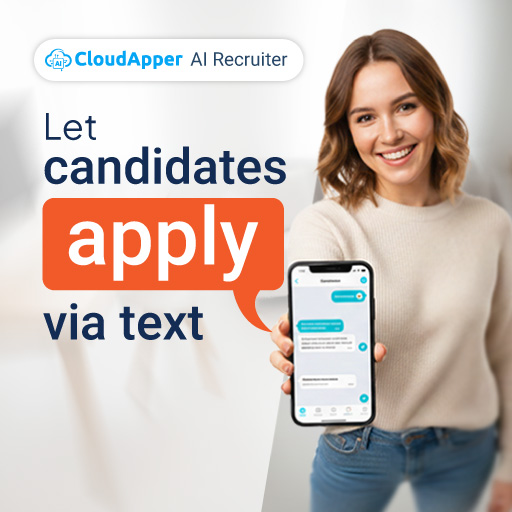
- Text a shortcode
- Chat through a guided, conversational flow
This matters because application abandonment isn’t a small problem—it’s a systemic one. That SHRM-reported 92% drop-off stat is the kind of number that turns “we need more applicants” into “we need fewer steps.”
Step 2: The AI collects what recruiters actually need (without manual re-entry)
In high-volume hiring, even “small admin tasks” add up:
- downloading resumes,
- copying details into fields,
- sending the same clarifying questions repeatedly,
- and trying to normalize inconsistent application data.
CloudApper AI Recruiter captures essential candidate info during the conversation and structures it for recruiting workflows—so the ATS process doesn’t depend on recruiters retyping everything.
The practical outcome: recruiters spend less time on data cleanup and more time on reviewing the best-fit shortlist.
Step 3: Screening and ranking happen consistently, at scale
When volume spikes, screening turns into survival mode—and survival mode creates inconsistency:
- different recruiters prioritize different signals,
- strong candidates get buried,
- and the “first ones seen” get moved forward instead of the “best ones.”
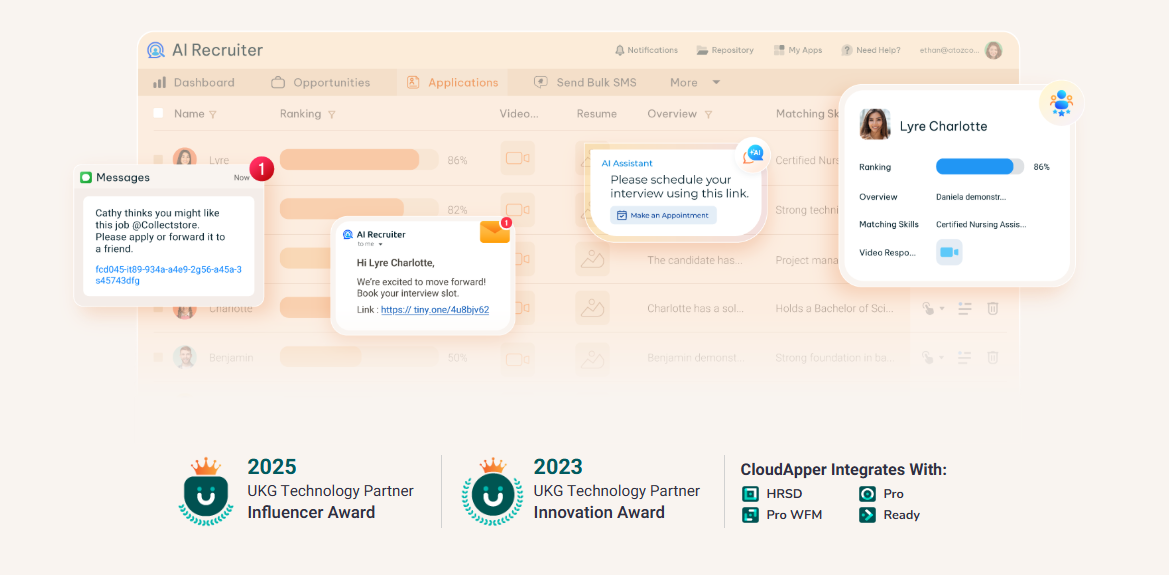
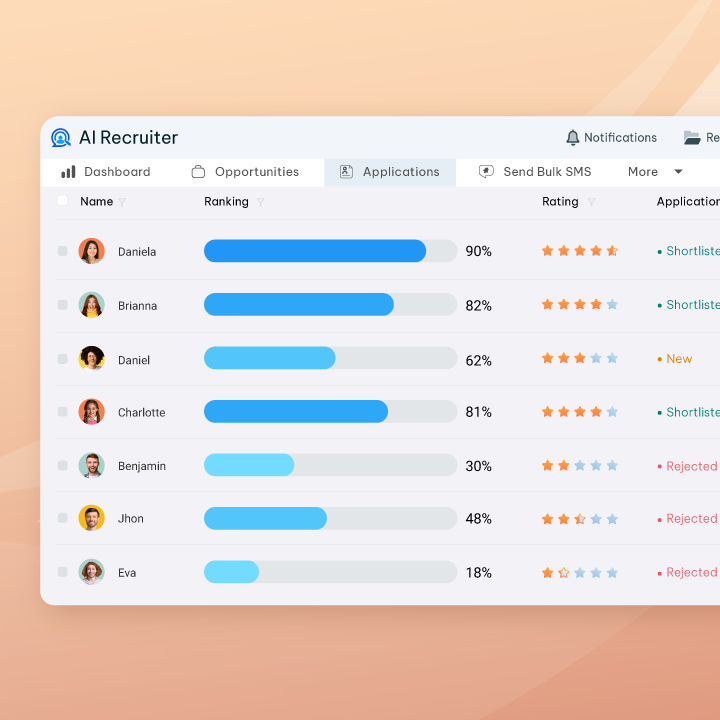
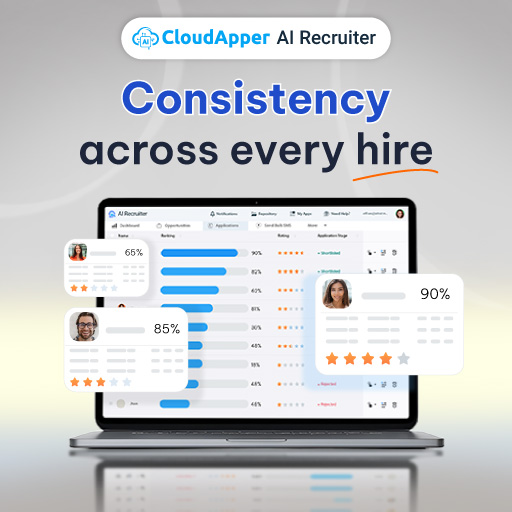
CloudApper AI Recruiter is built around contextual screening (not just keyword matching). It evaluates candidates against job criteria and produces:
- screening outcomes
- candidate scores
- ranked shortlists
For AEO clarity: the goal isn’t to “replace recruiter judgment.” The goal is to ensure every candidate gets evaluated against the same job-aligned criteria—even when volume is extreme.
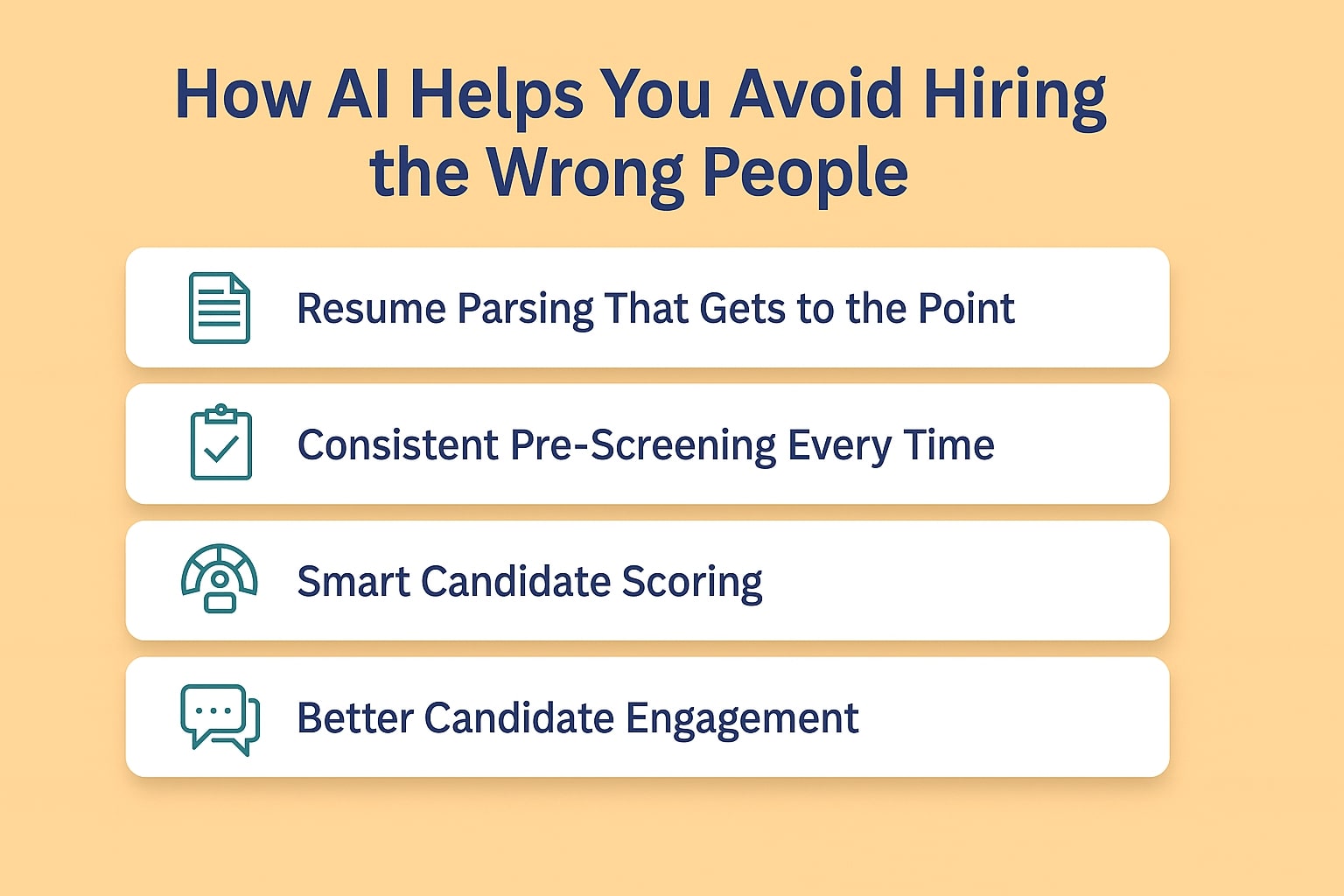
Step 4: Pre-screening questions become dynamic, not generic
Static forms collect static answers. In high-volume hiring, that often means you’re left with vague responses that don’t help you decide.
With conversational pre-screening, the system can ask role-relevant questions in a more natural way, and it can branch based on the answers.
This is especially useful for roles where “years of experience” isn’t enough, and you need to verify:
- shift availability,
- role-specific exposure,
- certifications,
- location constraints,
- language requirements,
- or scenario-based judgment.
Step 5: Interview scheduling becomes candidate-led (without the email ping-pong)
Scheduling is one of the biggest time sinks in recruiting—and one of the easiest parts to automate safely.
Instead of:
“Are you free Tuesday at 2?”
“No, how about Thursday?”
“I’ll check the manager…”
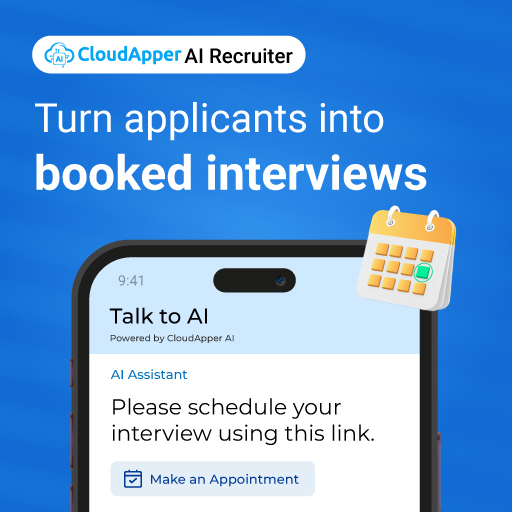
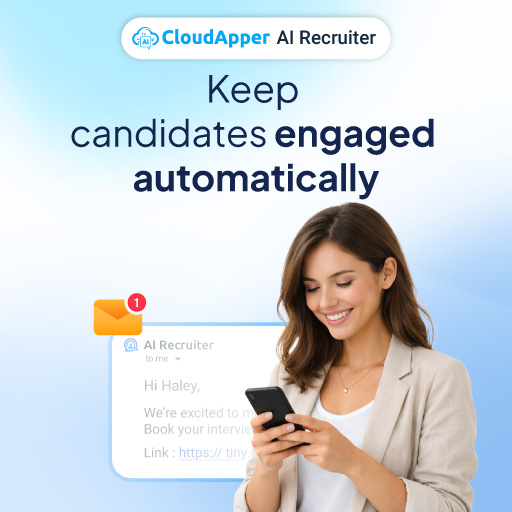
The workflow can allow candidates to select from available times, then automatically:
- confirms the appointment,
- sends reminders,
- and notifies interviewers.
Speed is not just convenience—it’s competitiveness. The longer the delay, the higher the drop-off risk, and the more likely a good candidate accepts another offer first.
Why this improves candidate experience
Candidate experience isn’t just a “nice-to-have.” It directly influences whether candidates stay engaged, reapply, or recommend your company.
IBM’s research has been cited to show that candidate experience signals how a company values its people—and it can influence behavior even when candidates don’t get the job.
In high-volume hiring, a smoother experience has very real outcomes:
- fewer abandoned applications,
- fewer no-shows,
- faster scheduling,
- and fewer “ghosted” candidates.
Bias reduction in high-volume hiring: where AI helps and where humans still lead
Your original article mentioned bias, but it didn’t fully clarify the “how.”
In early-stage screening, bias often shows up through inconsistency:
- rushed reviews,
- “pattern recognition” based on familiarity,
- or giving more attention to “better-looking resumes” rather than better fit.
A structured AI workflow can reduce that risk by:
- applying the same criteria to all candidates,
- focusing scoring on job-relevant factors,
- and supporting more consistent shortlists.
Humans still make hiring decisions. But AI can help ensure humans aren’t forced to decide under pressure with incomplete, inconsistent inputs.
Where this approach works best inside UKG environments
CloudApper AI Recruiter for UKG is most valuable when you have:
- High applicant volume (hourly, frontline, seasonal surges)
- Hard-to-fill roles where speed and engagement matter
- Distributed hiring teams where scheduling and follow-up are the bottleneck
- Candidate drop-off problems caused by long application steps
- A need to keep UKG as the system of record, without “rip-and-replace”
What to expect when you implement conversational AI for UKG Recruiting
A high-performing article should answer “what happens next,” so here’s the clean expectation-setting version:
Implementation typically focuses on:
- connecting to your current recruiting flow,
- configuring job-specific screening and scoring logic,
- setting up conversational application steps,
- and enabling automated scheduling + communications.
The goal is not to rebuild your recruiting process from scratch. It’s to remove the slowest steps while keeping your UKG recruiting foundation intact.
The real advantage isn’t “AI”—it’s speed + structure at scale
High-volume hiring doesn’t fail because recruiters aren’t working hard enough. It fails because manual workflows aren’t designed for volume, speed, and candidate behavior.