Integrating LinkedIn with UKG transforms recruitment by streamlining workflows, reducing errors, and enhancing efficiency in high-volume hiring.



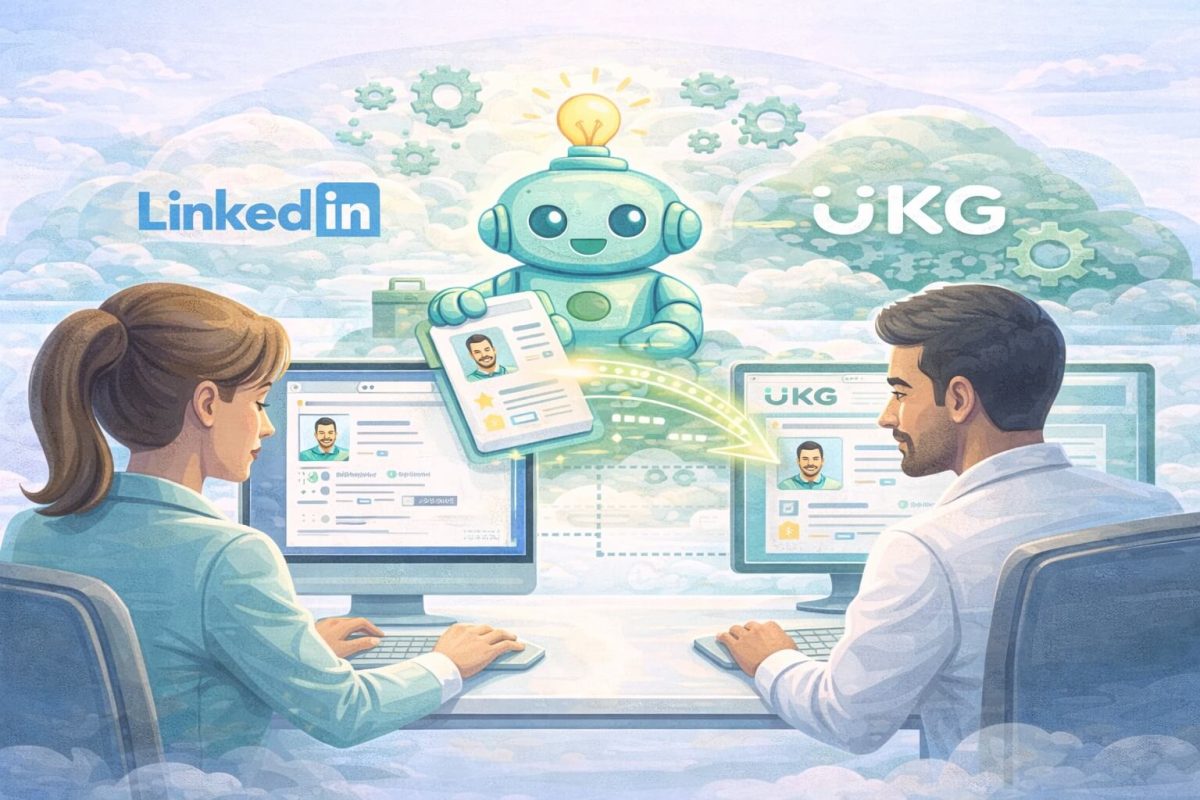
Table of Contents
Let’s be honest: hiring at scale is exhausting. You’re sourcing candidates on LinkedIn, screening resumes, scheduling interviews, and then—here’s the annoying part—you’re manually copying all that candidate information into UKG. Name, email, phone number, work history, everything. It’s the same data, just living in two different places, and you’re the one stuck playing messenger between them.
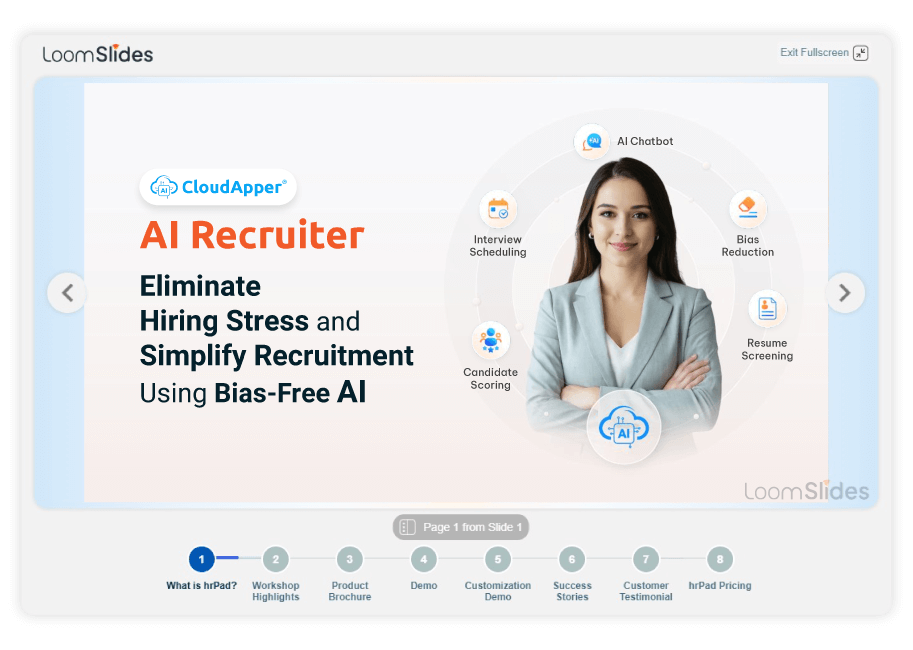
For more information on CloudApper AI Recruiter for UKG visit our page here.
If you’re a recruiter handling dozens or even hundreds of candidates, this back-and-forth isn’t just tedious—it’s a productivity killer. You lose track of where candidates are in the pipeline. Updates don’t sync. Someone gets missed because their information didn’t make it from LinkedIn to your UKG system. And suddenly, a great candidate slips through the cracks because you were too busy doing data entry.
That’s exactly why LinkedIn to UKG integration matters. It’s not about fancy technology for technology’s sake. It’s about getting your time back and making sure no candidate falls through the cracks. When LinkedIn and UKG talk to each other automatically, candidate details flow directly into your HR system the moment you find them. Status updates happen in real-time. No more toggling between tabs, no more copy-paste marathons, no more wondering if you updated the right record.
LinkedIn to UKG integration turns a fragmented, frustrating process into something that actually works with you, not against you.
What Is LinkedIn to UKG Integration and Why Does It Matter?
LinkedIn to UKG Integration refers to the seamless connection between LinkedIn’s professional networking platform and UKG’s human capital management software. This linkage allows recruiters to pull candidate data directly from LinkedIn into UKG, automating the transfer of profiles, resumes, and application details. In high-volume recruiting scenarios, such as seasonal hiring drives or rapid company expansions, this integration becomes indispensable. It eliminates the silos that traditionally exist between sourcing candidates on LinkedIn and managing their onboarding in UKG, fostering a more cohesive and efficient talent acquisition process.
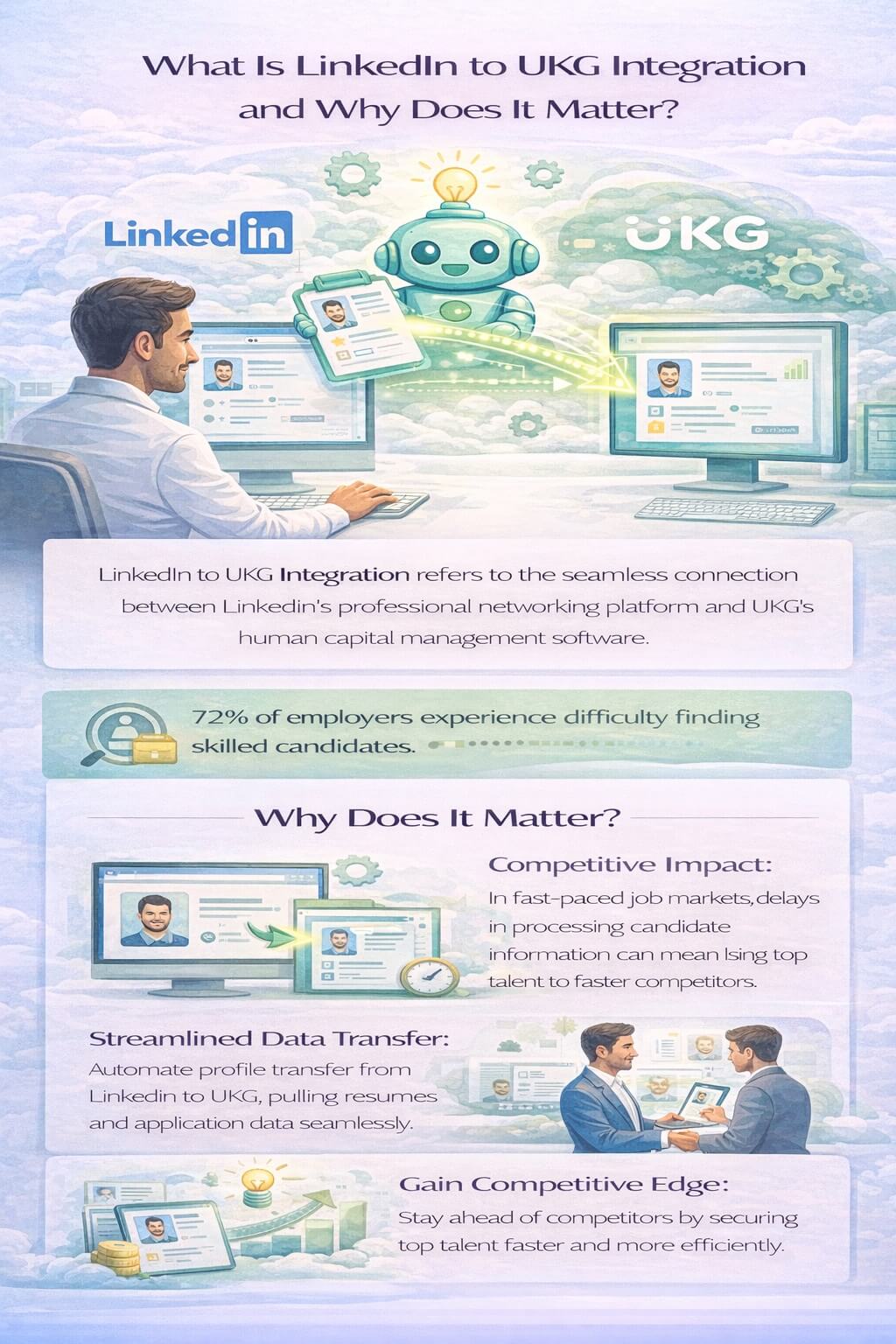
Consider the broader impact: In competitive job markets, where top talent is snatched up quickly, delays in processing candidate information can result in losing out to faster-moving competitors. By integrating these platforms, organizations gain a strategic advantage, reducing the time from initial contact to hire. This isn’t merely a technical upgrade; it’s a shift toward proactive recruitment, where data-driven decisions replace reactive firefighting. For businesses aiming to scale their workforce efficiently, LinkedIn to UKG Integration represents a foundational step in modernizing HR operations.
How Does Real-Time Candidate Status Updates Work in UKG?
One of the standout features of LinkedIn to UKG Integration is the ability to view real-time candidate status updates directly within UKG, without the hassle of switching tabs or logging into separate systems. Imagine a scenario where a promising candidate from LinkedIn advances through your hiring stages— from application to interview, and finally to ‘Hired.’ With this integration, UKG updates automatically, reflecting these changes in real time. This visibility is crucial for high-volume recruiting, where managing hundreds of applicants simultaneously demands instant access to accurate information.
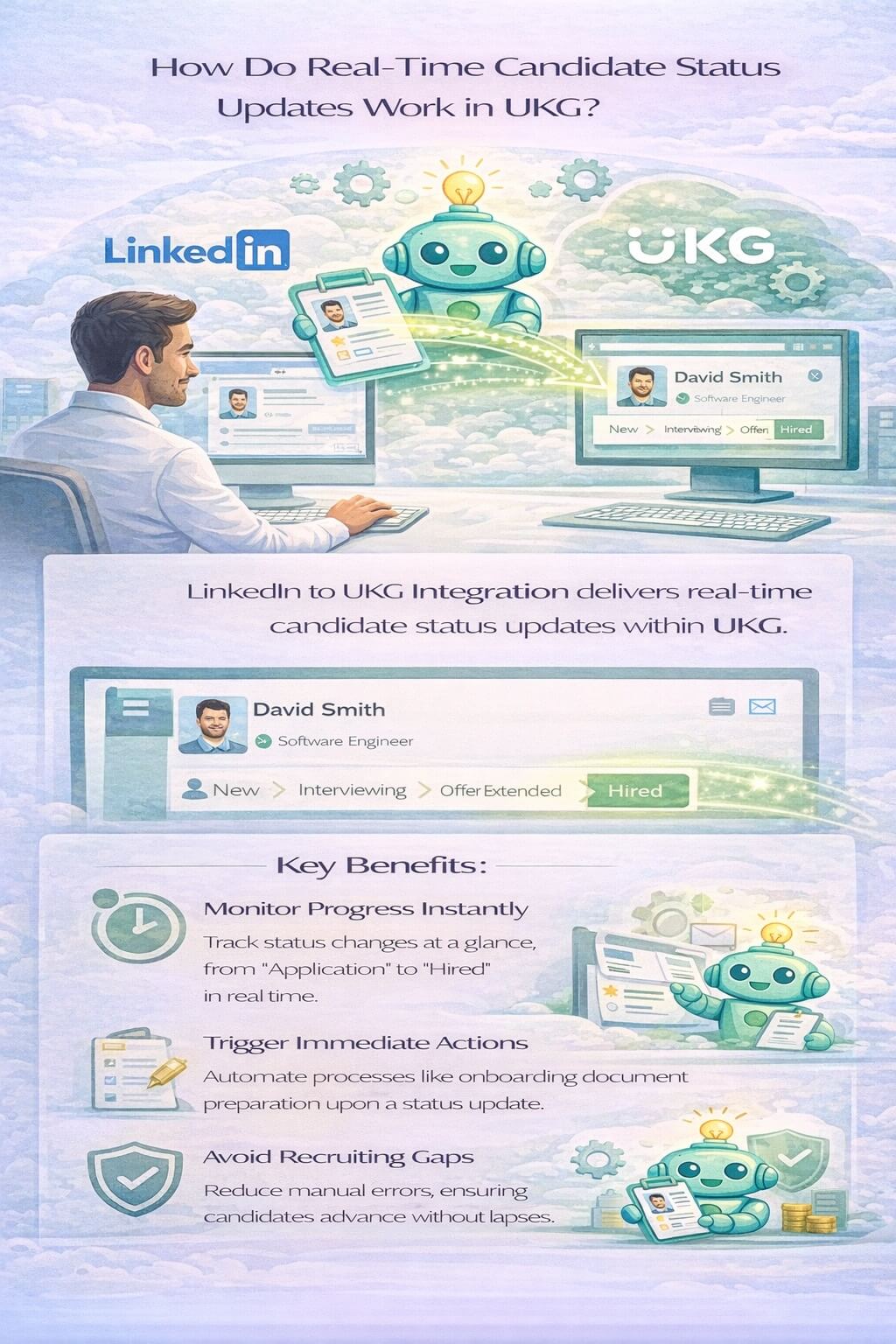
In practice, this means recruiters can monitor progress at a glance, prioritizing tasks based on live data rather than outdated spreadsheets. For example, if a candidate’s status shifts to ‘Offer Extended,’ the system can trigger immediate actions like preparing onboarding documents. This level of automation not only saves time but also minimizes human error, ensuring that no candidate falls through the cracks. By keeping everything within UKG, recruiters maintain focus and momentum, turning what was once a fragmented process into a fluid, efficient operation.
Can CloudApper AI Recruiter Act as Your Recruiting Assistant?
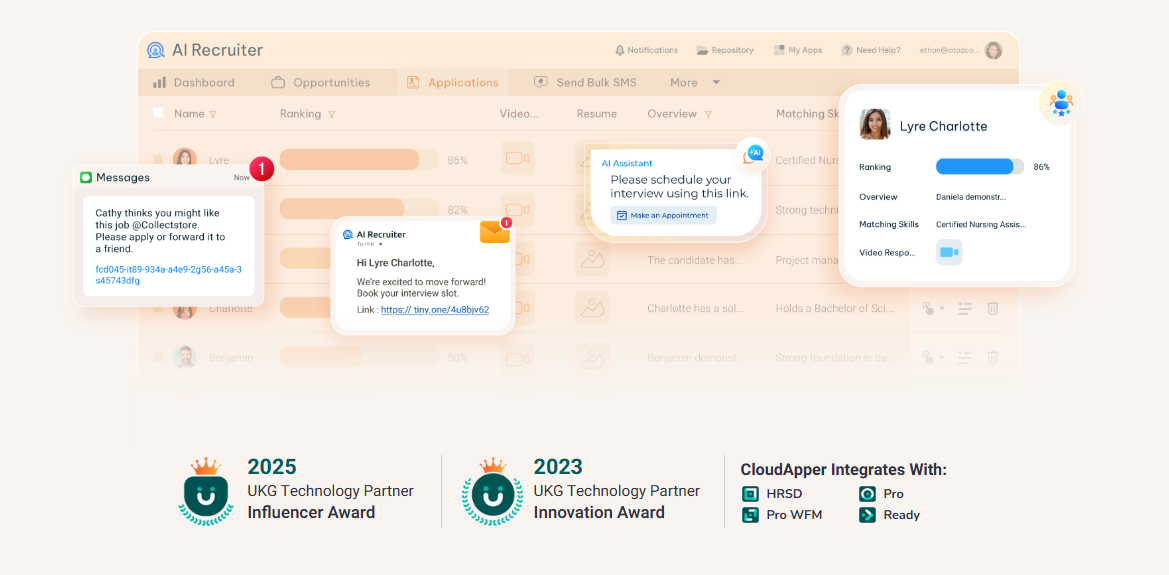
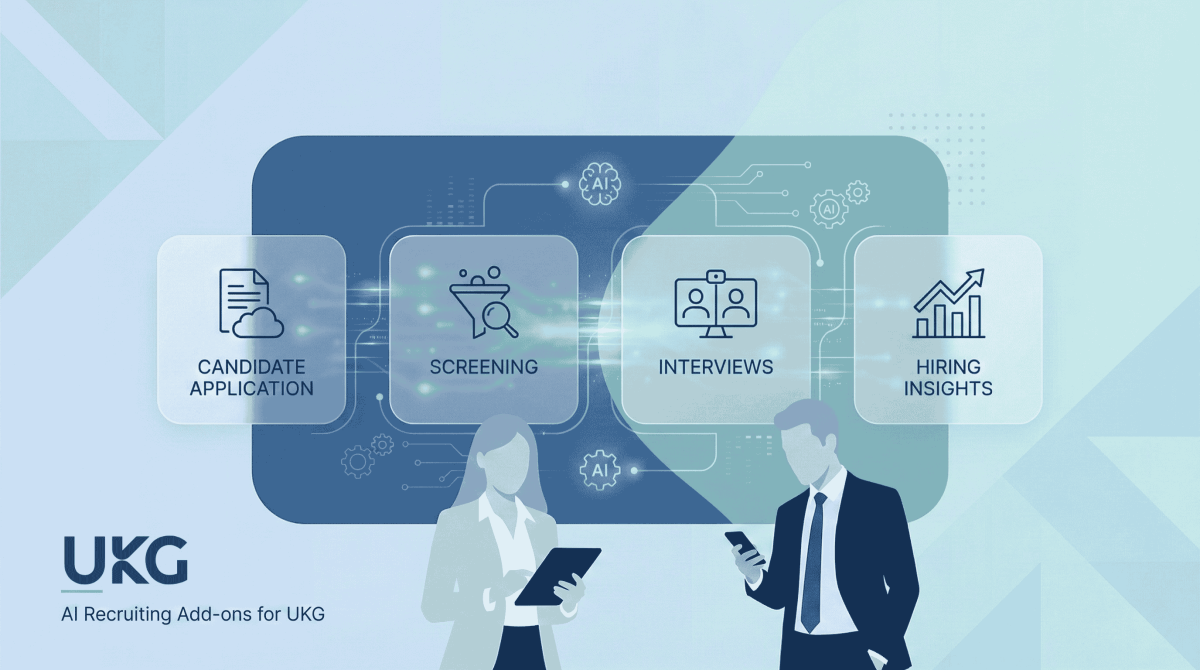
Enter CloudApper AI Recruiter, a powerful AI-driven platform that elevates LinkedIn to UKG Integration to new heights by serving as an intelligent ‘Recruiting Assistant.’ This tool is specifically designed to handle the repetitive, time-consuming aspects of hiring, allowing human recruiters to concentrate on strategic elements like building relationships and assessing cultural fit. By automating workflows, CloudApper AI Recruiter integrates seamlessly with LinkedIn and UKG, providing notifications and updates that keep teams aligned.
For instance, when a LinkedIn candidate progresses to the ‘Hired’ stage, CloudApper AI Recruiter can send instant alerts via popular communication channels like Teams or Slack, prompting the creation of a UKG profile. This feature is particularly valuable in high-volume recruiting, where timely communication can prevent bottlenecks. Recruiters no longer need to manually check statuses or send follow-up emails; the AI handles it, ensuring everyone from HR managers to department heads stays informed. With its customizable workflows, CloudApper AI Recruiter adapts to your specific needs, whether you’re a small business scaling up or a large enterprise managing global talent pools.
What Are the Key Benefits of Using CloudApper AI Recruiter for High-Volume Recruiting?
The benefits of incorporating CloudApper AI Recruiter into your LinkedIn to UKG Integration strategy are multifaceted and profound. First and foremost, it boosts efficiency by automating tasks such as resume screening and data synchronization, freeing recruiters from mundane duties. This allows for a sharper focus on high-impact activities, like engaging with top candidates or refining recruitment strategies.
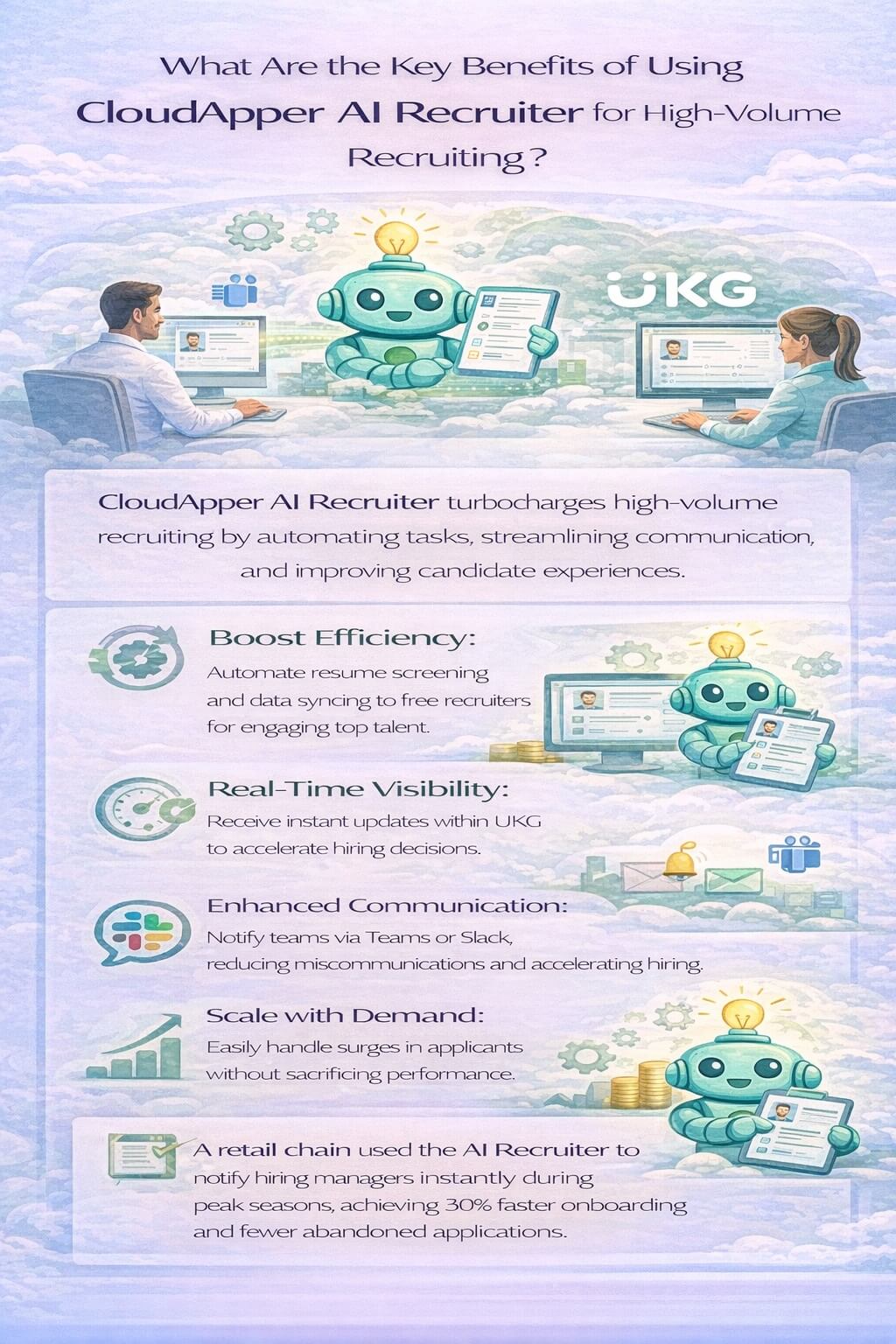
Real-time visibility is another critical advantage. With immediate updates within UKG, decision-makers gain insights that accelerate the hiring cycle. In a high-volume context, this can mean processing applications faster and reducing time-to-hire by significant margins. Enhanced communication further amplifies these gains; by notifying teams through Teams or Slack, CloudApper AI Recruiter bridges gaps that often lead to miscommunications or delays.
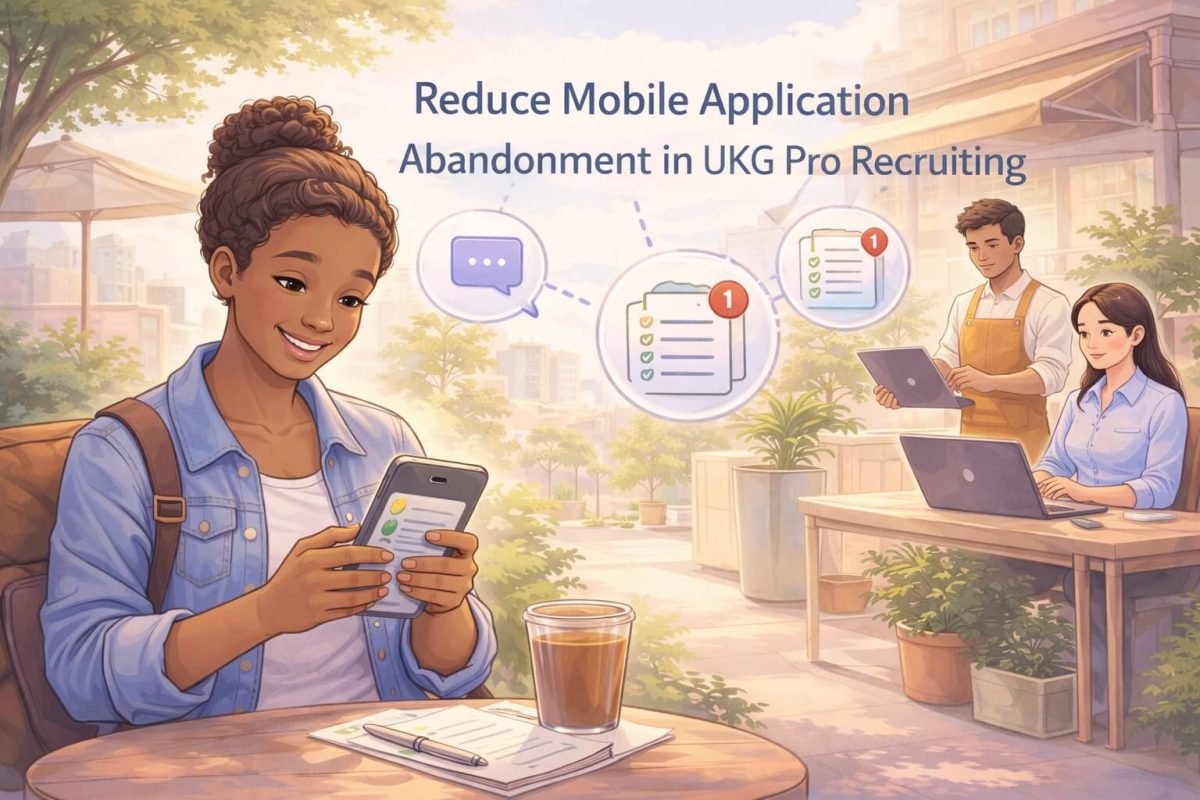
Moreover, the tool enhances the candidate experience by streamlining processes, which in turn builds your employer’s brand. Candidates appreciate quick responses and smooth transitions, leading to higher satisfaction and better retention rates. From a scalability perspective, CloudApper AI Recruiter handles increasing volumes without performance drops, making it ideal for growing organizations. In one insightful example, a retail chain during peak seasons used this integration to notify hiring managers instantly, resulting in a 30% faster onboarding process and fewer abandoned applications.
How Does LinkedIn to UKG Integration Solve Common Pain Points in Recruitment?
Traditional recruitment methods are riddled with pain points that LinkedIn to UKG Integration, powered by CloudApper AI Recruiter, effectively resolves. Manual data entry, for starters, is a notorious time-sink prone to errors. This integration automates the transfer of candidate information, ensuring accuracy and saving hours of labor. Delayed updates, another frequent issue, are eradicated through real-time synchronization, keeping recruiters equipped with the latest data at all times.
Communication gaps, often exacerbated in high-volume scenarios, are bridged by automated notifications. Instead of relying on emails or meetings, teams receive alerts on platforms they already use, like Slack or Teams, fostering better collaboration. Additionally, the customizable nature of CloudApper AI Recruiter allows tailoring to unique workflows, addressing specific challenges such as compliance requirements or industry-specific hiring needs.
Think about a tech company expanding rapidly: Without integration, recruiters might spend days manually updating records, leading to stalled hires. With CloudApper AI Recruiter, these processes are automated, solving inefficiencies and enabling proactive talent management. This not only reduces HR stress but also positions your organization as agile and innovative in attracting top talent.
Why Choose CloudApper AI Recruiter for Seamless Integration?
Choosing CloudApper AI Recruiter for your LinkedIn to UKG Integration means investing in a solution that prioritizes customization, seamless data flow, and scalability. Its AI capabilities go beyond basic automation, offering intelligent insights that help identify promising candidates faster. For high-volume recruiting, this translates to handling larger applicant pools with ease, without compromising on quality or speed.
The platform’s values align perfectly with modern HR needs: It ensures data accuracy through robust integration, adapts to evolving processes, and scales effortlessly as your team grows. Recruiters who have implemented it report reduced burnout and improved outcomes, with examples from various sectors demonstrating its versatility. Whether you’re in retail, tech, or healthcare, CloudApper AI Recruiter provides the tools to navigate talent acquisition challenges authoritatively.
In reflecting on these advancements, it’s clear that LinkedIn to UKG Integration isn’t just a trend—it’s a necessity for forward-thinking organizations. By leveraging CloudApper AI Recruiter, you can transform your recruitment strategy, making it more efficient, responsive, and effective. If you’re ready to elevate your high-volume recruiting game and experience the power of real-time updates and automated assistance, take the next step today. Visit CloudApper AI Recruiter to learn more and discover how this innovative tool can revolutionize your talent acquisition efforts.
Frequently Asked Questions about LinkedIn to UKG Integration
What are the primary benefits of integrating LinkedIn with UKG?
The integration streamlines recruiting by automating data flow between LinkedIn and UKG. Key benefits include improved efficiency through automation, real-time candidate updates, enhanced team communication, and an improved candidate experience. This allows recruiters to focus more on strategic hiring.
How does CloudApper AI Recruiter assist in the recruitment process?
CloudApper AI Recruiter automates tasks like sending notifications on status changes and updating candidate information in real-time. It facilitates seamless data transfer between LinkedIn and UKG, thus reducing manual data entry and potential errors.
Can the integration be customized to fit our specific needs?
Yes, the integration offers customizable workflows that can be tailored to fit unique recruitment requirements and scalability needs, making it suitable for businesses of all sizes.
How does this integration enhance communication within HR teams?
The integration provides instant notifications through platforms like Teams or Slack, ensuring that all team members are informed of candidate status changes promptly, thus bridging any communication gaps.
What pain points does the LinkedIn to UKG Integration solve?
It addresses common recruitment issues such as manual data entry, delayed updates, and communication gaps by automating these processes and providing real-time synchronization.