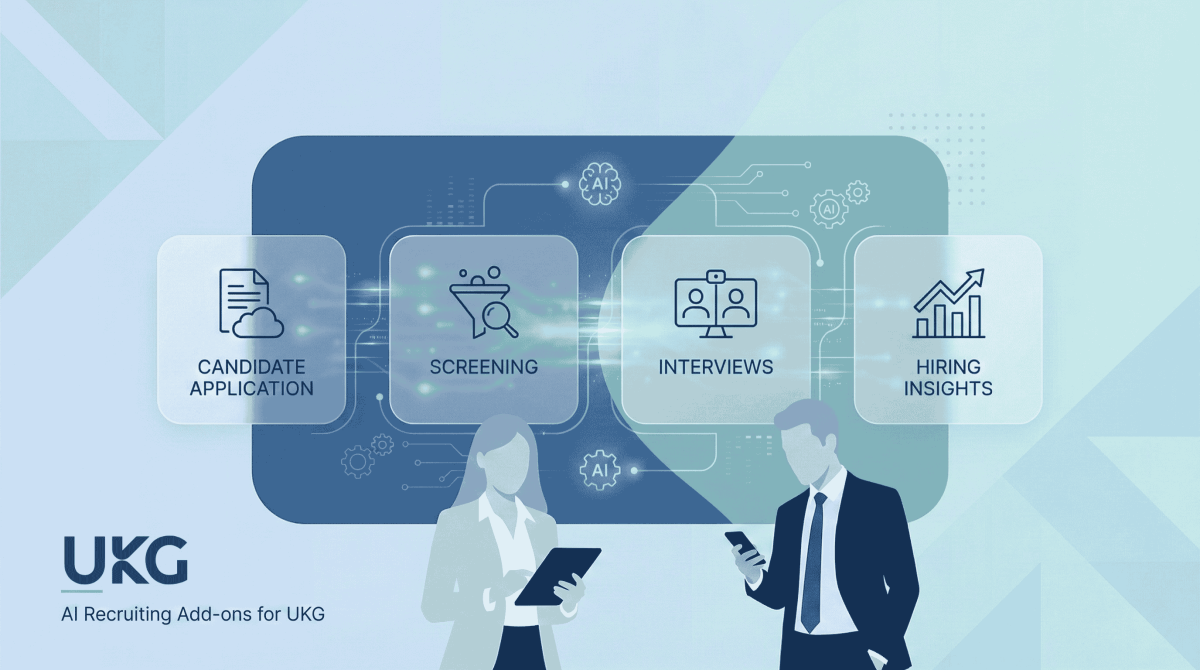

Automated scenario-based questions are transforming how UKG recruiters evaluate candidates. By focusing on real-world situations instead of surface-level resumes, hiring teams gain deeper insight into how candidates think, solve problems, and perform on the job, while maintaining speed, consistency, and a strong candidate experience.




Table of Contents
Hiring teams across North America are under constant pressure to move faster without sacrificing quality. Recruiters working in UKG environments manage high application volumes, complex roles, and rising expectations from candidates who want timely, thoughtful interactions. In this context, automated scenario-based questions are becoming a practical way to evaluate real skills early, rather than relying on resumes or surface-level screening alone. Instead of asking candidates what they know, these questions explore how they think, decide, and respond in job-related situations.
For UKG users, this shift aligns naturally with a more structured, data-informed hiring process. It allows recruiters to add depth to pre-screening while keeping workflows efficient and consistent across teams.
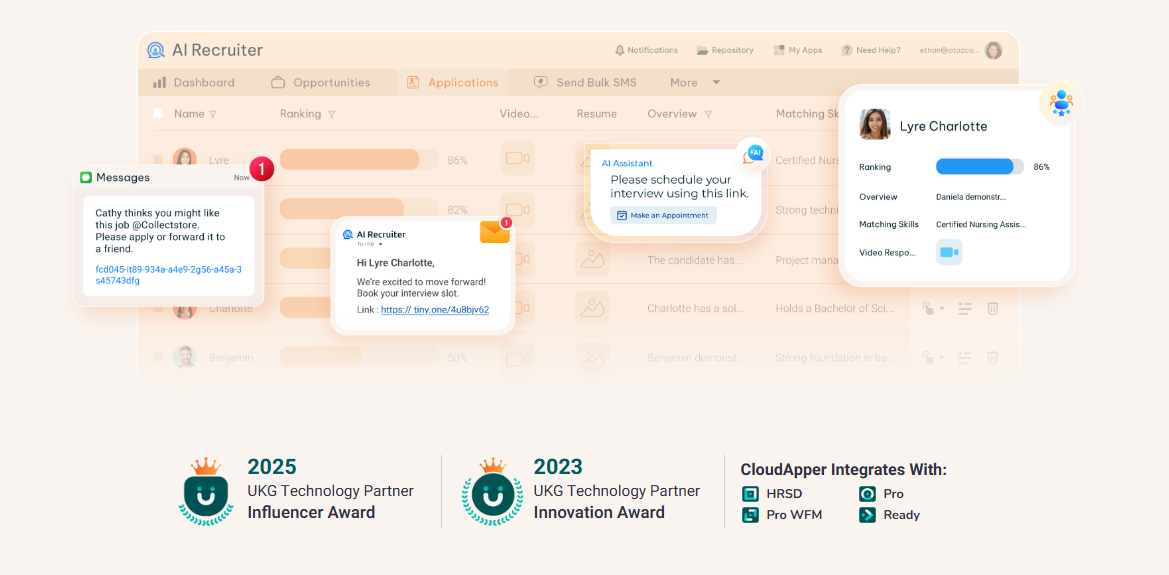
In many organizations, CloudApper AI Recruiter is now being used alongside UKG recruiting workflows to make this approach scalable. By integrating conversational AI directly into the hiring journey, it helps teams screen, engage, and assess candidates using scenarios that mirror real work challenges, without slowing down the process.
Why Traditional Screening Falls Short for Modern Roles
Most recruiters will admit that resumes only tell part of the story. Job titles vary widely, skills are often overstated, and keywords alone rarely capture how someone performs under pressure. Even structured questionnaires can feel generic, leading candidates to recycle rehearsed answers.
For roles that require judgment, collaboration, or problem-solving, this creates a gap. Recruiters want to know how a candidate would respond to a difficult customer, resolve a scheduling conflict, or prioritize tasks during a peak period. However, asking these questions manually for every applicant is rarely feasible at scale.
This is where automation adds value, not by replacing human judgment, but by ensuring every candidate is evaluated against relevant, job-specific scenarios in a consistent way.
How Automated Scenario-Based Questions Work within UKG Hiring Workflows
Automated scenario-based questions are designed to simulate real situations a candidate is likely to face on the job. Instead of simple yes-or-no or multiple-choice questions, candidates are presented with prompts that ask them to explain decisions, outline steps, or respond to realistic challenges.
Within a UKG hiring environment, these questions can be delivered early in the process, often during pre-screening. CloudApper AI Recruiter uses conversational AI to guide candidates through these scenarios in a natural, interview-like flow. The system adapts questions based on the role, the candidate’s background, and previous responses.
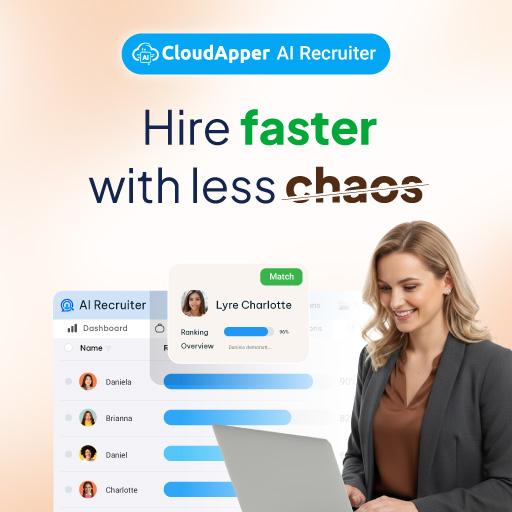
Because the process is automated, every applicant receives the same level of engagement and evaluation. Recruiters gain structured insights without adding manual workload, and candidates experience a process that feels relevant rather than transactional.

Automated Scenario-Based Questions in Practice: What Recruiters Actually Learn
One of the biggest advantages of this approach is the quality of signal it provides. Instead of relying on claims like “strong problem solver” or “excellent communicator,” recruiters see evidence of how candidates approach problems.
For example, a candidate applying for a retail leadership role may be asked to describe how they would handle an unexpected staffing shortage during a busy weekend. Their response reveals priorities, communication style, and decision-making logic. For a healthcare or manufacturing role, scenarios can focus on safety, compliance, or teamwork under pressure.
Because these questions are automated, they can be tailored to different roles while maintaining consistency. Recruiters can compare responses more objectively, focusing on reasoning and behavior rather than writing style or confidence alone.
Preventing Candidate Drop-Off While Adding Depth to Screening
A common concern with adding more assessment steps is the risk of losing candidates. Long waits, unclear timelines, and repetitive processes often lead to drop-off, especially in competitive labor markets.
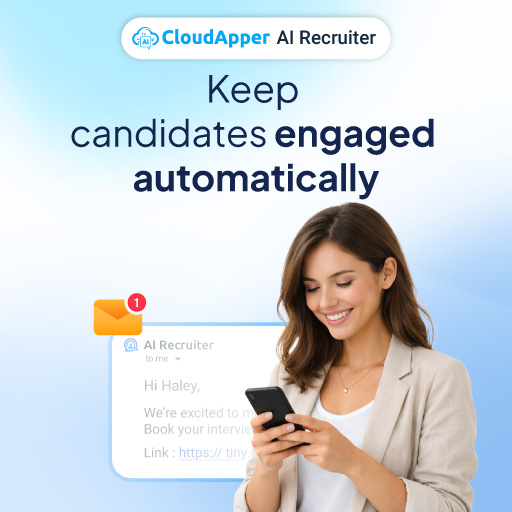
This is where automation supports both engagement and evaluation. CloudApper AI Recruiter instantly screens, scores, and ranks resumes in seconds, then moves qualified candidates directly into scenario-based pre-screening. Scheduling, reminders, and follow-ups run automatically, 24/7, so candidates are never left waiting.
The result is a smoother experience. Candidates understand what is expected of them, receive timely prompts, and stay engaged throughout the process. For recruiters using UKG, this means deeper insights without slowing down hiring timelines.
Detecting Real Experience Through Contextual Scenarios
Another challenge recruiters face is verifying experience in an era where generic answers and AI-generated content are increasingly common. Keyword matching alone cannot confirm whether someone has actually performed the tasks listed on their resume.
Automated scenario-based questions address this by focusing on context. CloudApper AI Recruiter uses deep contextual analysis to review resumes and then generates personalized scenarios that align with a candidate’s claimed experience. If someone lists experience managing teams, they may be asked to describe how they handled a specific performance issue or conflict.
These prompts require candidates to provide concrete examples and logical explanations. It becomes difficult to rely on buzzwords or vague statements, because the questions demand situational clarity. Recruiters gain more confidence that the skills demonstrated are grounded in real experience.
Evaluating Thinking Patterns During Interviews and Assessments
Beyond pre-screening, scenario-based questioning also plays a role in later-stage assessments. During interviews or structured evaluations, the focus shifts from what the candidate knows to how they think.
The Assessment Agent within CloudApper AI Recruiter uses scenario-driven questions to evaluate problem-solving, consistency, and soft skills. Candidates may be presented with follow-up situations that test how they adapt their approach when conditions change.
This method helps recruiters identify alignment between a candidate’s reasoning and the realities of the role. It also makes it harder to rely on real-time AI tools, because the questions evolve based on earlier responses. For UKG users, this adds an additional layer of confidence without disrupting existing hiring structures.
Building Fairness and Consistency Across Hiring Teams
Consistency is critical for organizations hiring across multiple locations or departments. When different recruiters ask different questions, it becomes harder to compare candidates fairly.
Automated scenario-based questions help standardize evaluation while still allowing role-specific customization. Every candidate for a given role faces the same core scenarios, evaluated against the same criteria. Recruiters can then apply their judgment with a clearer, more comparable set of insights.
Within UKG environments, this supports compliance, reporting, and internal alignment. Hiring leaders can better understand why certain candidates move forward and others do not, based on documented, job-related responses rather than subjective impressions.
Designing Scenario-Based Questions that Reflect Real Work
The effectiveness of this approach depends on relevance. Scenarios should mirror actual challenges employees face, not hypothetical puzzles disconnected from daily work.
Recruiters and HR leaders often collaborate to define these scenarios based on role expectations, performance metrics, and common issues. CloudApper AI Recruiter then uses these inputs to automate delivery and analysis, ensuring each interaction feels purposeful.
Over time, teams can refine scenarios based on hiring outcomes and on-the-job performance, creating a feedback loop that continuously improves quality of hire.

The Strategic Value for UKG-Centric Hiring Teams
For organizations already invested in UKG, the goal is not to replace existing systems but to enhance them. Automated scenario-based questions add depth where traditional screening is limited, while automation preserves speed and candidate experience.
Recruiters gain richer insights earlier in the funnel. Candidates feel evaluated on their real abilities, not just their resumes. Hiring leaders gain more consistent data to support decisions across locations and roles.
This combination supports smarter hiring at scale, without adding complexity for teams already managing demanding workloads.
Looking Ahead: Scenario-Based Hiring as a Standard Practice
As roles continue to evolve and expectations rise, hiring processes must move beyond surface-level screening. Scenario-based evaluation reflects how work actually happens, making it a natural fit for modern talent acquisition strategies.
When delivered through automation and integrated with UKG workflows, this approach becomes sustainable, fair, and candidate-friendly. It allows recruiters to focus their time on conversations that matter, armed with insights that go beyond keywords and claims.
For HR and recruiting leaders looking to strengthen hiring outcomes while maintaining efficiency, automated scenario-based questions are quickly becoming a core capability rather than an experiment.
Explore CloudApper AI Recruiter